

Azo Wetsah
AGS DNSU
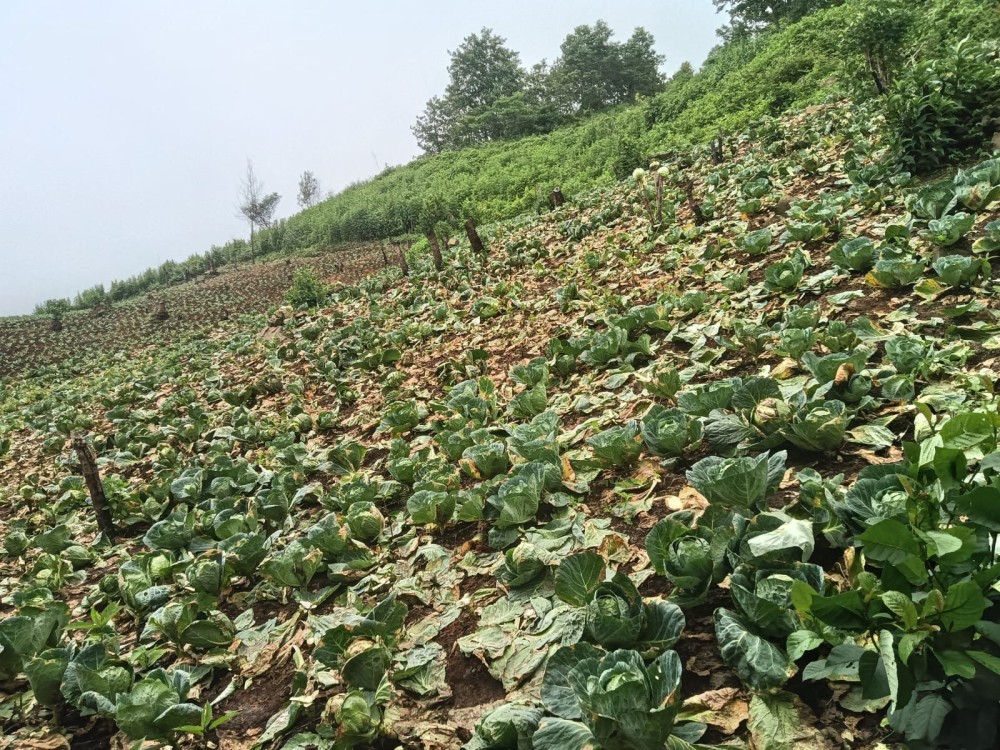
High up in the cool, misty terraced fields of the Razeba Range in Phek district, the soil has always been generous. Known across Nagaland as a major agricultural powerhouse, villages across Razeba and nearby Pfutsero spent months nurturing what turned out to be a record-breaking bumper harvest. Broad, lush heads of cabbage—grown entirely organically and often weighing up to 5 kg apiece—stretched as far as the eye could see.
Yet, what should have been a season of prosperity and joy has quickly turned into a quiet tragedy of sweat, soil, and heartbreak.
The Root of the Crisis: Markets Cut Off & Unsold Crops
For decades, cabbage farming has been the economic lifeline of the Razeba region. However, the farmers are currently weathering a massive financial blow due to factors completely beyond their control:
The Collapse of Primary Export Outlets: Historically, roughly 70% to 80% of the cabbage grown in Pfutsero and the Razeba Range was exported to neighboring Manipur. The ongoing ethnic conflict and recurring blockades in Manipur have completely severed this traditional trade route, leaving farmers cut off from their primary buyers.
Glut and Lack of Cold Storage: Coupled with a massive harvest, the absence of post-harvest preservation facilities or mini cold storages in the hills means these highly perishable organic cabbages rot within days once harvested.
Plunging Prices: With no external outlets, farmers have been forced into distress sales, offering 35–40 kg sacks for as low as Rs130 to Rs150 (less than Rs 4 a kg), yet finding virtually no takers locally.
Local news outlets have captured the gravity of the situation in the words of those witnessing it firsthand:
“Until last year, around 70% to 80% of the cabbage produced in the area was sold in Manipur... Owing to the continuing conflict, the 'traditional market' has collapsed, leaving farmers with no viable outlet for their produce.” — Eastern Mirror
“Community leaders estimate that 300 to 400 metric tonnes of cabbage are currently at risk of spoilage.” — Nagaland Post
“Selling cabbage today is not just merely about selling vegetables. These are the vegetables that address hunger and keep us healthy. We must support and respect our local farmers.” — Salhoutuonuo Kruse, Minister for Horticulture & WRD (via DIPR Nagaland)
Grassroots Action: Community Intervention in Dimapur
Recognizing that our farmers could not fight this battle alone, grassroots efforts stepped up. Working in active collaboration with The Entrepreneurs Associates (tEA), I launched a direct relief drive in Dimapur to bring the produce directly from Razeba’s fields to urban consumers.
Together, tEA and I brought in a shipment of 1,800 kgs of fresh cabbage to sell across Dimapur.
In Dimapur markets, standard vegetable prices usually sit around Rs20/kg for wholesale and Rs30/kg for retail. Hoping to offer an irresistible deal to consumers while guaranteeing relief for the growers, we set our prices at a discounted Rs 17 to Rs 20 per kg.
Despite this discounted price for organic, farm-fresh produce, the response from the urban public was surprisingly lukewarm. We struggled throughout the day and were unable to sell off the full 1,800 kg load in a single day—a sobering reminder of the huge gap between rural farm production and urban market absorption.
A race against time: millions of kilos at risk
Through relentless drive and emergency charity sales organized across the state, tEA and supportive community efforts have successfully facilitated the sale of roughly 40,000 kgs (40 MT) of cabbage so far.
While that effort has brought temporary relief to several families, it remains a fraction of what is sitting in the fields. More than 300,000 kgs (3 lakh kgs / 300+ Metric Tons) of cabbage are still sitting on the mountainsides, at immediate risk of rotting into waste.
If these crops spoil in the dirt, the financial ruin will ripple through hundreds of rural households, leaving families unable to pay for basic living costs, healthcare, or their children's school fees for the coming year.
A humane appeal to the Naga people
Behind every single head of cabbage leaving Razeba is a family that woke up before dawn, tended the soil with bare hands, and poured their honest sweat into the earth. They are not asking for handouts or charity; they are asking for a fair chance to feed their families through the dignity of their own labor.
When external borders close and traditional trade routes collapse, we, as Nagas, must become our farmers' safety net.
Choose Local: Buy Razeba cabbages when you see them in your local markets, street kiosks, or relief sales drives.
Buy in Bulk: Encourage local mess halls, hostels, restaurants, hotel kitchens, and event caterers to buy directly from these community distribution channels.
Spread the Word: Share their story so that urban households recognize that buying a head of local cabbage today is an act of solidarity with our rural brothers and sisters.
Let us not let the honest labor of our soil go to waste. Standing with our farmers isn't just an economic decision—it is our duty to the people who feed our land.

