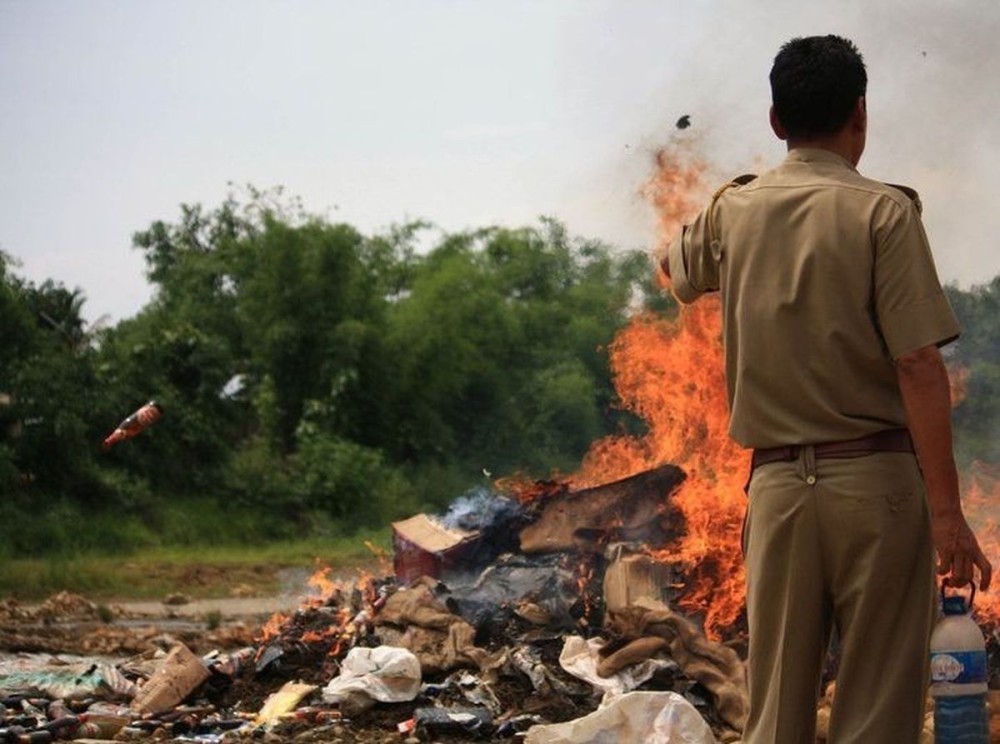
An enforcement personnel watches over destruction of seized liquor in Nagaland. Around thirty-four years since its enactment, the NLTP 1989 continues to be a contentious issue in the State. (Morung File Photo)
Say NLTP Act 1989 has failed its purpose
Dimapur, October 7 (MExN): The Civil Society Organisations (CSOs) in Dimapur have reiterated its demand for the repeal of the Nagaland Liquor Total Prohibition (NLTP) Act, 1989, exclusively within Dimapur District, submitting a formal memorandum to Chief Minister Dr Neiphiu Rio through the Deputy Commissioner, Dimapur.
The memorandum, submitted by the Naga Council Dimapur (NCD) on October 6, on behalf of the NLTP Act 1989 Repeal Committee, appealed for the lifting of prohibition under a strictly regulated and taxation-based liquor policy framed and administered by the State Government.
It reasoned that the 36-year-old act has failed to achieve its intended objectives of promoting public health and social welfare.
The representation follows a series of consultative meetings held across Dimapur, including with all CSOs on October 29, 2025, tribal hohos on November 24, 2025, village leaders on November 26, 2025, and Chakhroma Public Organisation and Western Sümi Hoho on January 27, 2026, where stakeholders unanimously resolved to pursue the repeal.
“The CSOs of Dimapur have unanimously resolved for the lifting of the NLTP Act, 1989, exclusively within Dimapur District under a strictly regulated and taxation-based liquor policy,” the memorandum stated, adding that the appeal reflects “the collective voice of the people of Dimapur.”
It argued that in the 36 years since the Act’s enactment, Nagaland has undergone substantial socio-economic transformation, necessitating a reassessment of the prohibition policy’s effectiveness and relevance. It claimed the “prohibition regime” has not fully achieved its objectives of promoting public health and social welfare. Instead “has inadvertently contributed to the proliferation of illicit liquor trade, the emergence of an extensive black market, and significant loss of potential state revenue.”
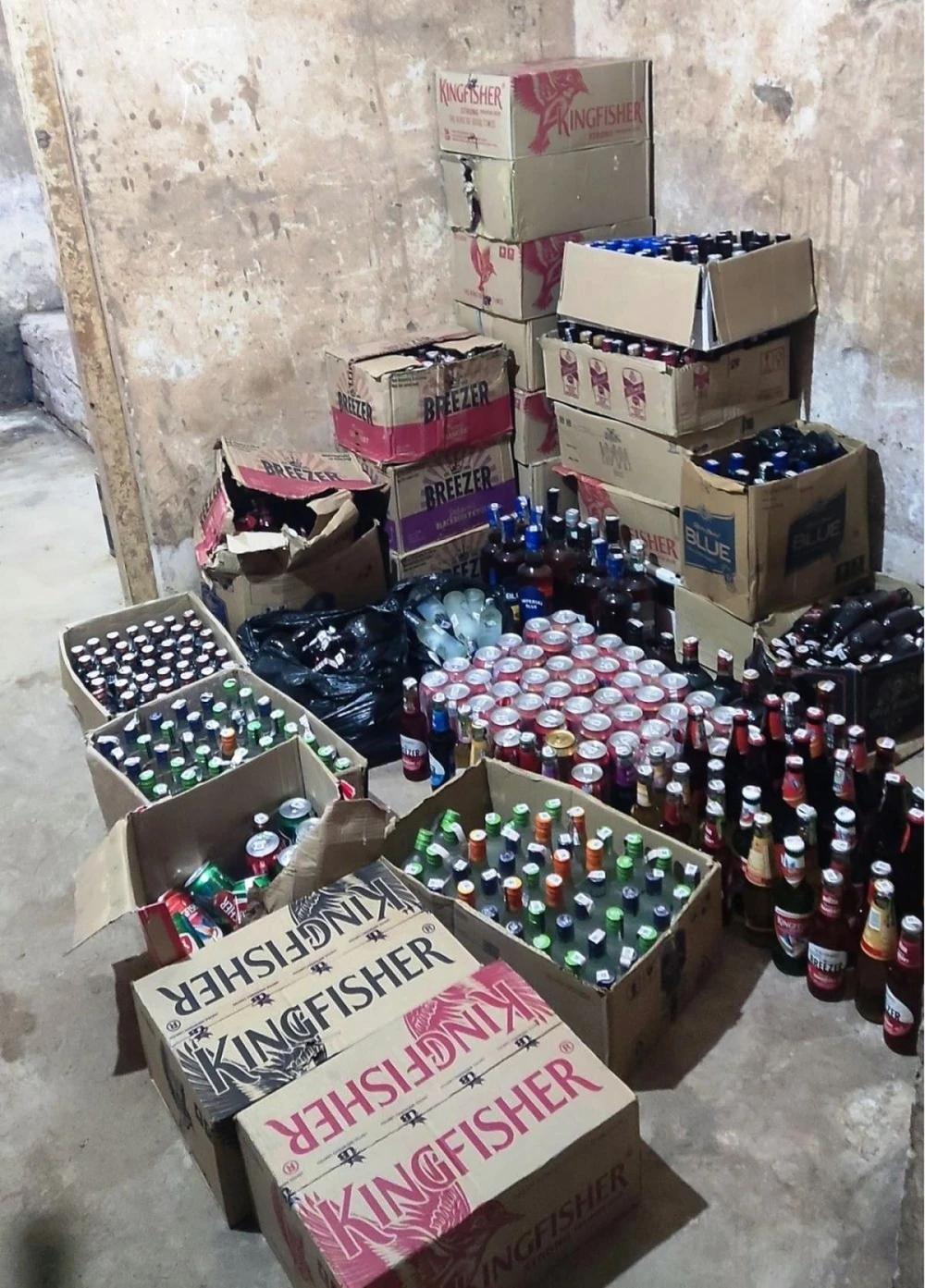
“Despite persistent efforts by the State enforcement and prohibition authorities, the inflow and transportation of liquor into the State continue unabated,” it said, citing Nagaland’s porous interstate border with Assam. “The continued existence of illegal liquor trade and consumption despite prohibition reflects a growing challenge to effective law enforcement and undermines the spirit of the law itself.”
Highlighting revenue potential, the CSOs estimated that Dimapur alone could generate approximately Rs 150 crore annually in liquor excise revenue under a regulated framework, with conservative estimates ranging between Rs 100-200 crore and the possibility of exceeding Rs 200 crore through tourism promotion and absorption of the black-market economy. The memorandum noted that excise duties from liquor constitute one of the largest sources of state-generated tax revenue across India, and that neighbouring Assam reportedly generates approximately Rs 1,500-2,000 crore annually through excise revenue. It also cited a 2022 research study titled “The Paradox of the NLTP Act, 1989” by academics from Dimapur Government College.
Recalling a similar representation submitted by the DUCCF at the Chief Minister’s residence-cum-office at Sovima on May 14, 2024, and the subsequent deliberation during the Monsoon Session of the Nagaland Legislative Assembly in August 2024 where the Chief Minister expressed optimism that the issue warrants broader consultation, the memorandum said the NCD convened meetings with all stakeholders to obtain collective consensus.
The CSOs proposed several conditions should the prohibition be lifted exclusively in Dimapur, including stringent enforcement measures, designation of restricted zones around educational institutions and places of worship, and allocation of a substantial portion of excise revenue towards public health initiatives, addiction treatment and rehabilitation programmes, construction of modern rehabilitation centres, community development projects, school-based awareness programmes, and life-skills counselling.
It further proposed that the Church and CSOs establish dedicated social action and counselling cells, and that a multi-stakeholder committee comprising CSOs, religious bodies, law enforcement, medical professionals, and the Excise Department oversee implementation.
“It is humbly suggested that the Church, the State Government, and all concerned stakeholders collectively undertake a constructive re-examination of the NLTP Act, 1989, in view of present socio-economic realities,” it stated.
“While respecting the moral and spiritual position of the Church, it is felt that the Government may be allowed to determine and implement policies deemed beneficial and practical for the welfare of the Nagas.”
The CSOs further demanded that all income generated be used only for the development of Dimapur District and rehabilitation centres across the districts, and that all liquor outlets be run only by the government and not through public contract or any other system. “We believe that the lifting of the NLTP Act in Dimapur, coupled with a regulated policy, will promote public health, enhance state revenue, and strengthen the rule of law,” it said.
“The common people of Dimapur and the entire CSOs of Dimapur stand ready to collaborate and cooperate with the Government of Nagaland in this endeavour.”
The memorandum was signed by Zasivikho Zakiesato, President, DUCCF and Convener, Committee for Lifting of NLTP Act; Dr Kahuka Chishi, Joint Secretary, DUCCF and Secretary, Committee for Lifting of NLTP Act; GK Rengma, President, NCD; LK Peter Anal, General Secretary, NCD; Hinoto P Aomi, President, Dimapur Naga Students Union; L Domta, Vice President, Naga Women Hoho Dimapur; Tohoshe Awomi, President, East Dimapur Tribal Council; Akashe K Zhimomi, President, Dimapur Chamber of Commerce & Industry; Hokuto Zhimomi, President, Dimapur District GB Association; Kholie Kapfo, President, GB Union Sadar Dimapur; Aheto Yeptho, President, East Dimapur Area Village Council Chairman Forum; Kanato Awomi, President, East Dimapur Youth Organisation; L Maongkum Jamir, President, Business Association of Nagas; and Vikato K Achumi, President, Dimapur District Citizen Forum.