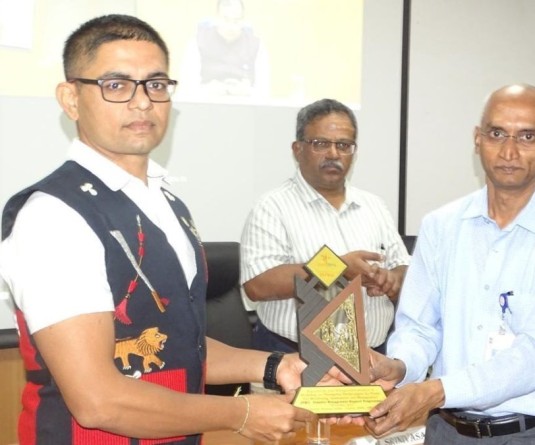
Unlocking the agricultural potential of the Eastern Konyak Area in the Naga Self-Administered Zone, Sagaing Region, Myanmar
Ahon Konyak
Sagaing Region, Myanmar
The Eastern Konyak Area in the Naga Self-Administered Zone of Sagaing Region, Myanmar, is richly endowed with fertile soils, abundant rainfall and a cool mountain climate that provides excellent conditions for agriculture. Home to the Eastern Konyak community, this mountainous border area possesses significant potential for cultivating high value crops such as ginger, coffee, spices, and a variety of horticultural produce. Yet, despite these natural advantages, agriculture remains largely subsistence based, with most households depending on maize and other traditional crops for their daily needs. By embracing modern farming practices, strengthening market access, and promoting cross border cooperation with neighbouring India, agriculture can become a powerful engine of livelihood, entrepreneurship, and sustainable rural development.
Agriculture has always been the backbone of rural life in the Eastern Konyak Area. However, the time has come to move beyond subsistence farming and embrace a more diversified and market oriented agricultural system. By encouraging kitchen gardens, promoting cash crops, and equipping farmers with modern knowledge and skills, the region can create new economic opportunities while preserving its rich agricultural heritage.
Among the most promising cash crops is ginger. Ginger is propagated vegetatively using healthy rhizomes and is relatively easy to cultivate under the area's favourable agro climatic conditions. Farmers generally plant ginger during March and harvest it approximately eight months later, towards the end of November. Besides household consumption, ginger is widely used in the food processing, spice, herbal and pharmaceutical industries, ensuring a steady market demand. With improved cultivation techniques, scientific post harvest management, storage facilities, and organised marketing, ginger has the potential to become a reliable source of income for farming families.
Coffee is another crop with considerable promise. My interest in coffee began with a simple cup of coffee. Curious about its origin, I collected coffee seeds and planted them in my kitchen garden, where they grew healthy and vigorous. This personal experience inspired me to learn more about coffee cultivation and convinced me that many parts of the Eastern Konyak Area possess favourable conditions for growing coffee. Coffee is valued not only as a beverage but also as an ingredient in chocolates, cakes, biscuits, confectionery, and numerous other value added products. As a perennial crop grown under shade, coffee can provide farmers with a sustainable long term source of income while encouraging environmentally responsible farming practices.
The area's cool temperatures, frequent cloud cover, abundant rainfall, high humidity and mountainous terrain create favourable conditions for cultivating ginger, coffee, spices, and several horticultural crops. Even during summer, the weather remains pleasantly cool, while winter brings mist and heavy dew across the hills. These natural conditions provide a strong foundation for producing high quality agricultural products capable of finding markets within Myanmar, neighbouring India and beyond.
Traditional crops such as maize continue to play an important role in ensuring household food security. However, integrating cash crops alongside food crops can diversify income sources, reduce economic vulnerability, and strengthen the resilience of farming households. A balanced approach that combines food security with commercial agriculture will provide long term benefits for rural communities.
Despite its immense agricultural potential, the Eastern Konyak Area continues to face several challenges that limit agricultural productivity and rural incomes. Most farmers cultivate traditional crops using conventional methods and have limited exposure to commercial agriculture. Knowledge of cash crop cultivation, plantation management, post harvest handling, grading, packaging, value addition, marketing, and export procedures remains limited. Consequently, much of the area's agricultural potential remains underutilised.
Strengthening agricultural extension services, establishing farmer cooperatives, developing collection centres, improving storage facilities, and enhancing rural transport infrastructure are essential steps towards building a more competitive agricultural sector. These initiatives would help farmers reduce post harvest losses, improve product quality, access larger markets, and secure better returns for their produce.
One of the most important investments in the future of the Eastern Konyak Area in the Naga Self-Administered Zone is farmer education supported by effective agricultural extension services. Although the region possesses fertile land and favourable agro climatic conditions, these natural advantages alone cannot ensure sustainable prosperity. Farmers require practical knowledge of improved cultivation techniques, soil fertility management, water conservation, integrated pest and disease management, post harvest handling, grading, packaging, value addition, financial literacy, and market linkages. They should also be introduced to cooperative farming, entrepreneurship, quality standards, and the opportunities and regulations associated with legal cross border trade. Well designed agricultural extension programmes enable farmers to adopt improved practices, increase productivity, reduce post harvest losses, and make informed business decisions. At the same time, they encourage young people to view agriculture not merely as a traditional occupation but as a modern, innovative, and profitable enterprise. When combined with better infrastructure, access to finance, and stronger market connections, investment in farmer education can transform the agricultural potential of the Eastern Konyak Area into sustainable livelihoods, improved food security, and long term rural prosperity.
The International Trade Centre (ITC) at Longwa has the potential to become an important gateway for legal cross border trade if it is fully developed and made operational through cooperation between the Governments of India and Myanmar. A well functioning trade centre, supported by appropriate customs, logistics, quarantine, and market infrastructure, could facilitate the legal exchange of agricultural produce, local products, and essential commodities between communities living on both sides of the India-Myanmar border. Such a facility would expand market opportunities for producers of ginger, coffee, and other cash crops, encourage rural entrepreneurship, strengthen local economies, and contribute to improved livelihoods in both the Eastern Konyak Area in the Naga Self-Administered Zone, Sagaing Region, Myanmar, and the neighbouring districts of Nagaland, India.
Beyond border trade, farmers should also be connected with local and regional markets within Myanmar. A diversified marketing strategy that combines local sales, regional trade, and legal cross border commerce would reduce market risks and provide farmers with multiple income opportunities. However, realising this vision will require supportive public policies, improved infrastructure, institutional cooperation, and a stable environment for trade and investment.
Agriculture should no longer be viewed merely as a means of subsistence. With entrepreneurship, value addition, organised marketing, and improved market access, farming can become a respected and profitable profession. The expansion of cash crop cultivation, agro processing, and small scale rural enterprises can generate employment, reduce outward migration, empower women through household enterprises, and create sustainable livelihood opportunities throughout the Eastern Konyak Area.
My own kitchen garden represents a small but meaningful beginning. My inspiration came from a simple belief that meaningful change often begins with one person taking the first step. After successfully growing ginger, coffee, and other plants, I realised that even a small piece of land could become a productive source of food, nutrition, and income. My intention was not merely to cultivate crops for my own household but to demonstrate to fellow villagers that kitchen gardens can improve family livelihoods and encourage self reliance. I hope that when people see what can be achieved with limited resources, they will be inspired to establish their own kitchen gardens and gradually explore the cultivation of cash crops.
Every successful kitchen garden can become a living demonstration of agricultural innovation. It shows that small initiatives, when adopted by many households, can collectively transform an entire community. Kitchen gardens not only strengthen household food security and improve nutrition but also serve as practical learning spaces where families can experiment with new crops, acquire farming skills, and build confidence before expanding into commercial cultivation.
The transformation of agriculture in the Eastern Konyak Area will require the collective efforts of farmers, village leaders, community organisations, agricultural experts, civil society, and the Governments of Myanmar and India. Investment in rural infrastructure, agricultural extension services, irrigation where feasible, storage facilities, market access, and farmer training will be essential to unlock the region's full agricultural potential. Equally important is the active participation of young people, whose energy, creativity, and commitment can drive innovation and ensure the long term sustainability of the agricultural sector.
Agriculture should be recognised not merely as a traditional occupation but as an engine of economic growth, entrepreneurship, and community development. With proper planning and support, the Eastern Konyak Area can emerge as a recognised producer of quality ginger, coffee, spices, and other horticultural products. The development of farmer cooperatives, small agro processing enterprises, and value addition industries can generate employment, increase household incomes, and create new opportunities for women and young entrepreneurs.
The Eastern Konyak Area in the Naga Self-Administered Zone, Sagaing Region, Myanmar, possesses many of the natural advantages required for agricultural transformation. By promoting kitchen gardens, encouraging cash crop cultivation, strengthening farmer education, investing in agricultural infrastructure, improving market access, and enhancing legal cross border cooperation through the International Trade Centre at Longwa, the area can gradually move beyond subsistence farming towards entrepreneurship, sustainable development, and shared prosperity.
The future of the Eastern Konyak Area lies not only in its fertile land but also in the determination and vision of its people. When knowledge is combined with hard work, when traditional wisdom is strengthened by modern agricultural practices and when local production is connected to wider markets, agriculture can become a powerful force for lasting economic and social transformation. The seeds planted today in our kitchen gardens and farms can grow into a future of dignity, opportunity, and prosperity for generations to come.
As the Eastern Konyak people of Myanmar, we aspire to stand on our own feet with dignity, hard work and self reliance. We do not seek dependence; rather, we seek opportunities to unlock the potential of our land and our people. What we need is a helping hand through knowledge, education, agricultural training, some minimum infrastructure support and access to markets. We look with hope to our brothers and sisters across the border and to our great neighbour, India, as partners in our shared journey towards prosperity. When border communities prosper, both nations benefit through stronger economic cooperation, deeper people to people ties and more vibrant border regions. Give us the opportunity to learn, to cultivate, to innovate and to compete and we will transform our fertile land into a source of food security, sustainable livelihoods, dignity, and shared prosperity. Together, let us build bridges of friendship and development so that future generations on both sides of the India-Myanmar border inherit not poverty and isolation, but opportunity, peace and hope.
Ahon Konyak is Chairman of Gonyu Village, Eastern Konyak Region, Sagaing, NSAZ, Myanmar and also Executive Member, Eastern Konyak Centre For Research and Development Studies, Myanmar