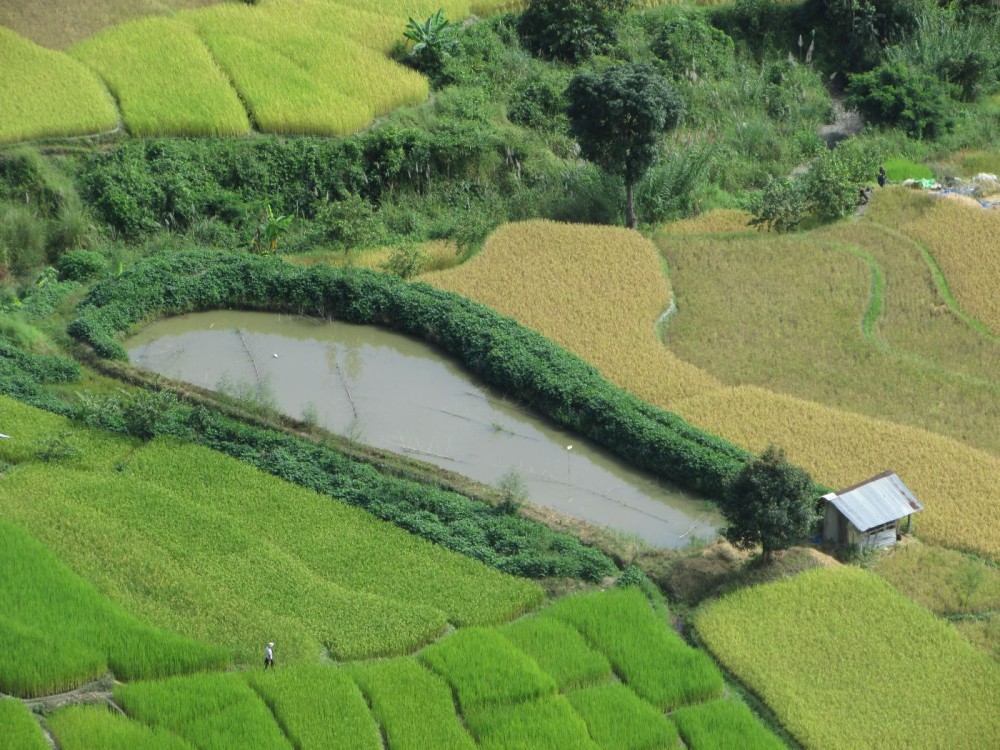
A fishery pond in Kohima district. (Morung file Photo)
Our Correspondent
Kohima | March 18
Fisheries development has gained momentum over the years in Nagaland, particularly in the areas of inland fisheries and freshwater aquaculture.
The State currently produces around 11,692.88 MT of fish, contributing to local food supply and income generation, according to Annual Administrative Report 2025-26 of the Department of Fisheries & Aquatic Resources, tabled at the 8th Session of 14th Nagaland Legislative Assembly.
Given the terrain and ecological characteristics of the State, fisheries development is closely linked with responsible management of ponds, reservoirs, rivers and hill streams, the report stated adding that efforts are being made to improve infrastructure and ensure quality seed production, and strengthen the capacity of fish farmers across districts.
As the demand of the fish continues to increase, there is a parallel need to balance production with sustainability, the report stated.
Protecting aquaculture ecosystems, improving scientific management, and addressing region specific challenges particularly in cold water and hill streams systems are essential for long-term growth.
With a balanced approach that integrates productivity, sustainability and conservation the fisheries sector of Nagaland can move confidently towards self-reliance, the report stated.
The department has announced its mission to increase the production of fish and fish products and to make the State self sufficient through technology driven concerted efforts with greater participation of people for sustainable development of sector for food, nutrition, livelihood and inclusive growth in rural sector.
Fishery-based eco-tourism and responsible sport fishing
Nagaland is emerging as a model for conservation-led fisheries through the promotion of community fish reserves and sport fisheries such as angling, the report stated.
Supported by the Department of Fisheries & Aquatic Resources, these community-managed reserves protect indigenous fish species, revive natural habitats, and celebrate the State s rich aquatic biodiversity.
At the same time, regulated angling is being developed as a high-value, eco-friendly tourism activity, drawing enthusiasts to pristine rivers and scenic water bodies.
This unique blend of conservation, community stewardship, and adventure tourism not only safeguards aquatic resources but also creates sustainable livelihoods, positioning Nagaland as a premier destination for fishery-based eco-tourism and responsible sport fishing, the report stated.
Aqua Park Nagaland
The Report stated that the Aqua Park will function as a demonstration and innovation centre, showcasing advanced systems such as Recirculatory Aquaculture Systems (RAS), ornamental fisheries, integrated fish farming, and climate-resilient aquaculture practices.
It will serve as a model unit for entrepreneurs and farmer-producer groups, aligning with the broader vision of sustainable fisheries development and the Blue Economy framework.
The initiative reinforces the Government’s commitment to nutritional security through increased availability of affordable fish protein, livelihood enhancement in rural and peri-urban areas, adoption of eco-friendly and sustainable aquaculture practices and strengthening institutional infrastructure for long-term sectoral growth.
With the laying of the foundation stone, the Aqua Park Nagaland enters a new phase of infrastructure expansion and sectoral modernization; the report stated adding that upon completion, “it is expected to act as a catalytic center for fisheries transformation, positioning Nagaland as a progressive state in inland aquaculture development in the North Eastern Region.”
Mentionably, the foundation for Integrated Aqua Park was laid at Tzudikong by Prime Minister Narendra Modi in the presence of MLA and Advisor A Pangjung Jamir on October 11, 2025.
Present scenario of fisheries in Nagaland
• Fish Production: 11,692.88 MT
• Fish Seed Production: 58.54 million
• Govt Demonstration Fish Farm: 8
• Govt Carp Hatcheries: 8
• Carp Hatcheries under Private Sector: 12
• Mahseer Hatchery: 1
• Trout Hatchery: 3
• Awareness Centre: 7
• Fish Farmers’ Training Centre: 6
• Fish Farmers’ Hostel: 2