LUMAMI, May 19 (MExN): A lecture on India's diplomatic and strategic relationship with Vietnam was delivered at Nagaland University on Sunday, with a retired Indian Ambassador arguing that the bilateral partnership is "benign, stable, and mutually beneficial" and urging deeper trade and economic integration to translate strategic goodwill into tangible outcomes.
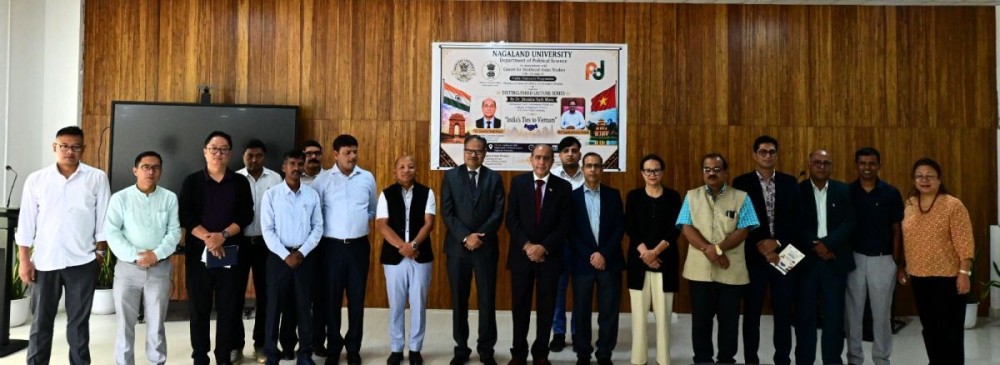
Dr. Jitendra Nath Misra, Ambassador (Retd), Ministry of External Affairs, and Professor of Diplomatic Practice at O.P. Jindal Global University, delivered the lecture titled "India's Ties to Vietnam" at the university's Lumami campus. The event was organised by the Department of Political Science in association with the Centre for Southeast Asian Studies under the Public Outreach Programme of the Ministry of External Affairs, Government of India.
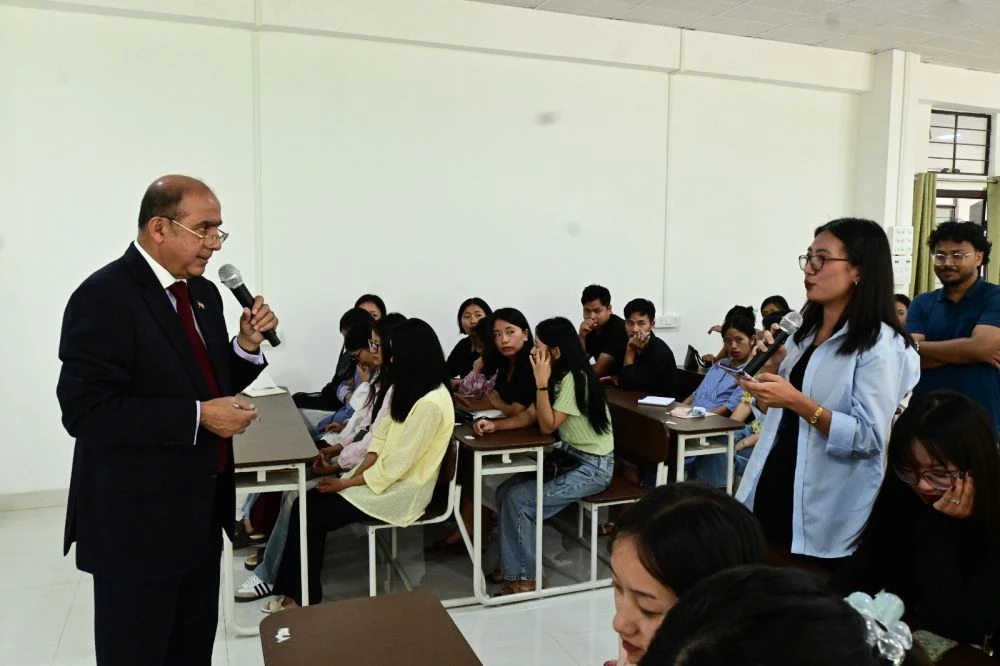
Framing the bilateral relationship within the Enhanced Comprehensive Strategic Partnership (ECSP), Dr. Misra said India's strategic autonomy — its non-alignment with any military alliance — lends it credibility as a stabilising force in the region and makes it a crucial partner for Vietnam. He noted Vietnam's strong support for India and its commitment to the non-use of force in international diplomacy.
Drawing on the 2026 Joint Statement, he observed a continuing global power shift from West to East and underscored the renewed centrality of hard power in contemporary international politics. Greater trade integration, investment flows, and economic connectivity, he said, were essential to deepen the bilateral relationship.
The lecture also covered the cultural dimensions of the partnership, particularly historical links through the Cham civilisation and the spread of Buddhism, noting that India has effectively employed cultural diplomacy in its engagement with Vietnam. On defence, he described bilateral ties as modest but steadily expanding.
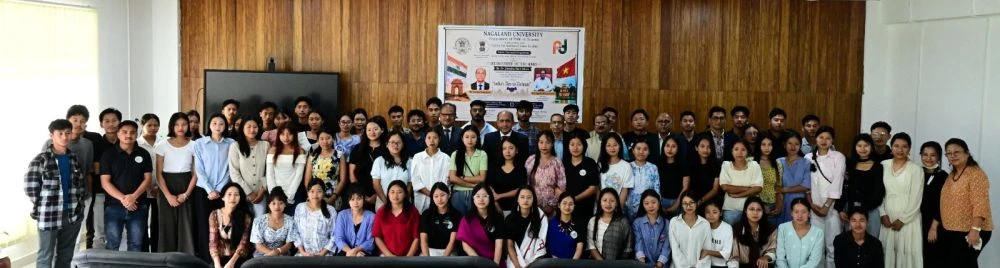
In the inaugural address, Vice-Chancellor Prof. Jagadish K. Patnaik spoke of India's civilisational ties with Southeast Asia through Buddhism and highlighted Vietnam's ideological significance on the world stage.
Welcoming the gathering, Prof Dasarathi Bhuiyan, Head of the Department of Political Science, recalled that India established diplomatic ties with Vietnam in 1972, becoming the first non-communist country to do so, and noted the 2022 celebrations marking fifty years of that relationship.
Dr. Deepak Kumar Bhaskar, organising secretary, said the lecture series was designed to help citizens connect local action with global developments, embodying the spirit of "Think globally, act locally." A question-and-answer session followed, in which students and research scholars engaged with the speaker. The event was attended by faculty, administrative officers, and a large body of students and research scholars.