(Photo: X/@NASA)
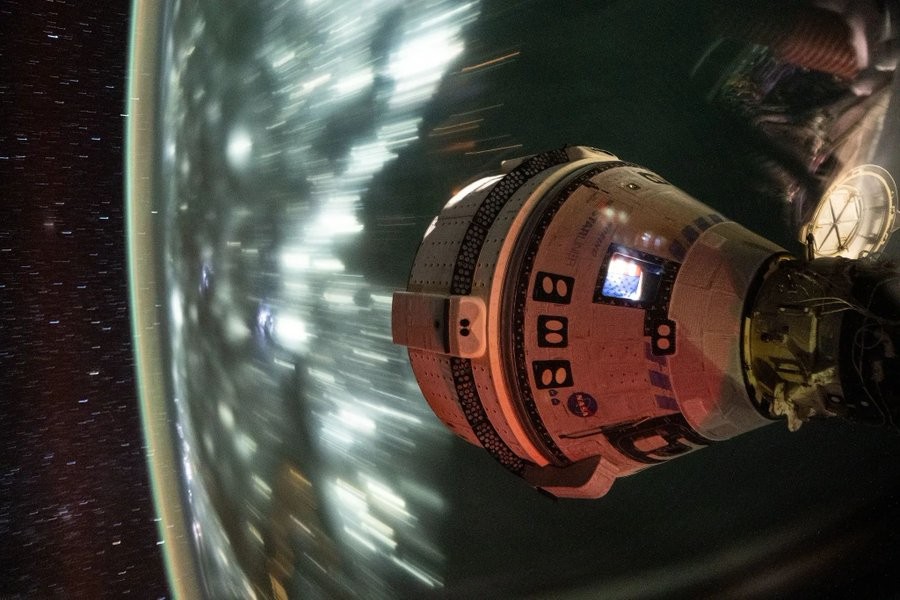
Washington, September 29 (IANS) NASA and Boeing have set out a phased plan to return the Starliner spacecraft to service after technical problems on the flight that carried astronauts Sunita “Suni” Williams and Butch Wilmore to the International Space Station.
The next Starliner mission will fly without a crew. It could launch in December or January 2027, NASA said Monday.
A crewed mission is planned by 2028 if the spacecraft completes its tests and certification requirements.
“We are starting with an uncrewed Starliner-1 mission to the International Space Station to validate the improvements made to the spacecraft and gather the flight data we need,” NASA Administrator Jared Isaacman said.
“From there, we will use what we learn, continue implementing the corrective actions identified by our Program Investigation Team, and complete the testing and certification required for crewed flight. Our current plan is to return astronauts on Starliner-2 by 2028.”
NASA also intends to exercise options for a fifth and sixth Starliner flight to and from the space station.
The agency will work with Boeing and United Launch Alliance to certify the Vulcan rocket for astronaut missions after the final flight of the Atlas V rocket.
The plan gives Starliner another opportunity to become a regular part of NASA’s Commercial Crew Programme. NASA wants more than one American spacecraft capable of transporting astronauts to low-Earth orbit.
“We have worked closely with Boeing to address the issues identified on previous Starliner flights, and we intend to see this vehicle return to flight in support of the International Space Station and future commercial destinations,” Isaacman said.
NASA established a Program Investigation Team after Starliner returned to Earth without Williams and Wilmore following its first crewed flight in 2024.
The investigation produced 61 recommendations intended to ensure that future missions meet NASA’s human spaceflight standards.
Investigators found that Starliner’s service-module reaction-control thrusters operated outside their engineering qualification. NASA said this caused the loss of control experienced during the crewed flight test.
Ground tests and analysis linked the thruster problems to a combination of factors, including the thermal environment and elements of the spacecraft’s design.
Boeing has since made thermal modifications to the service module. NASA will evaluate their performance during the uncrewed Starliner-1 flight.
NASA and Boeing have also agreed to change a thruster-valve design. The work is intended to address poppet-seal extrusion and its effects on thruster performance.
Other planned changes include installing new crew-module thrusters and batteries and making limited modifications to the parachute system.
“Starliner’s next flight is a critical step on the path to achieving full system certification and ensuring a sustained human presence in low Earth orbit,” said Dana Weigel, manager of NASA’s Low Earth Orbit Programme.
NASA said Starliner-1 would serve as an engineering evaluation mission. It will test the modified thermal environment, collect performance data and identify any remaining risks before astronauts are placed aboard the spacecraft again.