Nitish Kumar (Photo: Official sources)
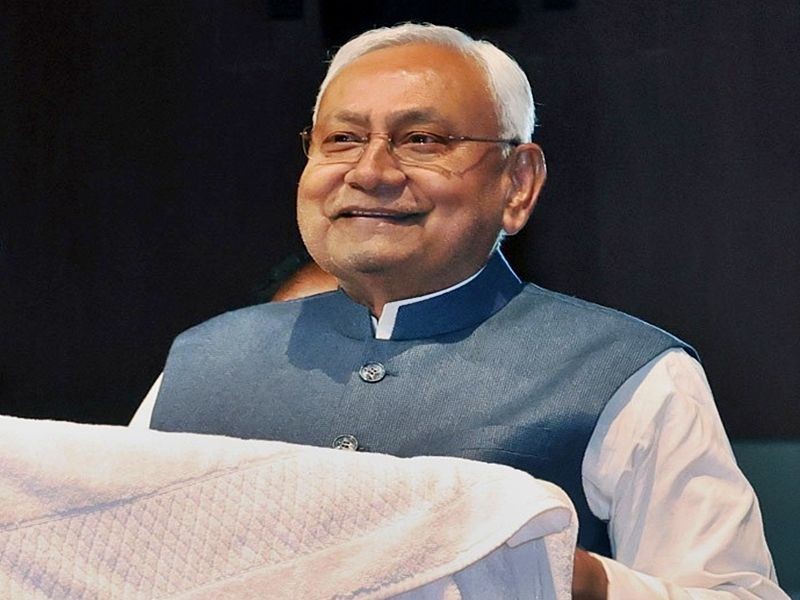
Patna, March 5 (IANS) Bihar Chief Minister and JD-U leader Nitish Kumar is regarded as one of the most seasoned and adaptable leaders in Indian politics, having navigated decades of ideological shifts, coalition realignments and governance experiments. With his nomination to the Rajya Sabha, his long political journey appears set to enter a new phase.
Nitish Kumar began his political career in student activism. He first contested the Harnaut Assembly seat in 1977 but was unsuccessful.
In 1985, he was elected from Harnaut to the Bihar Legislative Assembly, marking the beginning of his active legislative career. He entered the Lok Sabha in 1989 after being elected from the Barh constituency.
He was subsequently re-elected from Barh in 1991, 1996, 1998 and 1999.
In the Union government, he handled key portfolios including Agriculture, Railways and Surface Transport. His tenure as Railway Minister drew particular attention for administrative reforms and safety measures.
In 2004, he was elected to the Lok Sabha from the Nalanda constituency.
Nitish Kumar first took oath as Chief Minister of Bihar in 2000, although that government lasted only seven days.
A decisive shift in Bihar politics came in November 2005, when he was sworn in again as Chief Minister. He subsequently returned to office in 2010, 2015, 2020 and 2025 under changing political alignments.
During this period, he governed Bihar both in alliance with the NDA and alongside the RJD led by Lalu Prasad Yadav, reflecting a fluctuating yet resilient political trajectory.
He has served as a member of the Lok Sabha, the Bihar Legislative Assembly and the Bihar Legislative Council, making him one of the rare leaders with experience in all three legislative bodies. His move to the Rajya Sabha is being viewed as another milestone in his extensive public life. One of the defining aspects of Nitish Kumar’s tenure has been his emphasis on women’s empowerment.
In 2006, he introduced 50 per cent reservation for women in Bihar’s three-tier Panchayati Raj system, later extending it to municipal bodies. This decision significantly increased women’s participation in grassroots governance.
Though initially mocked with terms like “Mukhiya Pati”, over time many women leaders emerged independently and confidently.
To encourage girls’ education, the government launched the Chief Minister’s Girls’ Cycle Scheme and the Dress Scheme, providing financial assistance directly into bank accounts for purchasing bicycles and uniforms.
These measures led to a notable rise in girls’ school attendance and helped bridge the gender gap in matriculation examinations. Several scholarship schemes for girls were also introduced.
Under the Jeevika programme, launched with support from the World Bank, nearly one million self-help groups have been formed in Bihar, involving over 10 million women. These groups have facilitated savings, access to credit and small-scale entrepreneurship across rural areas.
Nitish Kumar's government provided 35 per cent reservation for women in the state police force, significantly increasing women's representation in law enforcement.
Additionally, a 50 per cent reservation was implemented for women in primary teacher appointments. The Chief Minister’s Women Entrepreneur Scheme offered financial assistance of up to Rs 10,000 for setting up industries, aimed at promoting women-led enterprises.
Infrastructure development has been another hallmark of his governance. Large-scale road construction projects were undertaken across Bihar, including state highways and rural connectivity roads reaching even hamlet levels.
With assistance from the Asian Development Bank, major infrastructure expansion was carried out, along with the construction of numerous bridges. Significant improvements were made in rural electrification.
Many villages now reportedly receive electricity supply for 22-23 hours a day, marking a substantial change from earlier decades. From student politics to multiple terms as Chief Minister and now to the Rajya Sabha, Nitish Kumar's political journey has witnessed significant ups and downs.
His legacy is often associated with governance reforms, women’s empowerment and infrastructure expansion. As he prepares for a role in the Upper House, observers see this as the beginning of a new chapter in one of Bihar’s most consequential political careers.