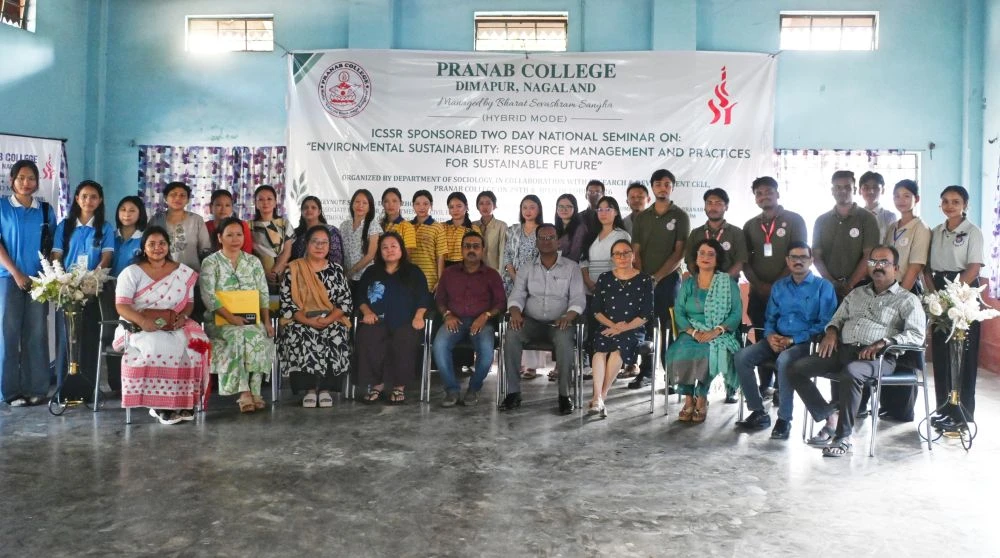
Dignitaries, faculty, and participants pose for a photograph during the national seminar on environmental sustainability at Pranab College, Dimapur.
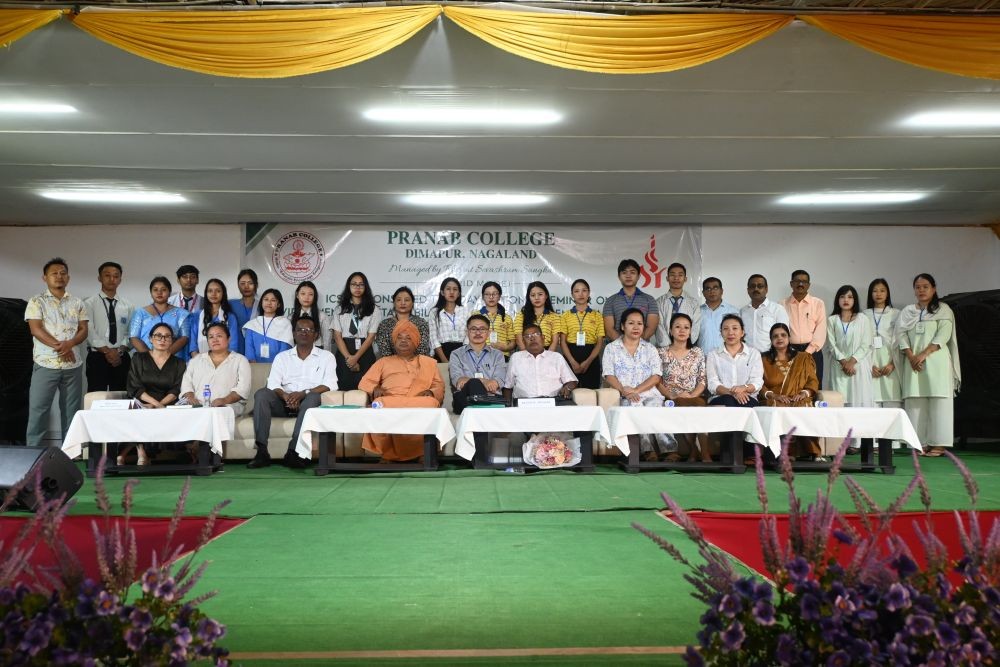
Dimapur, October 30 (MExN): Pranab College, Dimapur, organised a two-day national seminar on environmental sustainability, with scholars and researchers discussing indigenous knowledge systems, natural resource management and sustainable development.
Sponsored by the Indian Council of Social Science Research (ICSSR), the seminar on “Environmental Sustainability: Practices and Resource Management for a Sustainable Future” was held on October 29 and 30 at the college auditorium. It was organised by the Department of Sociology in collaboration with the college’s Research and Development Cell.
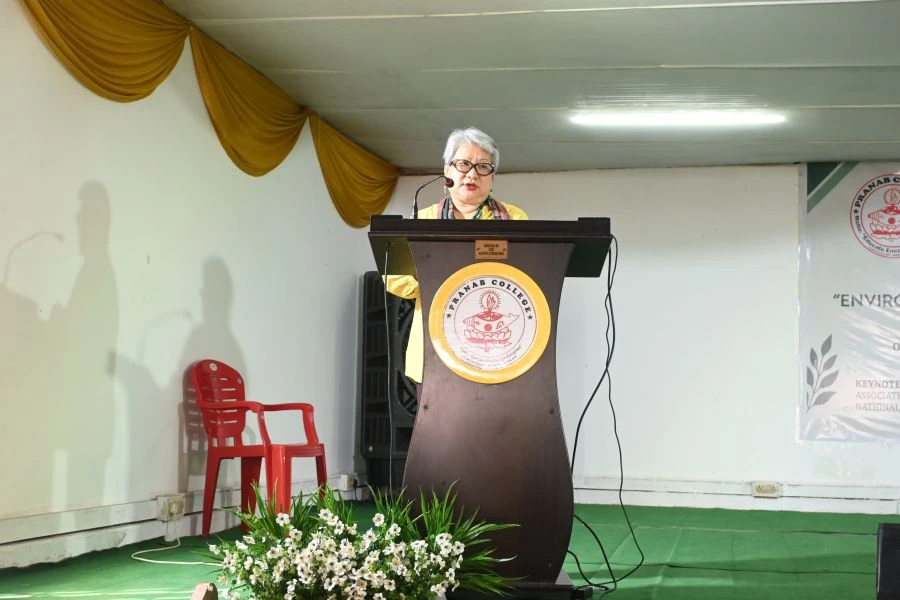
The inaugural programme was chaired by Dr Alomi Cynthia Shikhu, Seminar Convener, Department of Sociology. Delivering the welcome address, Principal of Pranab College, Dr Santosh Kumar, highlighted the urgent need to protect the environment as environmental problems continue to affect human lives. He stressed that development and environmental protection must go hand in hand and urged participants to translate the discussions into practical action in schools, colleges, workplaces and society.
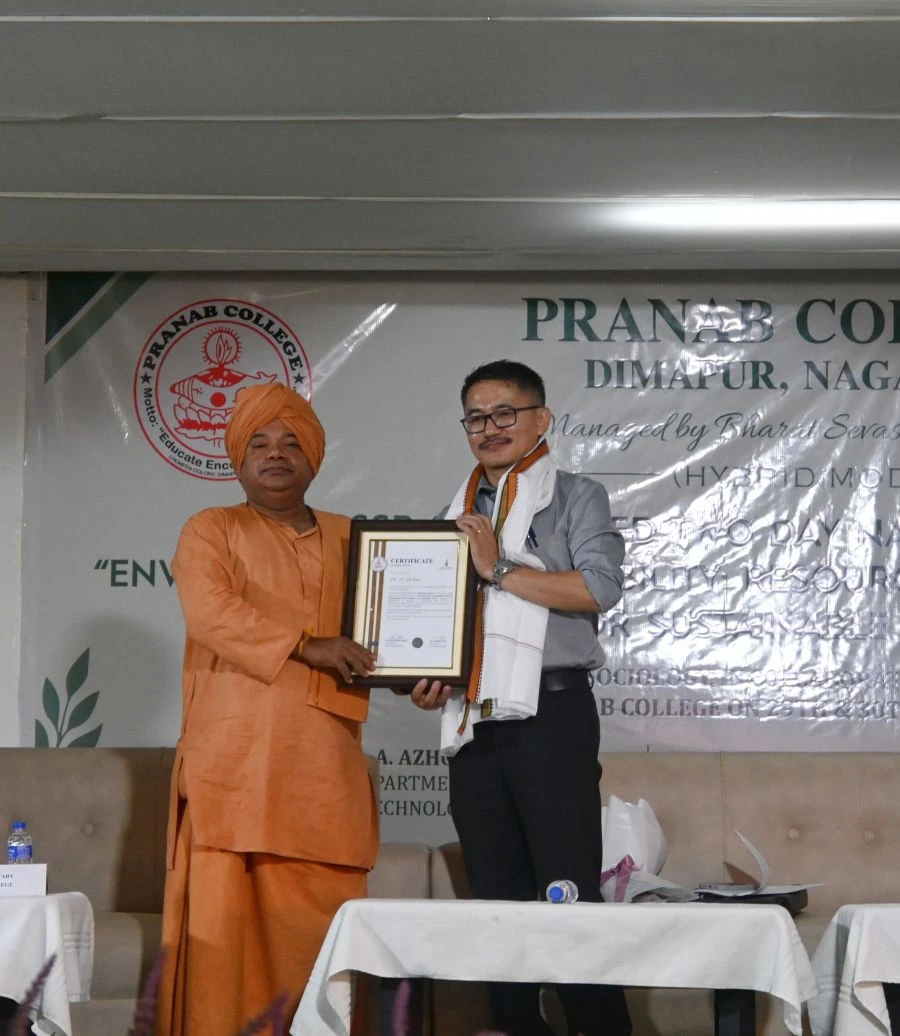
The keynote address was delivered by Dr A Azhoni, Associate Professor and Head of the Department of Civil Engineering, National Institute of Technology (NIT), Manipur. Speaking on the theme “The Future We Choose: Rethinking Development and Flourishing,” he raised the question of what society was seeking to sustain.
He discussed the relationship between development and environmental protection, identifying five dimensions of human flourishing: material and physical well-being, intellectual well-being, social and cultural relationships, ecological well-being, and ethical and political flourishing.
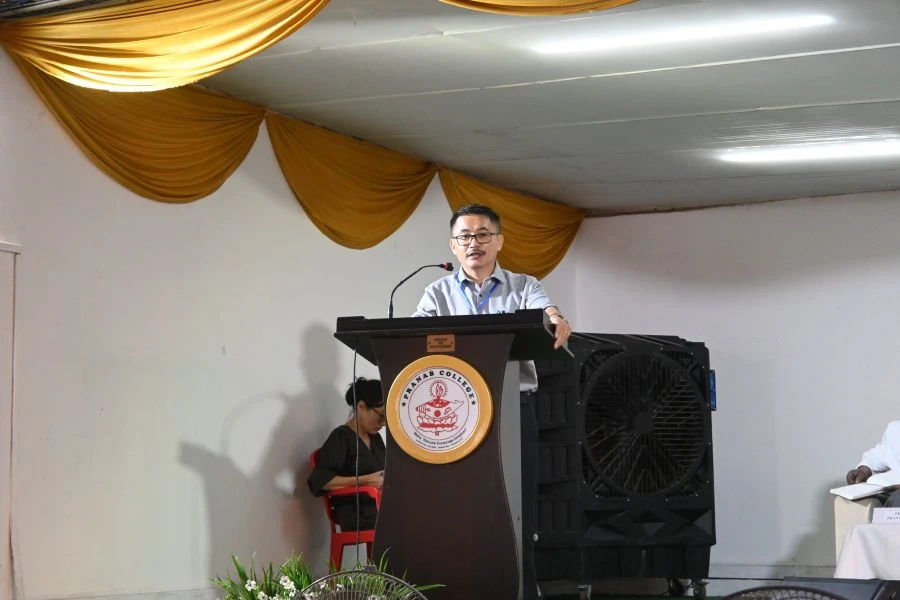
Dr Azhoni also highlighted environmental challenges in the Northeast, particularly those associated with mining, infrastructure development and responsible natural resource management. The discussions further examined traditional ecological knowledge and indigenous systems, recognising their role in environmental conservation.
During Technical Session II, Dr Jungmayangla Longkumer, Professor of Agricultural Extension Education, School of Agricultural Sciences, Nagaland University, Medziphema Campus, delivered a special lecture on sustainability in the context of Nagaland. She highlighted the importance of preserving the state's natural resources and indigenous knowledge, particularly through forest protection, conservation of local water bodies and sustainable agricultural practices.
Her lecture covered indigenous water conservation methods, traditional farming systems and agroforestry practices that contribute to ecological balance. The discussion also explored how community-based practices and traditional knowledge could help address environmental challenges and ensure responsible resource management for future generations.
Moderated by Meyisangla Jamir, Head of the Department of English, the session also featured five paper presentations on sustainability, environmental conservation and contemporary challenges. The presentations examined the relationship between nature, society and sustainable development, with discussions on integrating indigenous practices with contemporary approaches to environmental protection.
The second day of the seminar, held on October 30, featured Technical Sessions III and IV conducted online. Technical Session III was moderated by Dr A Azhoni, with Olivia, Assistant Professor, Department of Sociology, serving as rapporteur. Researchers and paper presenters joined virtually to share their findings on sustainability, indigenous knowledge systems, ecological practices and sustainable development.
Technical Session IV was moderated by Majakhon Kamei, Head of the Department of Sociology, while Dr Sanjukta Bhattacharjee, IQAC Coordinator and Department of English faculty member, served as rapporteur. The presentations explored themes including ecological spirituality, indigenous knowledge and the relationship between communities and nature.
The seminar concluded with a valedictory programme, marking the completion of the two-day academic event. The inaugural programme's vote of thanks was delivered by Dr Sanjukta Bhattacharjee, Assistant Professor, Department of English, who acknowledged the dignitaries, keynote speaker, organisers, faculty members and students.