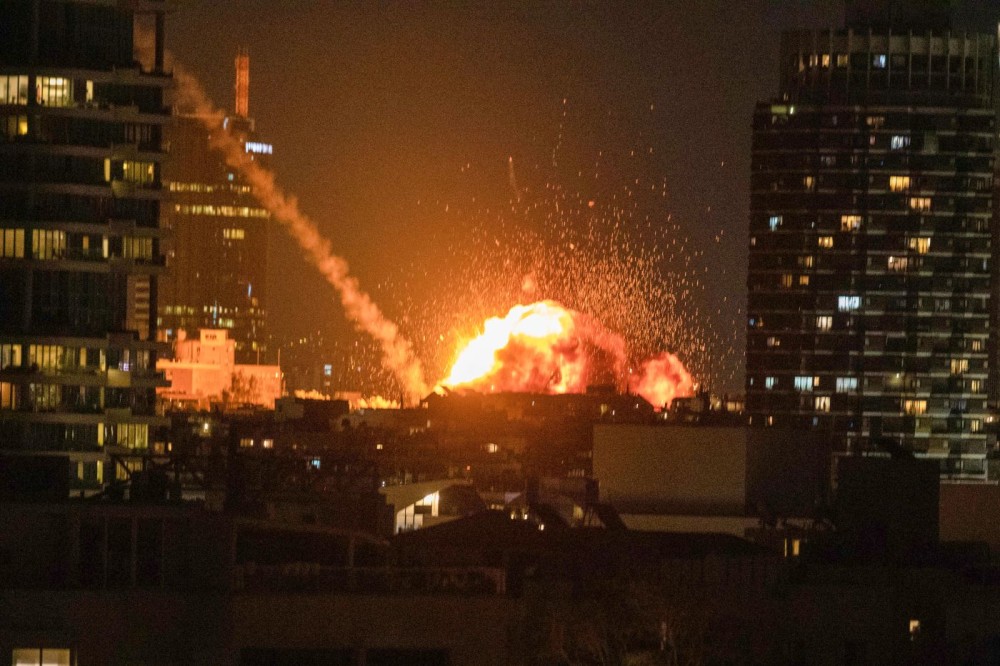
Tel Aviv, March 1 (IANS) Residents of Tel Aviv described a night of sirens, explosions and anxious hours in shelters as tensions between Israel and Iran escalated, bringing the conflict to the heart of civilian neighbourhoods.
As air raid sirens pierced the silence, families rushed to safe rooms and underground shelters, uncertain of what the night would bring.
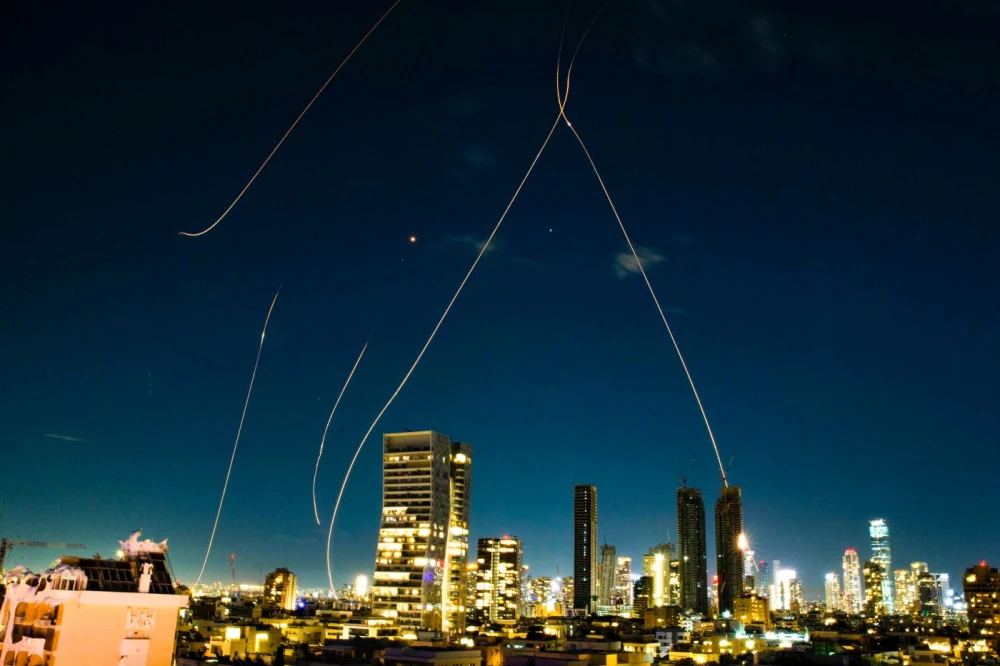
Tel Aviv: This long exposure photo taken on Feb. 28, 2026 shows flare trails of the interceptor missiles launched from Israeli air defense systems in Tel Aviv, Israel. The United States and Israel on Saturday launched "major combat operations" against Iran, claiming that the country's Supreme Leader Ayatollah Ali Khamenei had been killed. Iran retaliated with a series of counterattacks against Israel and U.S. targets across the region Late Saturday, at least 20 people were injured in Tel Aviv during Iran's latest round of strikes on Israel, Israel's national emergency service MDA reported. MDA said that a 40-year-old man is in a serious condition with a shrapnel wound. (Xinhua via IANS)
One local recalled the tense moments. “It was ongoing, but we had enough time to get to the shelter. I heard the sirens and the boom, and was like, ‘Okay, we should go to the shelter.’ So we went to the shelter the whole day, the whole night,” the resident said, describing the prolonged hours spent in the shelter.
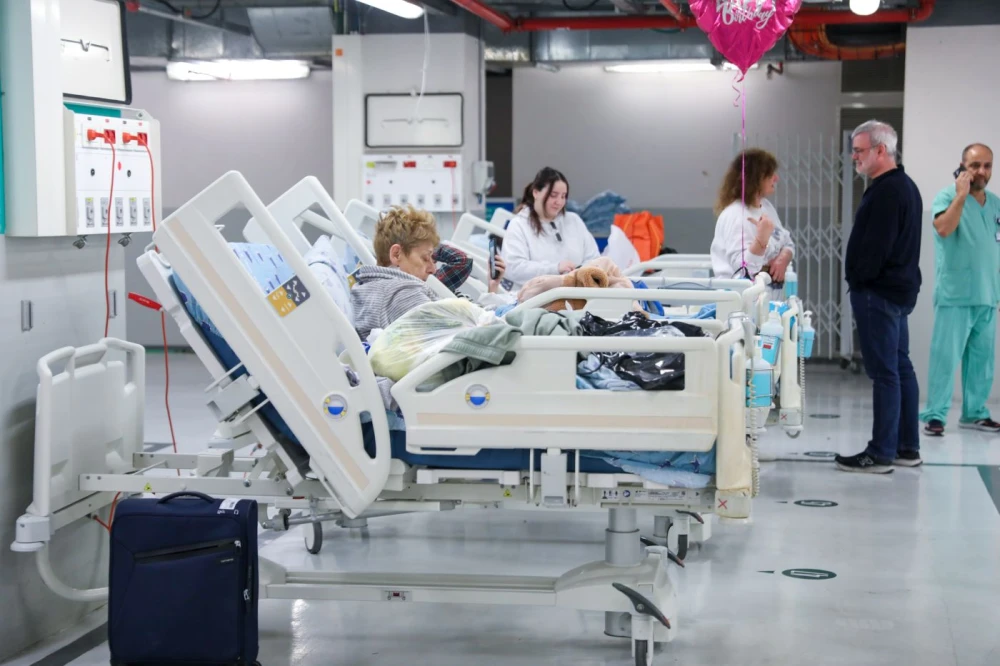
Tel Aviv: Patients are moved into a parking lot at a medical center in Tel Aviv, Israel, Feb. 28, 2026. The alert level of all hospitals in Israel has been raised to the highest level after attacks in Iran, and hospitalized patients were transferred to shelters, the Israeli Health Ministry said in a statement. All non-urgent hospital activities have been canceled.(Xinhua via IANS)
Another resident said they sought refuge in a reinforced safe room inside their apartment building. “I was in the safe room in my apartment. I have a safe room underground, so I was safe, but we heard a lot of noise. And now we came to see what happened here, and you can see all the damage. But what’s most important is that everyone is safe,” the local said, pointing to shattered glass and debris scattered across the street.
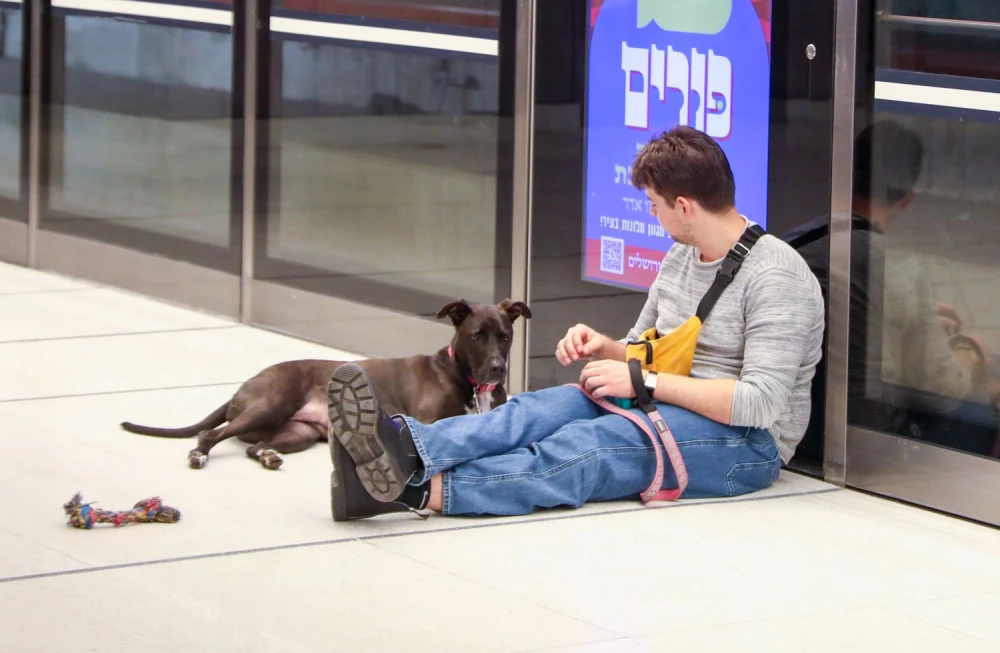
Tel Aviv: People take shelter at a metro station in Tel Aviv, Israel, Feb. 28, 2026. The Israel Defense Forces' Home Front Command has issued civil defense directives as air raid sirens sounded in multiple areas nationwide, urging residents to take shelter. The United States and Israel on Saturday launched "major combat operations" against Iran after the recent U.S.-Iran nuclear talks in Geneva failed to yield a deal to avert the crisis. (Xinhua via IANS)
In some cases, residents narrowly escaped tragedy. “Last night, none of us were here. We slept in another place, and in the morning we heard that the apartment had been destroyed,” another local said, standing near the ruins of what had been their home.
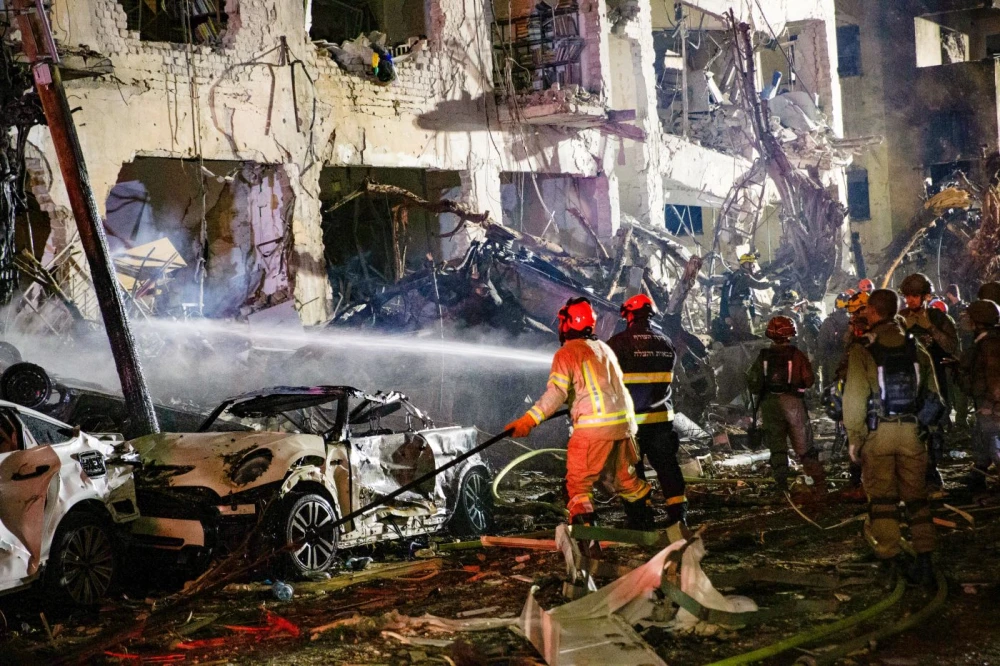
Tel Aviv: Members of the Israeli security and rescue forces work at the scene where a ballistic missile fired from Iran hit and caused damage in Tel Aviv, Israel, early on March 1, 2026.The United States and Israel on Saturday launched "major combat operations" against Iran, claiming that the country's Supreme Leader Ayatollah Ali Khamenei had been killed. Iran retaliated with a series of counterattacks against Israel and U.S. targets across the region. Late Saturday, at least 20 people were injured in Tel Aviv during Iran's latest round of strikes on Israel, Israel's national emergency service MDA reported. MDA said that a 40-year-old man is in a serious condition with a shrapnel wound. (Xinhua via IANS)
Buildings bore visible scars of the strikes, with broken windows, damaged facades and emergency crews surveying the aftermath. Despite the destruction, many residents expressed relief that there were no reported casualties in their immediate surroundings.
The scenes underscore the human cost of the escalating Israel-Iran conflict, as ordinary civilians grapple with fear, displacement and uncertainty while hoping for a swift de-escalation.