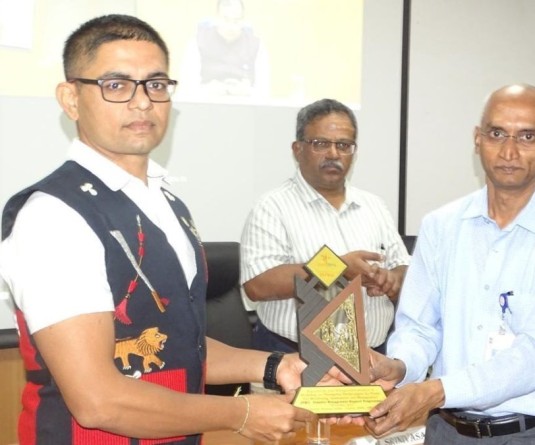
Kevile Dolie
Every year, when Independence Day approaches Nagaland, we are reminded of the generation that came before us. We raise our flags, remember their sacrifices and celebrate the identity they helped preserve. Their sacrifices deserve respect. Yet this year, I find myself asking an uncomfortable question: what happens when the generation that carried the struggle is no longer here to tell us about it?
No generation lasts forever. Those who experienced Nagaland’s liberation from British rule and the horrors of the Indo-Naga war that followed will one day no longer be here to tell their stories themselves.
Records and stories will remain, but knowing a history is not the same as living it.
For today's Naga generation, India has also been part of our entire lives. Our education, economy, documents, passports, travel and countless everyday connections are tied to it. We have grown up with people from different parts of India. They are not strangers to us, but classmates, neighbors, colleagues and sometimes even family.
At the same time, being so acquainted with India does not erase our own identity. We rub shoulders with India in every way, but we are Nagas by identity first, with our own history, culture and sense of belonging.
But then I find myself with a difficult concern. If the struggle continues for many more years, it is reasonable to ask: what does it ask of us? Young people also want education, work, economic security and the chance to build a good life. If independence remains illusive what future are we being asked to imagine? And if it came tomorrow, how would such a change affect the lives we have built with India?
These questions do not necessarily mean rejecting the past. They come from living in the present.
History shows that the meaning of freedom can change between generations. When India became independent in 1947, Jawaharlal Nehru described it as a moment when the country stepped “out from the old to the new.” Independence was not simply an ending; it was the beginning of new responsibilities.
South Africa offers another example. The generation born after apartheid became known as the “Born Free” generation. They did not experience apartheid themselves, yet they inherited its consequences. For many, freedom came to include not only political rights but also economic opportunity, equality and dignity.
Our situation is different. These examples cannot tell us what Nagas should do. But they remind us that every generation eventually has to decide what freedom means to it.
There is also another part of the past that we inherit: its pain.
We may not have lived through the war, but its grief can still reach us through family stories, memories and attitudes towards others. Remembering the past matters, but so does healing from it. Pain that is not transformed is pain that is transferred.
Perhaps this is the question I am left with this Independence Day: what do we owe to the struggle we inherited?
We cannot inherit the experiences of those who came before us. We can only inherit their memories, their hopes, their questions and, sometimes, their wounds.
Maybe our responsibility is to remember those things honestly while also being allowed to ask what they mean for our own lives.
The generation before us carried out the struggle.
Our generation must decide what to carry forward.