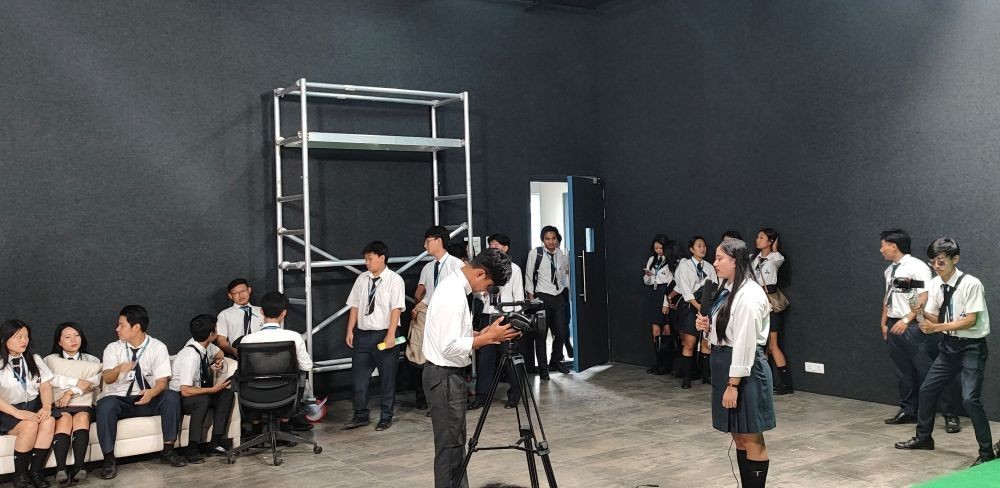
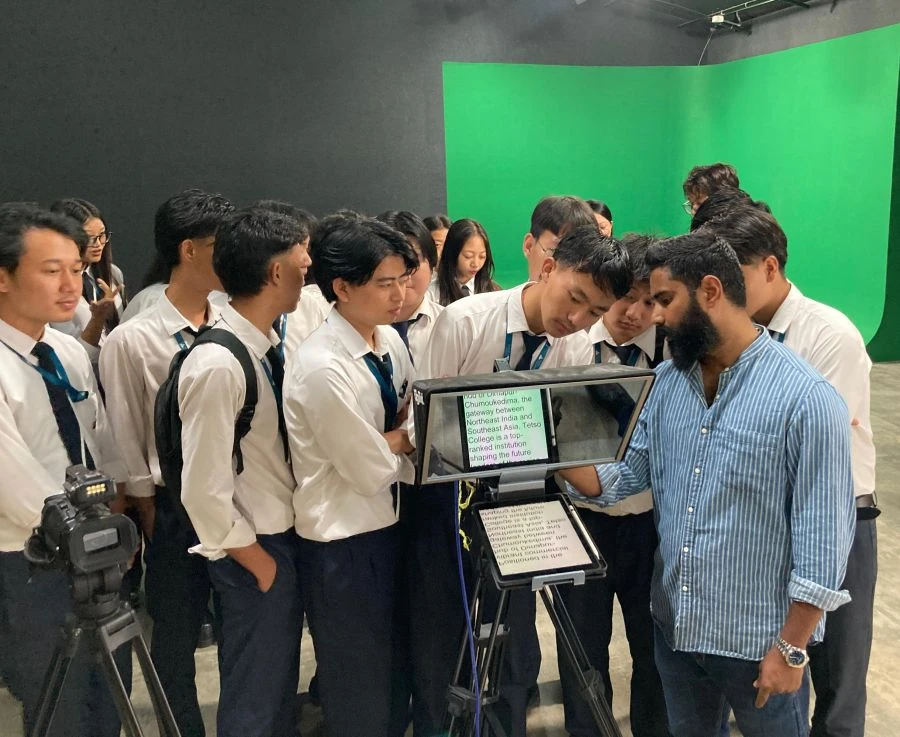
Mass Communication students of Tetso College during a practical class at Miyazaki Narrative Lab, Tetso College. (Photo Courtesy: Moarula Pongen)
Tianaro Aier
Dimapur | August 16
As journalism in Nagaland expands its role as a platform for public voice, it is drawing growing interest from students of Mass Communication, who see it as one of the most visible and influential career paths in the field, according to a recent independent survey undertaken by this writer.
The survey, conducted among fifth-semester Mass Communication students at Tetso College, Chümoukedima, sought to capture how aspiring media professionals view the current state of journalism in Nagaland and the changes they believe are needed for the industry to grow.
Ethics remain a concern
“The current state of journalism in Nagaland is yet to grow, but it is slowly growing,” a student stated adding that one of its weaknesses is “not following the ethics of journalism.”
Respondents observed the media in Nagaland as strong, trustworthy and hardworking, while acknowledging that credibility remains an area requiring constant attention. One respondent pointed out that while news is expected to be timely and reliable, “sometimes news may be presented in a non-accurate manner,” particularly in cases involving minor offences and matters requiring strict adherence to journalistic ethics.
The issue of citizen journalism was also raised. Respondents pointed out that “locals are covering up the hard news more than the reporters” and stated that although this is a positive initiative, such actions can violate the ethics of journalism and lead to unwanted consequences, particularly in situations involving sensitive issues.

From classroom to newsroom
While students expressed confidence in their academic knowledge, responses differed on whether classroom training alone is sufficient to prepare them for professional journalism.
One respondent admitted that they do not get enough “real-life practical experience” and access to equipment, while others observed that textbook and classroom teachings differ from real-life practices. They called for courses to be more relevant and updated in line with the current media industry.
However, some also felt that academic activities, internships and assignments had helped them develop relevant skills. One student said, “Yes, getting internship experiences, class activities, assignments, etc. provides an overview of what or how journalism takes place around the world.”
The gaps in coverage
Students also identified areas they believe require greater media attention, particularly governance and issues affecting vulnerable sections of society.
“Issues in the governance where the investigative journalism should be there,” one respondent said, arguing that stronger investigative reporting could reveal facts and demonstrate “the power of the media it holds.”

Another pointed to shortcomings in education, hospitality and road development, while referring to the landslide situation in Mon and the need for the government to take quick action.
Other issues identified by students included “education inequality between urban and rural Nagaland and disaster preparedness, human trafficking and unsafe migration.” According to the respondents, inadequate coverage of such issues can leave the public unaware of vulnerabilities and contribute to problems in the future, particularly among young people.
A call for a stronger media industry
“We need to change the mindset of the people first before changing how the media works,” a student said when asked what they would change in Nagaland’s media industry. The statement pointed to social judgement as a factor that can suppress new ideas and creative expression.
One respondent called for “more news media powerhouses and more growth of the media industry,” while another stressed the need for better working conditions, including “better pay and job security for journalists.” The same respondent also called for regular training in areas such as artificial intelligence, investigative journalism, cybersecurity and fact-checking. Ethical journalism also emerged as a recurring concern. One student said the industry needs to ensure that journalists understand “the ethics of journalism and respect the privacy of the citizens.”
Despite the concerns raised, the students largely viewed the future of journalism in Nagaland as significant, particularly as technology changes how people consume and produce news.
“Journalism in Nagaland is a voice for the people just as any journalism in any other place,” one respondent said. “This voice should be open for all the people, it should raise the concerns of the people and society.” The students also called for greater independence in journalism. “The roles should be more strong-headed, rejecting the interference and authority of the governance in the media industry,” one respondent said.
For the next generation entering the field, however, the changing media landscape presents opportunities adding that young people are increasingly aware of issues around them and willing to speak.
The writer is currently a B.A fifth-semester student in the Department of Mass Communication at Tetso College, Chümoukedima. This report is part of her one-month internship at The Morung Express.