Lithsa
Kiphire
How a rainy afternoon in Pungro, Kiphire in 2023, turned a simple conversation about children and learning into a library without walls — and eventually into national recognition.
The rain had been falling steadily over Pungro. The hills were wrapped in mist, the roads had grown quiet, and the grey afternoon seemed to have slowed the rhythm of the small town. However, Inside the Educational Block Resource Centre (EBRC) Pungro Office, a different kind of movement was taking place.
A group of development partners had gathered around a table to learn about the learning outcomes of students across Kiphire Aspirational District and its Khongsa Aspirational Block. Each person had brought something to the discussion — data, field observations and experiences from schools and communities, and, above all, a shared concern about how children were learning and what more could be done to support them. As the conversation continued over cups of tea, the discussion gradually moved beyond numbers and reports. The data on the table represented real children — their classrooms, challenges, aspirations and hopes for a better future. The question was no longer simply what the numbers showed, but what could be done differently to create better learning opportunities, particularly for children living in remote and difficult-to-reach area.
One concern stood out: Access to Books and Reading Materials!
For many children, especially in rural schools, a library is still imagined as a separate room filled with shelves and books. This led to a simple but powerful question: Does a library really need a room? The question changed the direction of the conversation. What if a library was not defined by four walls, but by access!
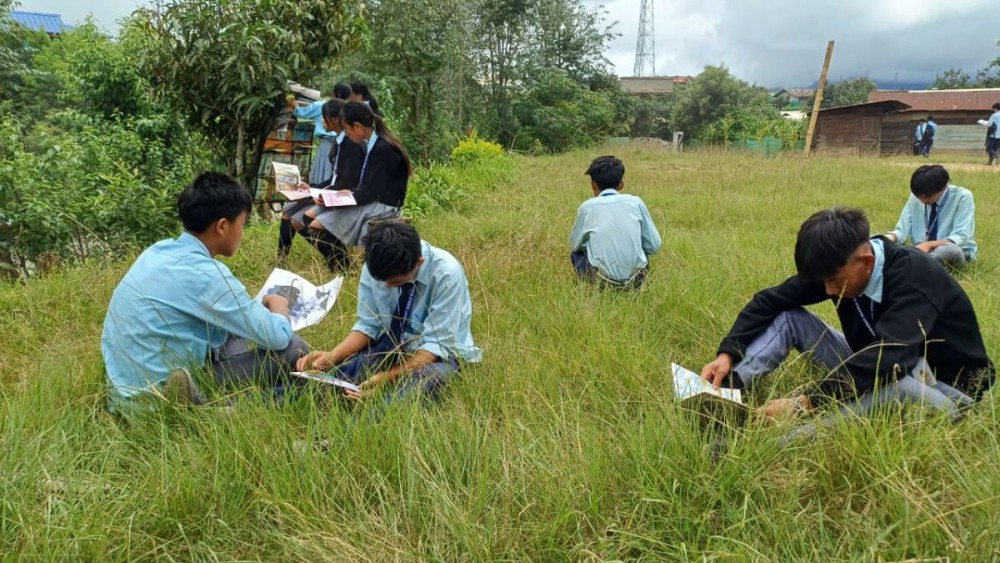
It was this simple shift in thinking that opened the way for the Hanging Library Initiative, spearheaded by Hanrenla K, Coordinator, EBRC Pungro Block. The idea was simple, practical and suited to the realities of the schools. Instead of waiting for additional rooms, expensive infrastructure or ideal conditions, books could be displayed and made easily accessible within classrooms and other appropriate spaces. Children could see the books, reach for them, choose what interested them and read in an environment that was already part of their everyday school life.
At its heart, the initiative asked a fundamental question: What can we do with what we already have? The answer was not to wait for perfect infrastructure, but to make better use of existing spaces and available resources.
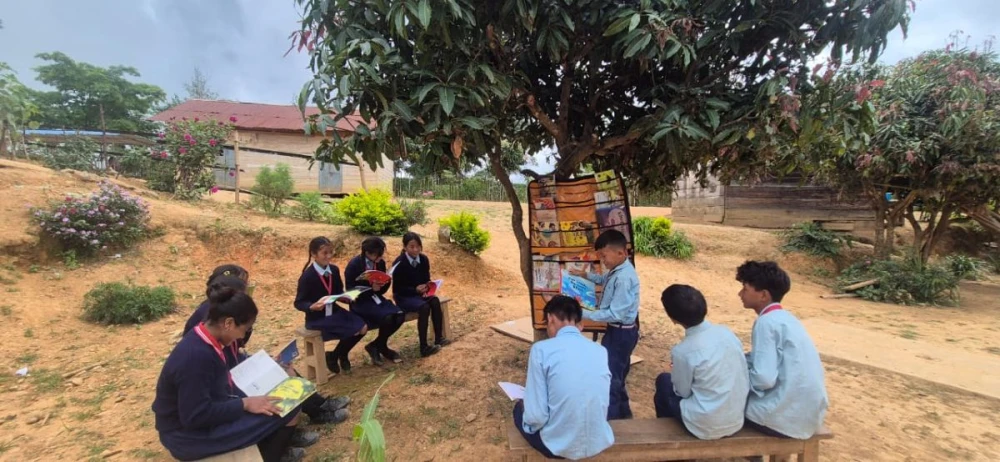
The initiative gained momentum as EBRC Pungro, Lihpikihna Foundation and Piramal Foundation came together, bringing different strengths to a shared educational purpose. Books and learning materials donated by BFA Noida added another essential element — the books themselves.
It was innovation shaped by necessity: not waiting for ideal conditions, but finding possibilities within existing circumstances. It was not simply about hanging books on walls. It was about making reading visible, accessible and inviting, while creating opportunities for children to explore, imagine, question and learn.
At the heart of the initiative was Hanrenla K, whose contribution went beyond developing an innovative idea. Her strength lay equally in her ability to recognize a challenge and think beyond conventional solutions. Her engagement with organizations, partners as well as schools, demonstrated an important leadership quality: the ability to connect people, ideas and resources.
She did not approach the challenge simply as a question of infrastructure. She saw an opportunity to rethink what a library could be and then worked to create the partnerships necessary to make that vision possible. Her contribution reflects the importance of both innovation and engagement in educational administration. An idea can begin with one person, but its impact grows when that person can inspire others to participate, contribute and take collective ownership.
In this sense, her role was not only that of an innovator, but also that of a bridge-builder, connecting institutions, development partners, schools and resources to address a shared concern for children’s learning.
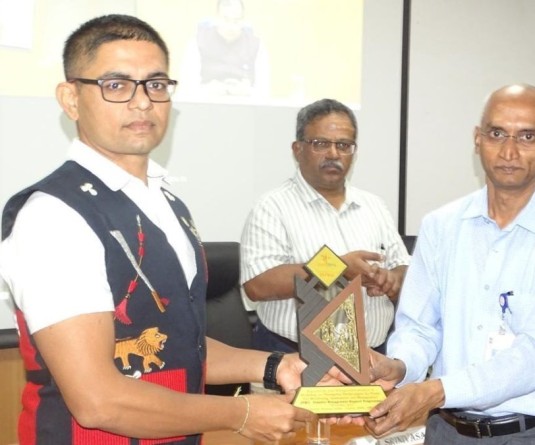
The journey eventually reached the national stage when Hanrenla K was conferred the prestigious “Award for Innovation and Good Practices in Educational Administration” by National Institute of Educational Planning and Administration (NIEPA), New Delhi
What makes the journey particularly significant is not only what Hanrenla created, but how she created it — by questioning conventional approaches, identifying possibilities within limitations, engaging partners and bringing people together around a common purpose.
The Award on the Wall, the Book in a Child’s Hands!
Perhaps that is what makes the story of the Hanging Library Initiative so powerful. It did not begin with a large building or a major infrastructure project; it began with people sitting together, looking at data, sharing observations and asking what more could be done for children. In two phases of the initiative, 11 government schools under Pungro block have now Hanging Library impacting over 700+ children.
The significance of the initiative reminds us that educational innovation can emerge from the realities of a place, that partnerships can turn ideas into action, and that even in remote area, small changes in the way resources are made available can open new possibilities for children.
Perhaps, on another rainy afternoon in Kiphire, somewhere another conversation will begin. Because change does not always announce itself. Sometimes it begins with a question, grows through partnership and takes shape when an old problem is viewed in a new way.
And sometimes, all it takes is a cup of tea.