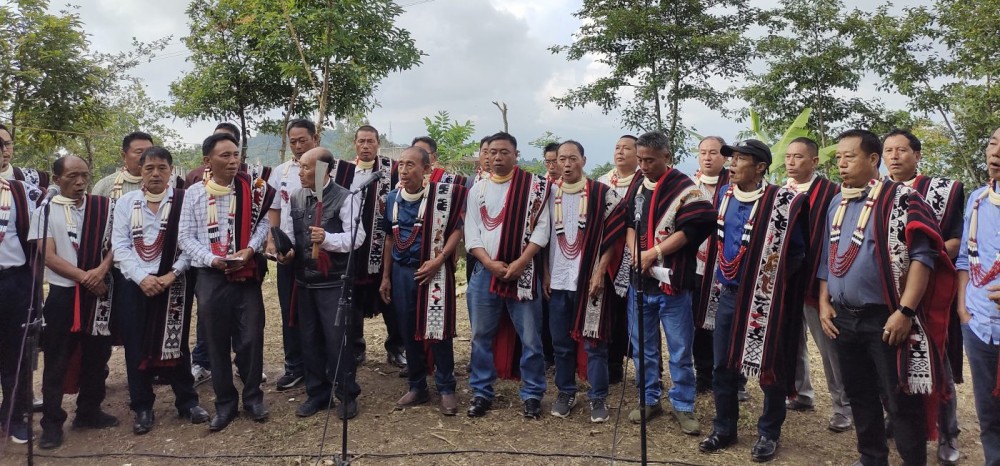
Yimyu Ward Executive Committee members perform the ‘Naga Freedom Song’ (Naga Nüjiso Ken), originally sung during the 1965 Indo-Naga Peace Talks at Khensa village, during the 63rd Indo-Naga Ceasefire Day commemoration at the village on September 6. (Morung Photo)
Morung Express News
Mokokchung | September 6
Sixty-three years after the Indo-Naga ceasefire was declared, questions over what it was intended to achieve and why a lasting political settlement remains elusive were brought back into focus at the historic Peace Talk Camp at Khensa, Mokokchung, on Sunday.
The 63rd Indo-Naga Ceasefire Day and Nagaland Peace Day were commemorated at Khensa, a site where three rounds of peace talks were held in 1965 following the 1964 ceasefire.
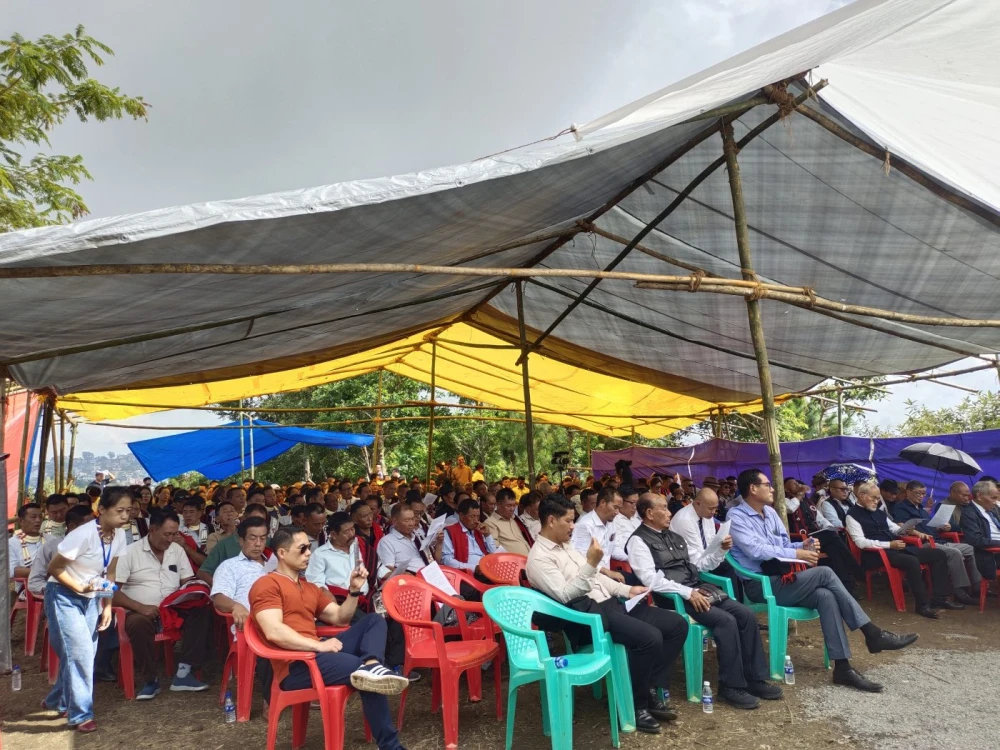
The programme brought together church leaders, representatives of the Naga national movement, village representatives and others to reflect on the ceasefire and the continuing search for peace.
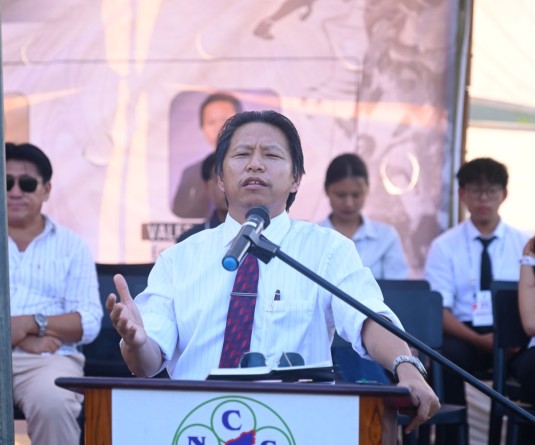
For Rev P Longri Longchar, an emissary associated with the 1965 Indo-Naga peace talks at Khensa, the ceasefire emerged from a period marked by bloodshed and violence. Speaking during a session titled “Remembering 1965 Indo-Naga Peace Talk, Khensa,” Longchar recalled the circumstances surrounding the peace initiative and the need to move away from violence towards dialogue.
The significance of the ceasefire, however, remains contested.
Speakers at Sunday’s commemoration presented differing aspects of the same unresolved question: whether the political conflict can ultimately be addressed without confronting its historical roots and the competing positions of India and the Naga national movement.
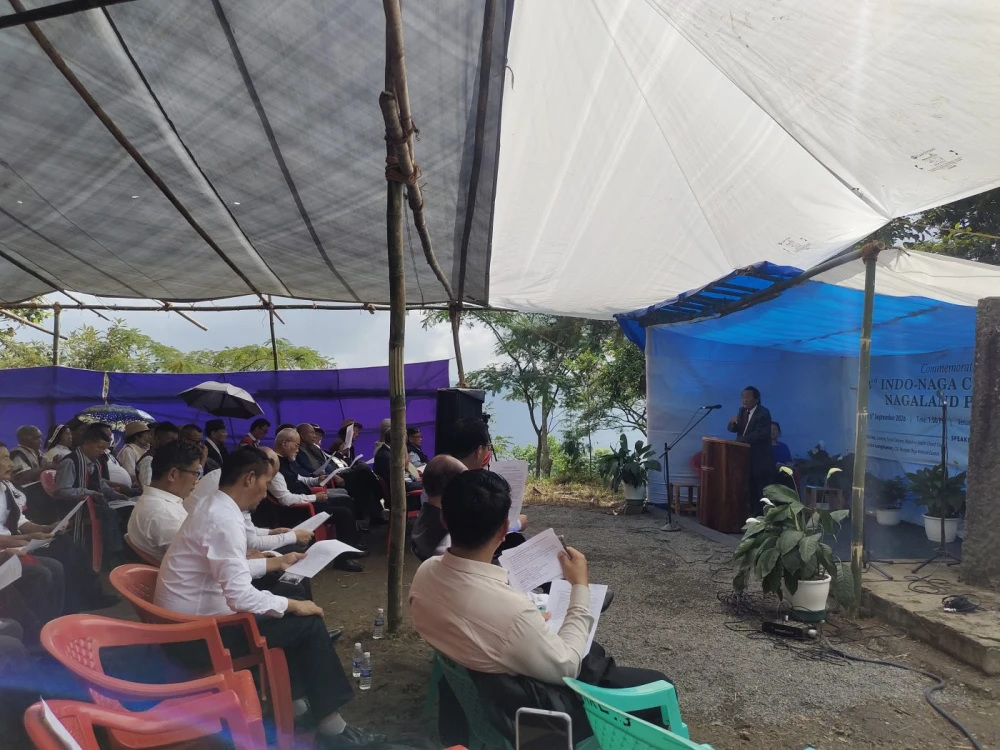
Takuyaba Longkumer, Central Executive Committee member of the Naga National Council, reiterated the Naga national position on sovereignty and independence.
Referring to the 1964 ceasefire, he argued that it remains the central agreement in the Naga political position and maintained that the issue must be addressed through political dialogue.
Kezha Angami, Kedahge of the Federal Government of Nagaland, similarly framed the 1964 ceasefire as an acknowledgement that military force could not resolve the Indo-Naga issue. He called for dialogue, truth, cooperation and reconciliation, while stressing the importance of strengthening traditional village institutions and addressing divisions within Naga society.
Meanwhile, Dr Villo Naleo, Secretary of Social Concern, Nagaland Baptist Church Council, said the Church’s responsibility should extend beyond calling for an end to violence to actively building reconciliation.
Drawing from the biblical vision of nations turning away from war, he said peace begins when disagreements are no longer settled through violence.
“Ceasefire must lead us to a just peace,” Naleo held, arguing that the Naga political question could not be resolved simply through administration, military strength, economic packages or the passage of time. It required political will, dialogue, truth, justice and reconciliation, he said.
The commemoration also sought to reconnect the present generation with the physical and historical legacy of the 1964-65 peace process.
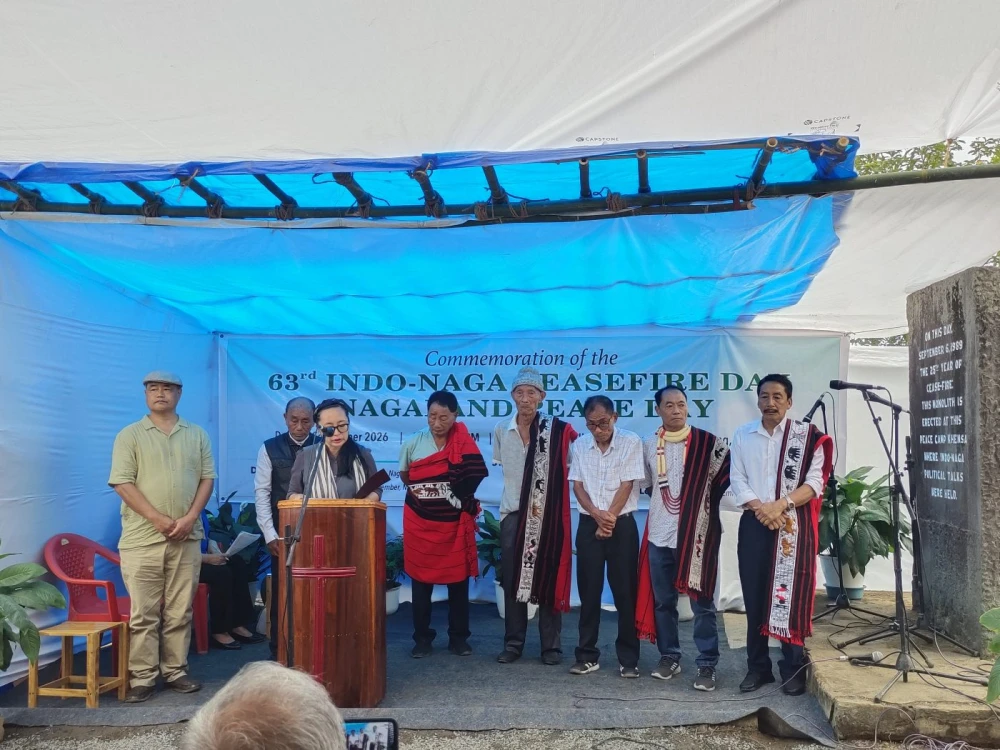
A highlight of the programme was the formal recognition of the land gifted by descendants of the Leubaza clan at Yimyu Tenem, Khensa.
According to the statement presented at the programme, Mapukaba, Merenmayang, Temsunungba and Pangertoshi Leubaza donated their clan heritage land to the Naga people on September 6, 1964, following a request from representatives of the Federal Government of Nagaland.
Recalling the 1964 ceasefire and the 1965 peace talks at Khensa, speakers said the political issues that led to the ceasefire remained unresolved and continued to require dialogue and a peaceful settlement.
The programme also featured the Naga Freedom Song (Naga Nüjiso Ken), which was sung by Khensa students during the 1965 peace talks and was presented again during Sunday’s programme.
Longchar, who was entrusted with composing and teaching the song to the students at the time, led the song.