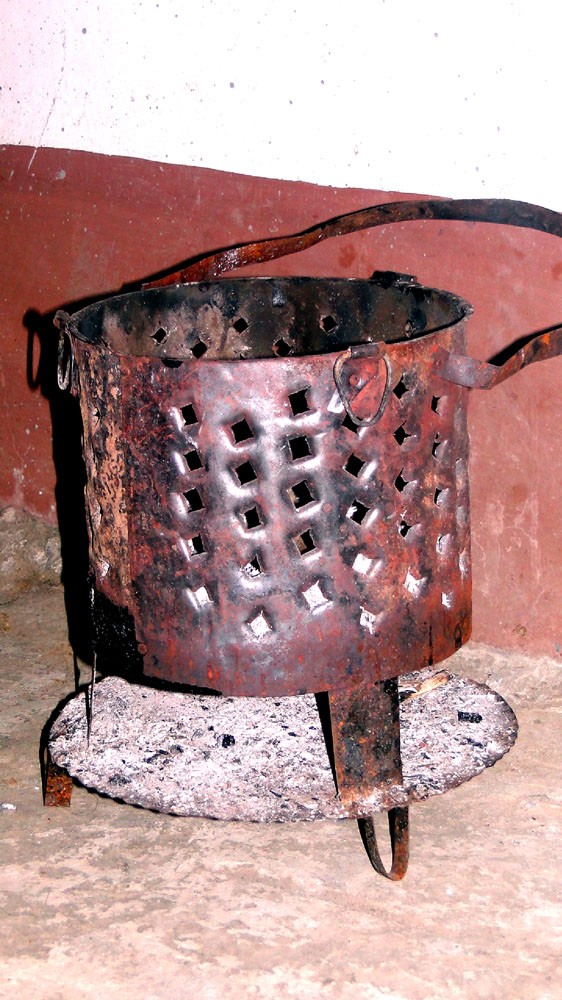
A Local Charcoal Grill / Chulha used for room heating using charcoal.
Issued by Nagaland Pollution Control Board
During the cold weather we burn charcoal to keep us warm. However, some precautions has to be taken to prevent accidents besides causing fire hazards. When we burn charcoal carbon monoxide is released; which is dangerous for our health. When asphyxiation is detected as the cause of death, as reported in the local dailies on 6th January 2012 being the cause of death of the four youths at the Indira Gandhi Stadium, Kohima, this means that the body suffocated from being with held oxygen for a limited amount of time. This can happen when strangulated or the air is deprived of oxygen by emitting other gases such as carbon dioxide and carbon monoxide.
What is Carbon Monoxide (CO) and the dangers associated with it:
Carbon monoxide is a colorless, odorless, tasteless and toxic gas produced as a by-product of combustion. Any fuel burning appliance, vehicle, tool or other device has the potential to produce dangerous levels of carbon monoxide gas. Examples of carbon monoxide producing devices commonly in use around the home in Nagaland may include: Fireplaces and woodstoves, Charcoal grills / Chulha, Automobiles.
There are many dangers associated with carbon monoxide, some of which are short term problems and some of which can be permanently damaging or even fatal. Carbon monoxide poisoning can come about through a number of sources, and these can be everyday items and appliances sued within the home or at work.
Once carbon monoxide has been breathed in, it replaces the oxygen in the blood, thus killing off cells and starving vital organs of oxygen. One of the dangers of carbon monoxide poisoning is death. A large enough dose of this odourless, colourless and tasteless gas can kill within minutes.In fact, people die every year from carbon monoxide poisoning without ever knowing what hit them. They simply slip in to unconsciousness and never come around, or they may already be asleep when they breathe in the carbon monoxide and simply never wake up again. Smaller doses of carbon monoxide poisoning can cause a range of symptoms and problems, and depending on how often the CO is breathed in and at what levels, can cause both short term and long term damage.
One of the dangers associated with the short term symptoms of carbon monoxide poisoning is the non-specific nature of the symptoms, which can often resemble flu.This means that the sufferer can often go on breathing in carbon monoxide, which can then lead to either long term or permanent damage, or death. The long term dangers associated with carbon monoxide can be devastating and can affect the rest of your life. Carbon monoxide can result in brain damage, heart problems, major organ dysfunction, memory or cognitive problems, behavioural and personality changes and a range of other permanent problems.
The dangers of carbon monoxide can arise both in the home and the work environment, and many people are affected by these dangers simply through lack of knowledge and vigilance. There are many ways in which you can reduce the risks of carbon monoxide exposure, but these dangers often get the better of people who have no idea what the signs are, how to aid prevention, how to treat symptoms and what the causes of the carbon monoxide pollution are. Carbon monoxide is a silent and deadly danger, and takes thousands of lives all around the world each year. The sad thing is that many carbon monoxide related deaths could have been avoided with some basic precautions and a little vigilance. However, the fact that this gas is practically undetectable to the general public, along with the fact that the symptoms of carbon monoxide poisoning are so non-specific can contribute to the level of danger that this gas carries. It is important to remember that learning more about the dangers of carbon monoxide can go some way towards helping you to avoid these dangers, or take appropriate action should you be affected by this gas. This in turn could help to prevent serious and long term damage, and could even help to save lives. Thinking about it now and acting to prevent the risks of carbon monoxide poisoning may save your life and the lives of those around you,The following tips for preventing carbon monoxide poisoning:
• Never leave a vehicle engine running in an enclosed garage.
• Portable flameless chemical heaters should never be used indoors. Although they don't have a flame, they can release carbon monoxide.
• Charcoal grills / chulha should not be used indoors without sufficient ventilation.
• All gas appliances must be properly vented to prevent carbon monoxide buildup indoors.
• Make sure your fireplace flue is open when you have a fire, and get your chimney checked and cleaned annually.
Medical Effects of Carbon Monoxide:
Carbon monoxide inhibits the blood's ability to carry oxygen to body tissues including vital organs such as the heart and brain. When CO is inhaled, it combines with the oxygen carrying hemoglobin of the blood to form carboxyhemoglobin (COHb). Once combined with the hemoglobin, that hemoglobin is no longer available for transporting oxygen.How quickly the carboxyhemoglobin builds up is a factor of the concentration of the gas being inhaled (measured in parts per million or PPM) and the duration of the exposure. Compounding the effects of the exposure is the long half-life of carboxyhemoglobin in the blood. Half-life is a measure of how quickly levels return to normal. The half-life of carboxyhemoglobin is approximately 5 hours. This means that for a given exposure level, it will take about 5 hours for the level of carboxyhemoglobin in the blood to drop to half its current level after the exposure is terminated.
IMPORTANT NOTICE: Nothing on the this article should be taken as either medical or legal advice, but instead should act as a useful resource in providing general information that may be useful to the general public.