The Nagaland Civil Service (NCS) Probationers of the 2025 Batch with the Comptroller and Auditor General of India, K Sanjay Murthy, and senior officers of the CAG office.
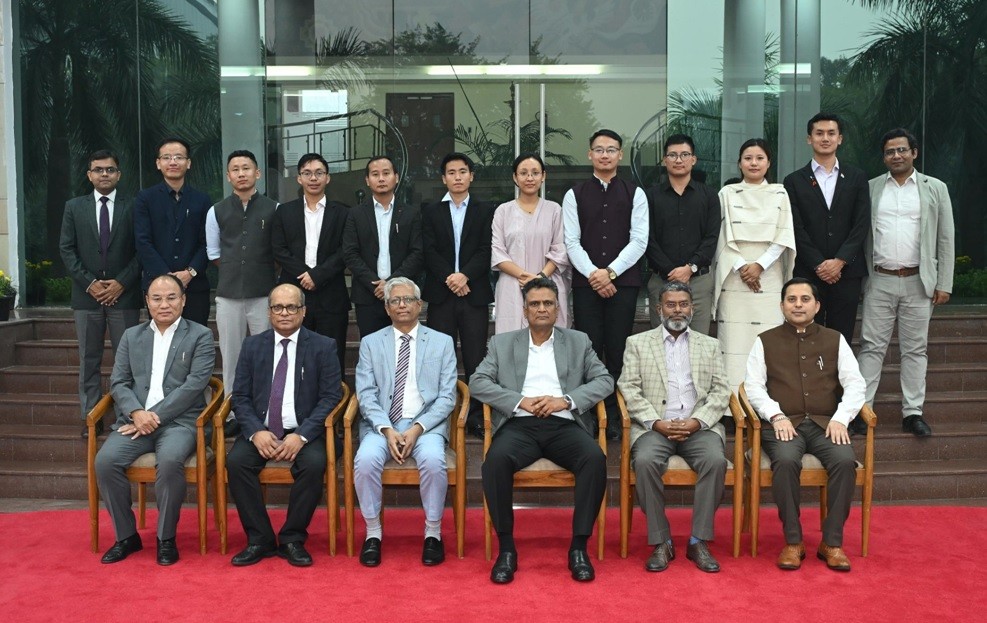
New Delhi, November 13 (MExN): Nagaland Civil Service probationers visited the Office of the Comptroller and Auditor General (CAG) of India, New Delhi on Thursday as part of their Bharat Darshan programme, engaging with one of the country’s foremost constitutional institutions.
The two-hour programme commenced with a welcome address by the Deputy Comptroller and Auditor General (HR, Legal, Coordination and Defence), who congratulated the probationers and extended his best wishes for their careers in public service, stated a press release.
Highlighting the institutional breadth and uniqueness of the CAG, he underscored its mandate across all three tiers of government. He encouraged the probationers to view audit from a broader perspective, emphasising the need to regard auditors as partners and friends in governance, as the institution increasingly seeks to reposition itself as a constructive partner to the executive in strengthening public administration.
This was followed by a detailed presentation on the constitutional and statutory mandate of the CAG of India by the Director, PPG. The presentation covered key provisions of the Comptroller and Auditor General's (Duties, Powers and Conditions of Service) Act, 1971, and elaborated on the institution's role in ensuring accountability, transparency and fiscal discipline in the management of public resources. It was emphasised that the purpose of audit extends beyond ensuring that public money is properly accounted for to examining whether it has been utilised economically, efficiently and effectively.
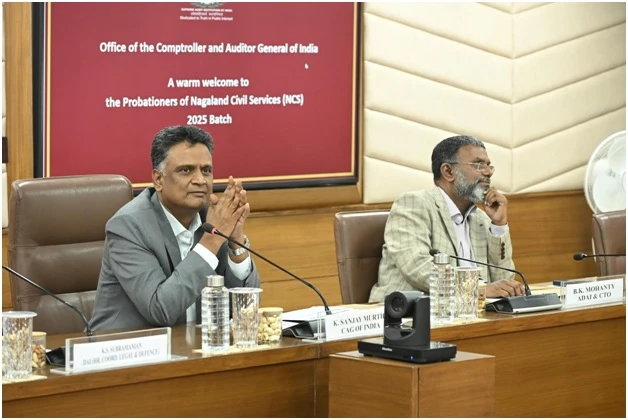
A subsequent presentation by the Director (SMU and Coordination) highlighted the CAG's recent initiatives and its ongoing institutional transformation, anchored on four key pillars: stakeholder engagement, digital transformation, national alignment and capacity building. The probationers were introduced to emerging audit practices, including GIS-based audits, and OIOS (One IAAD One System), a workflow-based IT platform designed to streamline the entire audit lifecycle. These initiatives reflect the institution's growing emphasis on technology-driven, data-informed and efficient audit processes. The presentation also highlighted the development of an indigenous Large Language Model (LLM) by the CAG in collaboration with IIT Madras, under its India-specific Audit AI initiative, including its proposed application in assessing the Ease of Living Index.
The programme culminated in an interaction with the Comptroller and Auditor General of India, Sanjay Murthy, who shared his insights on the evolving landscape of public administration and the importance of embracing technological advancements. He encouraged the probationers to remain tech-savvy, open to innovation and adaptable to emerging tools and technologies, while maintaining a strong commitment to institutional accountability and public service.
The interaction provided the probationers with valuable insights into the critical role of public audit in strengthening governance and safeguarding public resources. It also reinforced the importance of fostering a constructive relationship between the executive and audit institutions, founded on mutual trust, transparency and a shared commitment to better public service delivery.