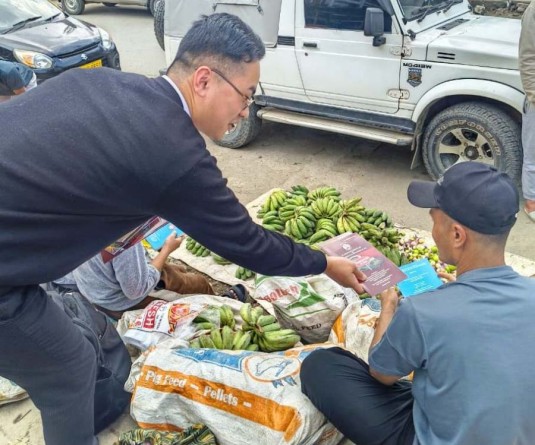
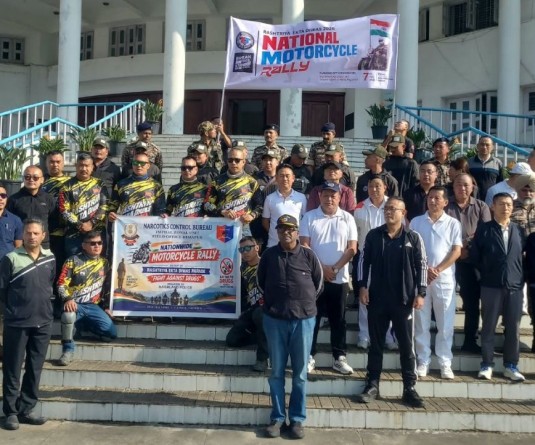
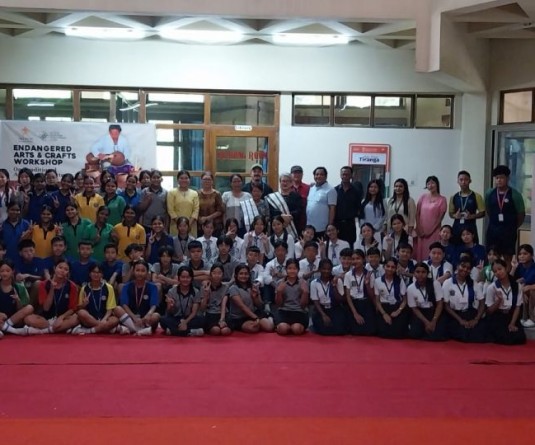
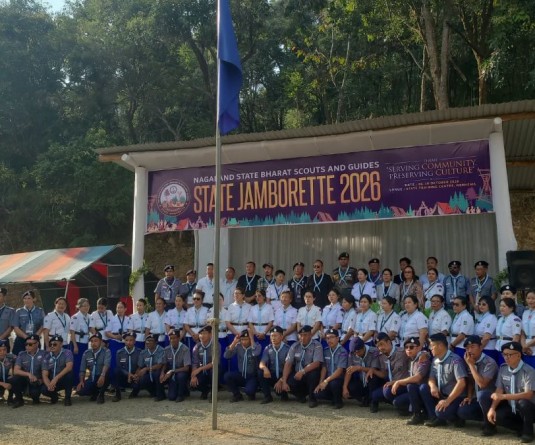
Wildlife Week 2026 brings together various stakeholders in Longleng for knowledge exchange on biodiversity conservation. (Photo Courtesy: LEMSACHENLOK)
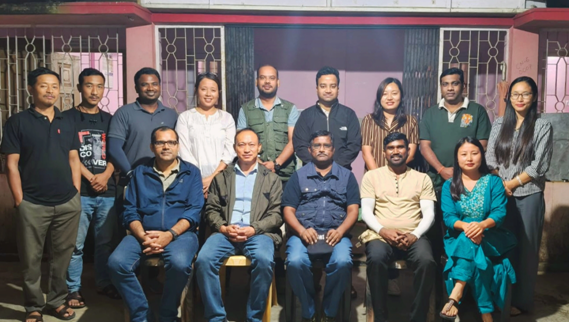
Longleng, October 7 (MExN): Gaps in biodiversity documentation and the need for stronger community participation in conservation were highlighted during a knowledge exchange between LEMSACHENLOK and a team from the Zoological Survey of India (ZSI) as part of Wildlife Week 2026 in Longleng on October 5.
The ZSI team, led by Dr D Suresh Chand, Senior Scientist-E, held discussions with LEMSACHENLOK on the status of wildlife in Nagaland, particularly the need for systematic documentation and field-based research in less-explored areas of Longleng district.
The discussions highlighted the need to strengthen Nagaland’s faunal database, particularly on mammals, birds and other vertebrate groups. While existing scientific information could support local conservation initiatives, participants noted that significant knowledge gaps remain in areas that have not been adequately surveyed.
The participants also stressed the role of communities and Village Councils (VCCs) in facilitating biodiversity research and conservation in community-managed landscapes. Researchers seeking to conduct field studies or collect specimens were urged to follow appropriate procedures and obtain necessary permission from the concerned community institutions.
Strengthening People’s Biodiversity Registers (PBRs) at the community level was identified as another priority. Participants said PBRs could document locally observed species along with information such as the observer, date and location, photographs, habitat and vegetation type, thereby creating records of local biodiversity and traditional ecological knowledge.
The discussions also touched on the changing relationship between communities and wildlife, with participants noting a gradual shift from traditional hunting practices towards greater awareness of biodiversity conservation.
LEMSACHENLOK highlighted the need to expand research beyond commonly studied species to include other vertebrate groups, microorganisms and wetland ecosystems, including the identification and documentation of larger water bodies and wetlands requiring conservation attention.
The ZSI team expressed willingness to support LEMSACHENLOK through knowledge sharing, technical guidance and capacity building in biodiversity documentation and data collection. Collaboration among scientific institutions, universities, NGOs, communities and government agencies was identified as important for improving biodiversity information and conservation efforts.
Separately, LEMSACHENLOK led by Y Nuklu Phom and Kalpavriksh, Pune, Neema Padak Broome held a community stakeholders’ discussion on the “Territories of Life” Self-Strengthening Support Programme, focusing on community-led biodiversity mapping, protection of biocultural heritage and Indigenous knowledge systems.
The discussions also explored linking local conservation initiatives with the Sustainable Development Goals (SDGs) and Kunming-Montreal Global Biodiversity Framework (KM-GBF) targets, inforemed a press release from the LEMSACHENLOK.