Residents in Zunheboto town have raised concerns over persistent mobile and internet connectivity issues.
Tokavi K Zhimo
Zunheboto | November 22
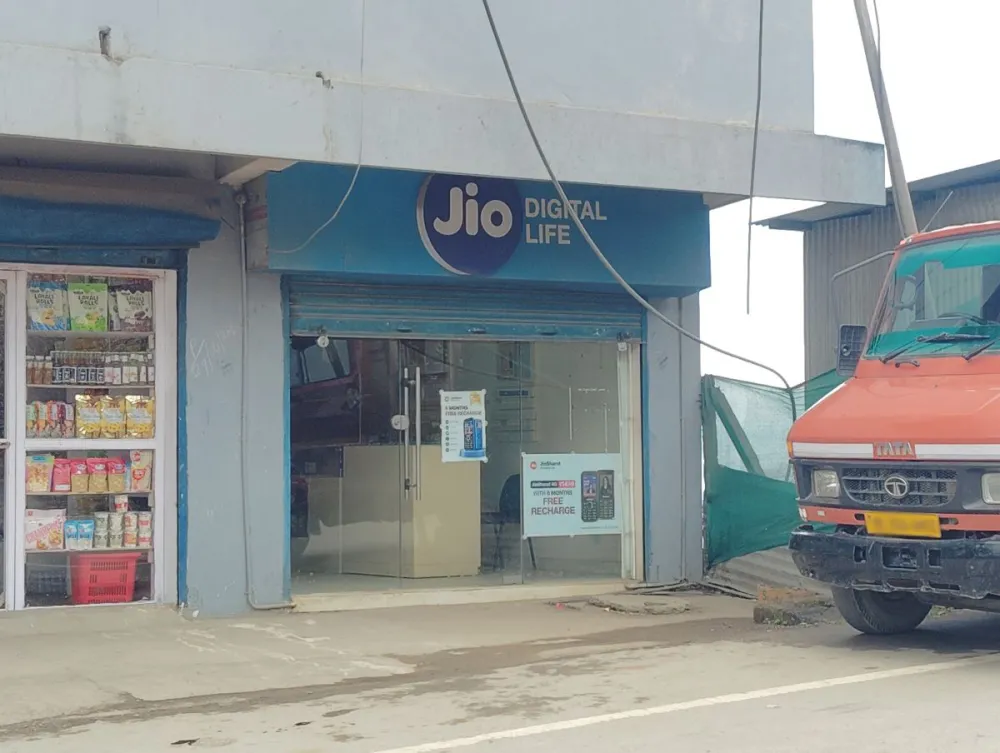
Persistent complaints over unreliable mobile connectivity in Zunheboto town have raised concerns over the quality of telecom services, with subscribers across different operators reporting frequent call disruptions, slow internet speeds and difficulties accessing essential online services. While several complaints have been directed at Jio, users of Airtel and BSNL have also reported connectivity problems, pointing to wider concerns over network reliability in a town where residents increasingly depend on mobile services for communication, education, professional activities and digital transactions.
One subscriber said poor connectivity had prompted him to stop recharging his Jio SIM and switch to Airtel. “Poor network! I no longer recharge my Jio SIM. Instead, I prefer Airtel, which I use daily,” he said.
Another subscriber questioned the gap between the promotion of 5G services and the actual experience of consumers. “The network of so-called Jio 5G is a nuisance. At my residence, it does not even support 4G properly. I hardly use Jio now and prefer other alternative networks,” the subscriber said.
A senior district-level administrator using both Airtel and Jio said Airtel was generally preferred for its comparatively consistent connectivity, while Jio was used only occasionally. The administrator also pointed to the need to promote BSNL as a government-owned operator, but said reliability remained a concern. “Being a government-owned service, we should promote BSNL, but reliability is equally important,” the administrator observed, adding that Airtel connectivity was not always consistent either.
A BSNL subscriber reported that the network frequently remained in emergency mode, making even important calls difficult. Although some improvement had been noticed during the current year, the subscriber said connectivity continued to deteriorate during the rainy season and even in light fog.
Consumers also pointed to the financial burden of maintaining multiple SIM cards to ensure uninterrupted communication. One Airtel user said ordinary subscribers could not always afford to recharge two connections simply to compensate for unreliable services. Even disruptions lasting five to six hours, once or twice a month, could create difficulties for people relying on a single operator for personal and professional commitments.
The concerns extend beyond mobile connectivity to broadband services. A media professional described his experience with Jio's mobile network as “very pathetic”, saying he had stopped subscribing to its mobile plans despite using a dual-SIM phone with Airtel and Jio connections. He said Airtel remained his preferred option for internet access, although network reliability continued to be a concern.
He said his professional responsibilities required consistent internet connectivity, particularly for transmitting high-resolution photographs and videos and completing time-sensitive digital assignments. His office had used Symbios, a Nagaland-based private Wi-Fi service provider, for nearly two years before switching to Jio AirFiber in October 2026, expecting better service given its location in central Zunheboto town. However, he alleged that the new connection performed considerably worse than expected.
Despite repeated requests for technical assistance, he said technicians acknowledged the problems over phone calls but did not visit the office to resolve them. Following the lack of satisfactory response, he submitted a written complaint to the Jio service manager in Zunheboto district on November 7. The complaint was subsequently forwarded to the Deputy Commissioner for intervention.
According to him, the district administration, acknowledging the impact of poor connectivity on teachers, students and the general public, wrote to the company on November 9, seeking resolution of the issues within seven days of receipt of the communication. However, as of November 20, no response had reportedly been received by the administration.
Unable to continue with the service, he eventually switched back to Symbios, which he said had become comparatively more reliable. The Jio AirFiber equipment, he remarked, was now merely hanging on his office wall as a decoration.
Highlighting the implications for journalism, he said news organisations operate under strict deadlines, with reports, photographs and videos often required to be transmitted, edited and published on the same day. “We are a media profession. If you are late, even by one minute, you are late. Time does not wait for you, and we always run on deadlines,” he said, adding that unreliable internet services could delay the transmission of news materials and affect timely reporting.
He also questioned the introduction of 5G services when basic 4G connectivity remained inconsistent in parts of Zunheboto town. Citing information gathered from sources within the telecom sector, he claimed that subscribers in several outlying areas of the district were reportedly receiving satisfactory services, while complaints from the town persisted.
He suggested that Jio consider establishing a dedicated telecom tower in Zunheboto town to strengthen its infrastructure and improve service delivery. “We are paying for the service. We are paying customers, and we have to get the services we are paying for,” he asserted.