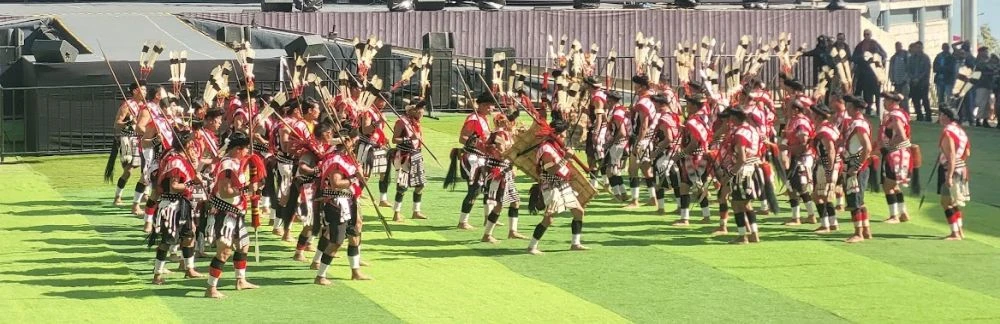
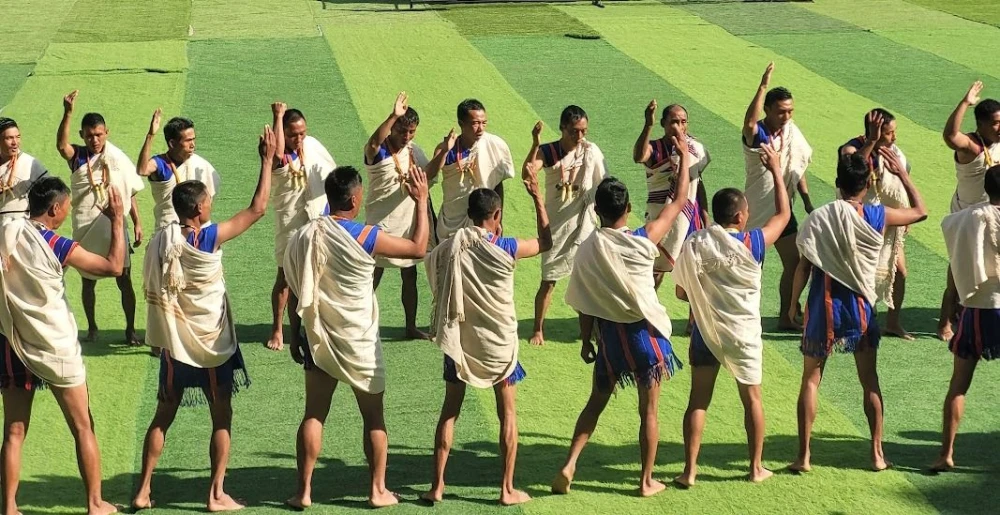
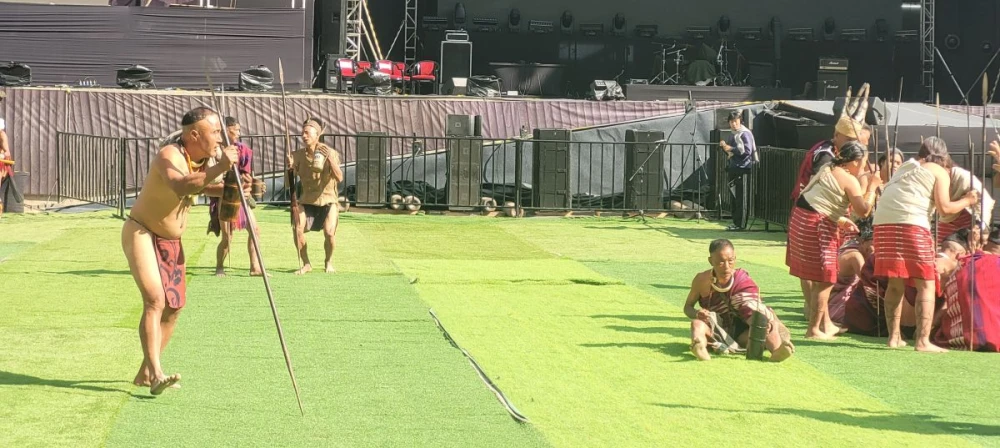
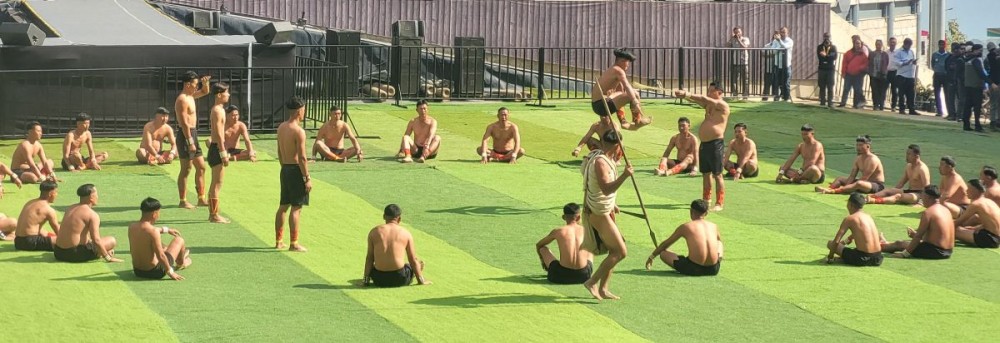
Cultural troupe on Day 3 Cultural show of Hornbill Festival at Kisama on December 3. (Morung Photo)
Our Correspondent
Kohima | December 3
The “Cultural Connect” in its third day, brought by Department of Art & Culture, today showcased the colourful cultural dances, folk songs and traditional practices of the various Naga tribes at Kisama.
The Samziuram cultural troupe representing Zeliang tribe performed Akoina Lin, a lively folk dance presented during large gatherings, especially by the youth. The performance symbolised merrymaking and compared the dancers to falcons and butterflies.
Thanamir Thriintsenpong Cultural representing Yimkhiung tribe presented “Kha Kiaklak Rhimo (Demonstration).
Ghokimi Cultural Society representing Sumi tribe showcased Akikiti, a traditional kick-fighting sport performed within a circular ring.
A folk song called “Shangrü Thsaba Khi” was performed by Chungtor Cultural Club , representing Sangtam tribe.
Tseminyu Village Cultural Troupe, representing Rengma tribe presented Künyeün, a war dance of the Ngada Festival.
Kamaleah Area Public Organization representing Pochury tribe performed Küzhegwi, a ritual chant by elders reminding villagers to strictly adhere to customs to prevent natural calamities.
Pongching Biihii Cultural Society, representing Phom tribe showcased Ho Ho Shou, the song of origin and migration, recounting the ancestral journey from “Entolok” to “Laimeisham.”
N-Longidang Vilage Youth Cultural Club representing Lotha tribe performed Myingthung Sharü, a Dance of Praise, traditionally presented to welcome a new village chief.
Songihuh village, representing Kuki tribe performed Lenchonghoi La, a folklore recounting the tragic abduction of Lenchonghoi by Khalvompu.
Chi Guhching Village Cultural Troupe representing Konyak tribe presented Gan-rin Boa, a war-footing song performed before battle, involving rituals, dance and oath-taking, symbolising unity, bravery and readiness for combat.
Mech Kachari Cultural Troupe representing Kachari showcased Bagurumba, the iconic butterfly dance performed by Mech Kachari women. Celebrated for its grace and beauty, the dance promotes virtue, character and harmony with nature.
Khiamniungan Cultural Troupe from Noklak Town performed Beoyam Kinya, a harvest demonstration reflecting the joy, relief and communal unity during harvest season.
The Garo cultural troupe from Dubagoan village presented the Quarrel Dance, depicting a symbolic conflict between the Sangma (intelligence) and Marak (power) clans. Rituals with sword and shield precede the performance, followed by a celebratory dance symbolising restored peace.
Uphai Cultural Troupe representing Chang tribe performed Khuyubü, a traditional wrestling sport historically held during festivals, where champions were honoured with a traditional hat known as Helikhun.
Thiivopisiimi cultural troupe representing Chakhesang tribe showcased Süte Li, a millet cultivation song sung during fieldwork as millet serves as an essential early-season crop.
Rejusanger Cultural Troupe of Siingratsii, representing Ao tribe presented Keyi Asahba Yimya (The Tiger’s Hunt), highlighting the historical necessity of tiger hunting to protect livestock and communities, and its transformation into folklore and dance.
SAPO Cultural Troupe, representing Angami tribe performed Lübo–Tati. Traditionally played during social visits and gatherings, it reflects the musical heritage of the Angami people.
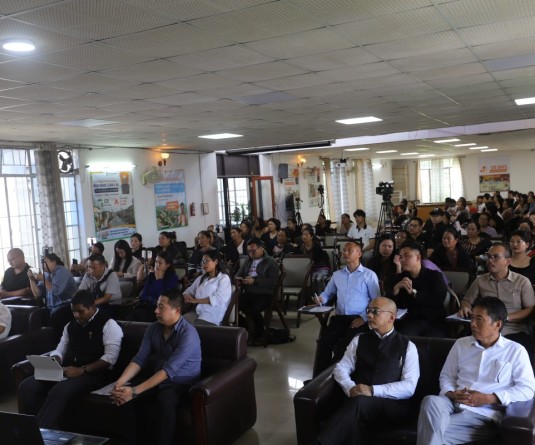
Earlier, today’s cultural show was graced by Deputy Chief Minister Y. Patton and Food & Civil Supplies and Legal Metrology advisor K. Tokugha Sukhalu as host and co-host respectively.
The special guest included; Jigme Thinlye Namgyal, Consult General, Embassy of Bhutan, Lt. Gen. Mohit Wadhwa, SM, GOC 101 Area and Simon Lee Broughton, Founding Editor of Songlines.