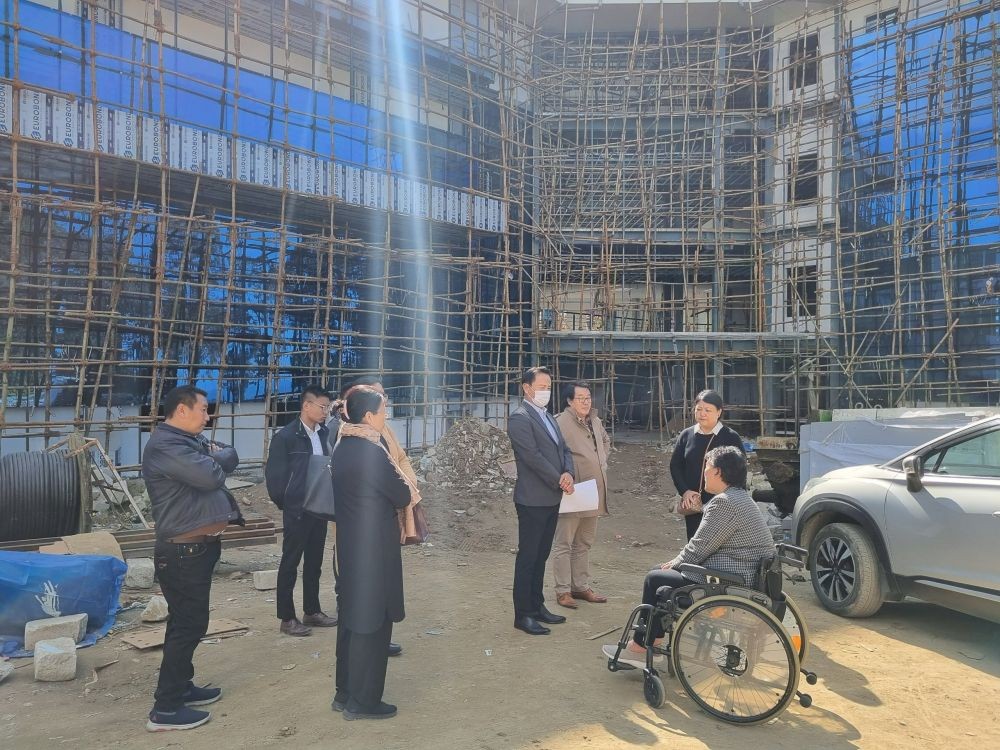
SCPD Nagaland inspected key Kohima Smart City projects on November 26, 2024, to ensure adherence to mandated accessibility specifications. (File Photo)
Lenni Samuel
Dimapur | June 20
Diethono Nakhro, former State Commissioner for Persons with Disabilities in Nagaland, has spent nearly two decades challenging the very foundations of how disability is being misunderstood. As a pioneer of the disability rights movement in the region and the state’s first disability self-advocate, Nakhro has pushed for a fundamental shift in perspective: away from viewing disabled people as recipients of charity and toward recognizing them as equal citizens with inherent rights and leadership potential.
Nakhro has received multiple awards for her advocacy work. She was conferred Kevichusa Citizenship Award (2020) for her consistent efforts in championing the rights of persons with disabilities (PwD) and the common good. In 2019, the Classic Club in Kohima presented her with Classic Award for her outspoken and resilient activism in the disability rights movement. Earlier, in 2015, she received the NCPEDP-Lemon Tree Helen Keller Award under the ‘Role Model Disabled Person’ category from National Centre for Promotion of Employment for Disabled People (NCPEDP).
In an interview with The Morung Express, Nakhro discusses the pervasive stigma that remains the greatest barrier to inclusion, the yawning gap between progressive policies and their implementation on the ground, and why true accessibility extends far beyond the construction of poorly designed ramps.
Could you kindly introduce yourself and share a brief background of your work?
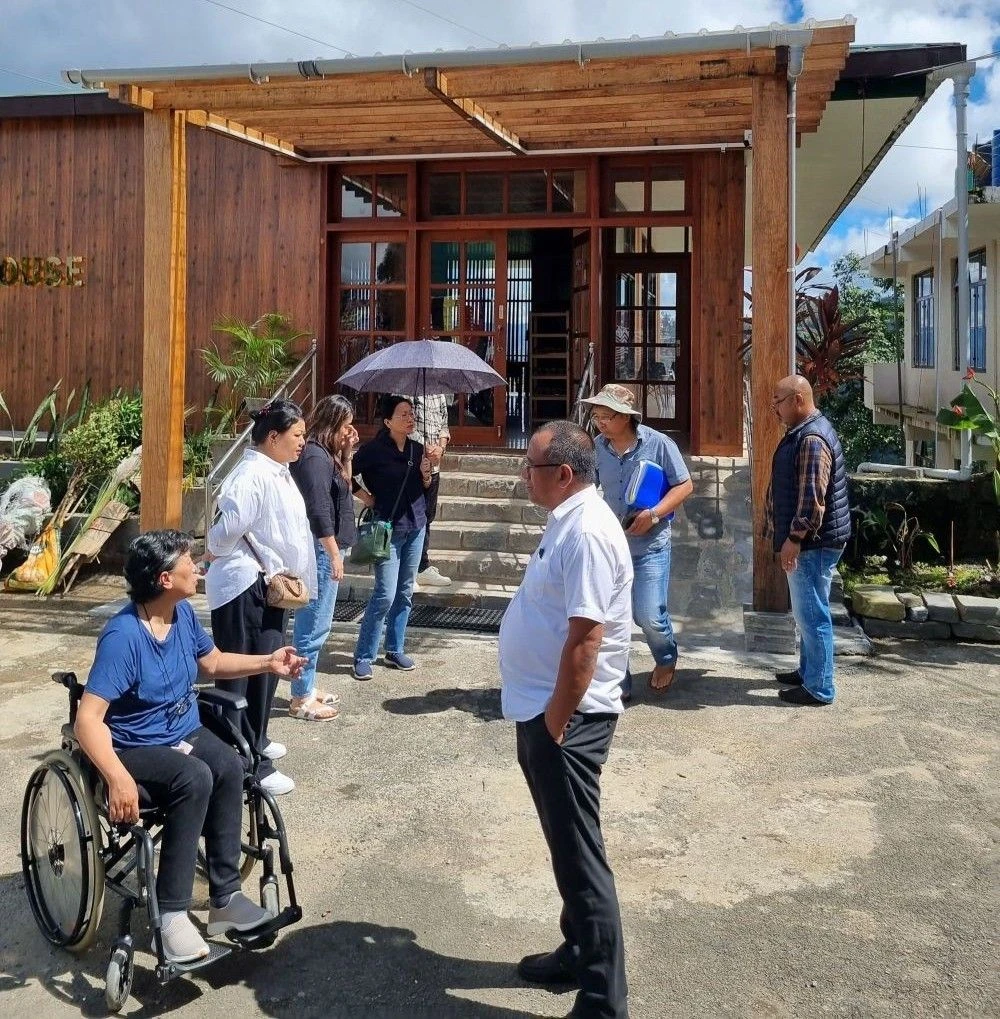
Diethono Nakhro: Disability Rights and Inclusion Advocate and former State Commissioner for Persons with Disabilities, Nagaland.
Have worked for almost two decades to advance accessibility, inclusion, and equal rights for persons with disabilities in Nagaland, across India, and at international platforms. As one of the pioneers of the disability rights movement in Nagaland and widely recognised as the state’s first disability self-advocate, I have been deeply involved in promoting a more inclusive and rights-based understanding of disability. My work has focused on ensuring that disabled people are recognised not as beneficiaries of charity, but as equal citizens with rights, dignity, and leadership potential.
During my tenure as State Commissioner for Persons with Disabilities, I worked to strengthen policy implementation, improve accessibility, promote awareness, and enhance institutional accountability through cross-sector collaboration.
In your opinion, what are some of the biggest challenges faced by Persons with Disabilities (PwD) in Nagaland? To what extent do you think negligence or being unaware remains the root cause?
Diethono Nakhro: One of the biggest challenges faced by persons with disabilities in Nagaland is negative societal attitudes, which perhaps remain the greatest barrier of all. Disability is still mostly seen through the lens of pity, charity, shame, or dependence rather than dignity, rights, and equal participation. Many disabled people continue to face low expectations, overprotection, and assumptions about what they can or cannot do.
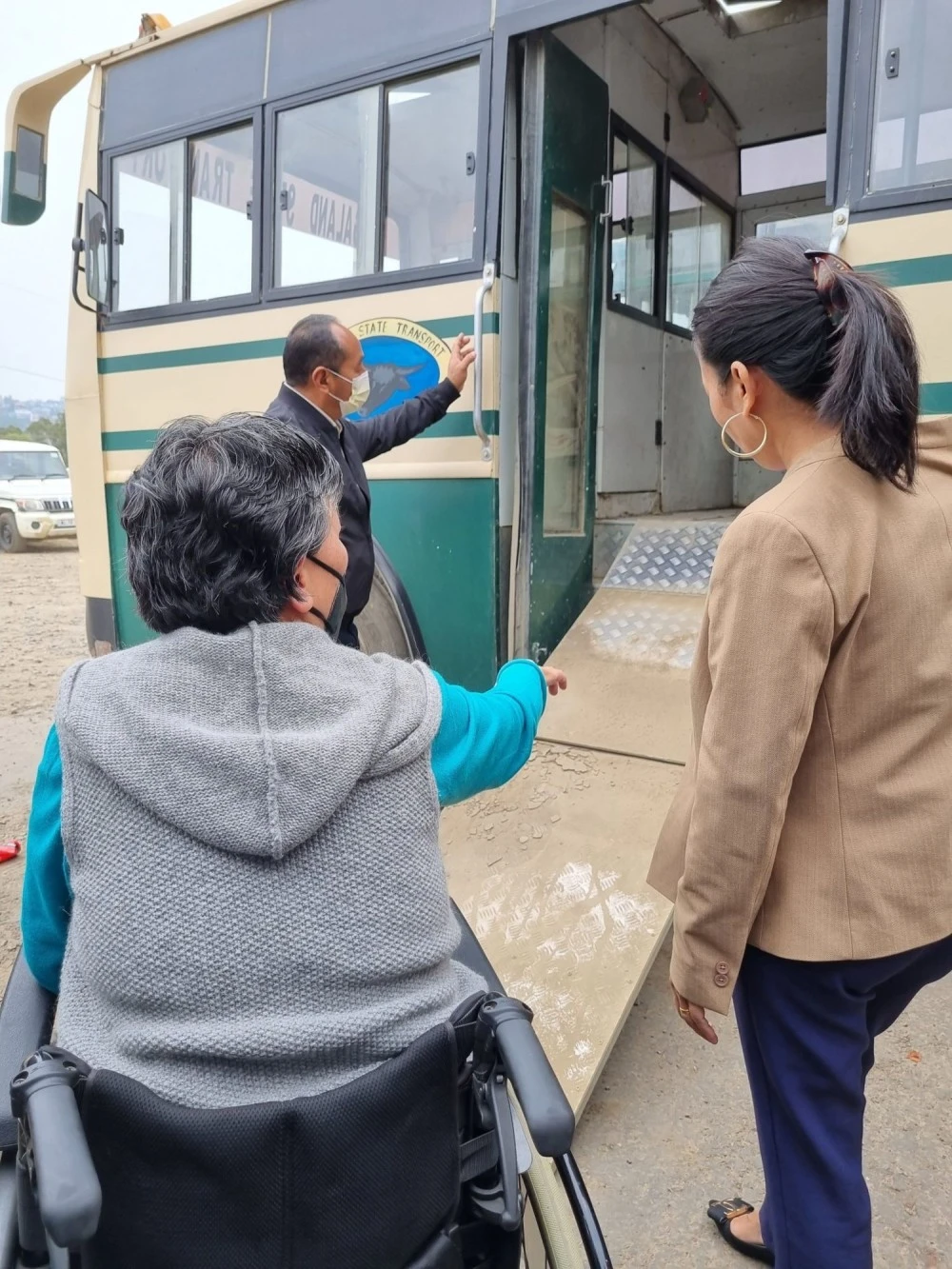
Another major challenge is inaccessibility in its many forms, not just the built environment. As a wheelchair user, I experience inaccessible buildings, public spaces, transport systems, but accessibility concerns go far beyond ramps. People with visual impairments may lack access to information in Braille or accessible digital formats, and Deaf and hard-of-hearing people face communication barriers, and so on.
There are also significant gaps in inclusive education, healthcare, employment, and support services. While awareness has indeed improved, many institutions still do not fully understand disability inclusion, or fail to prioritise it. At this stage, lack of awareness cannot always be an excuse. When accessibility is repeatedly ignored despite laws and guidelines, it becomes negligence.
The challenge is not the disability itself, but the barriers society creates. Real change in Nagaland will happen when disabled people are seen not as beneficiaries of charity, but as equal citizens whose participation and leadership matter.
Despite the government policies and welfare schemes aimed at supporting persons with disabilities, do you believe there is still a significant gap between policy and implementation? What are the major factors hindering implementation in Nagaland?
Diethono Nakhro: Absolutely. We have progressive laws and policies for persons with disabilities, but the lived reality in Nagaland often falls far short of what these policies promise.
One major reason is the limited awareness and understanding of disability within institutions. Disability is still being treated as a welfare issue rather than a matter of rights and inclusion. There is also a lack of disability-inclusive planning.
Disability is a cross-cutting issue and intersects with almost every sector - education, health, transport, employment, housing, elections, digital services, etc. Effective implementation requires coordination across departments, but disability concerns are frequently treated as the responsibility of a single department. Limited trained personnel, lack of disability-sensitive service delivery, and inadequate monitoring mechanisms, all these affect outcomes.
Nagaland’s hilly terrain and limited infrastructure do create genuine challenges, but they should not become reasons for exclusion. Take for example the current discussions around procurement of new NST buses, accessibility appears to have been treated as an afterthought rather than a necessity, with claims that low-floor buses and lifts or ramps are not feasible. The question should not simply be whether standard models work, but what accessible and context-appropriate solutions can be designed for Nagaland’s terrain. Around the world, including in difficult terrains, adaptations and universal design approaches are being explored. If accessibility is seen as a priority, solutions are usually found; if not, exclusion becomes normalised.
At the end of the day, implementation comes down to political will. Without leadership, prioritisation, budgets, and accountability, even the best policies remain only on paper.
Accessibility is often limited to building of ramps in Nagaland. What according to you does true accessibility look like?
Diethono Nakhro: In many ways, the implementation gap becomes most visible in how we understand accessibility. And yes, here in Nagaland, it is often reduced to simply building a ramp, and many times even that is poorly designed and unsafe to use.
True accessibility means creating environments where disabled people can participate independently, safely, and with dignity. For those with mobility impairments, this may mean ramps, lifts, accessible toilets, transport, roads, etc. For persons with visual impairments, it includes accessible information, Braille, audio, and screen-reader-friendly systems. For Deaf people, it means sign language interpretation, closed-captioning in videos, and communication systems that do not exclude them. Persons with intellectual, psychosocial, or neurodivergent disabilities may require simplified communication, supportive systems, or environments that are easier to navigate.
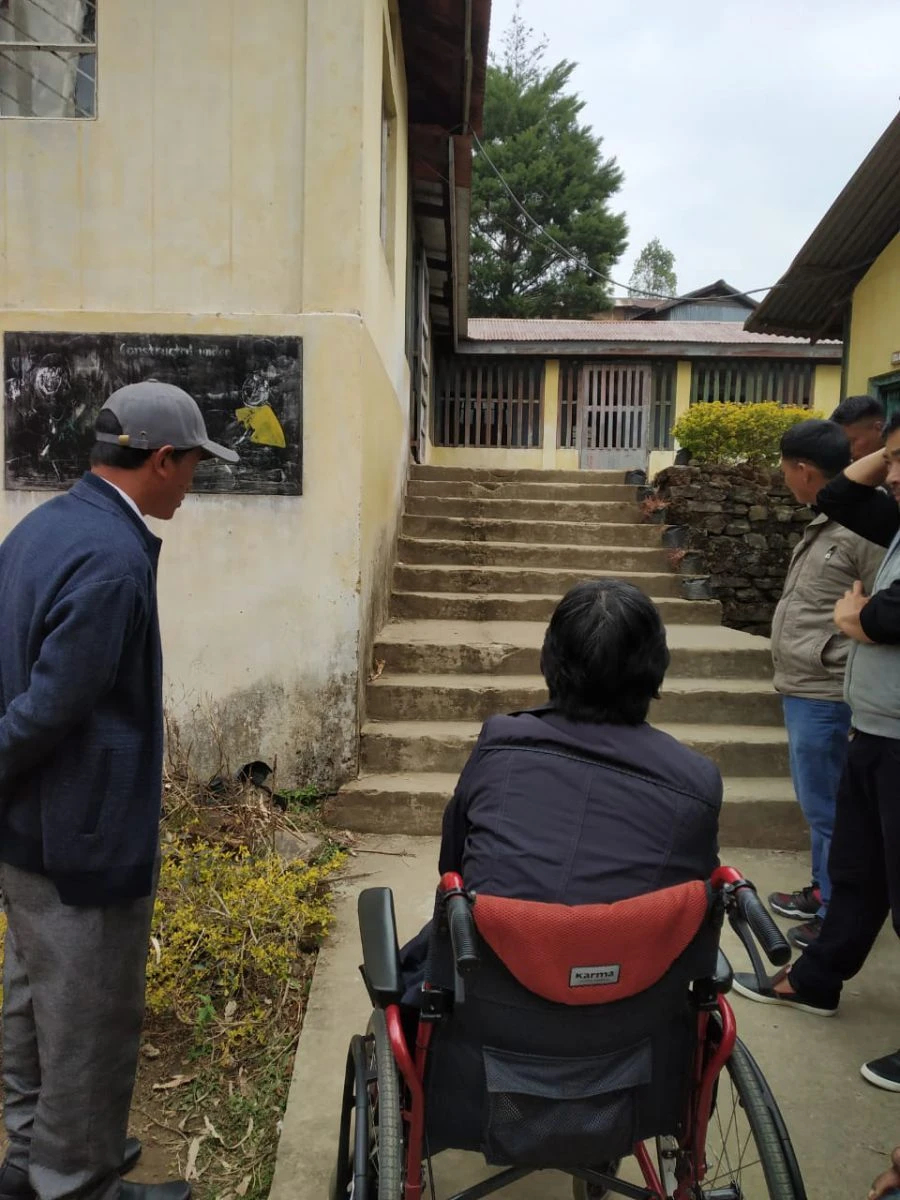
It is also attitudinal and institutional. You can have a ramp at the entrance, but if disabled people are treated with pity, denied opportunities, or excluded from decision-making, the space is still not truly accessible.
It is about designing systems and spaces from the beginning in ways that work for the widest range of people, rather than making adjustments only after exclusion happens. It also means listening to disabled people themselves, because accessibility cannot be designed effectively without lived experience.
Accessibility is not just about infrastructure; it is about belonging, participation, and equal opportunity. A truly accessible Nagaland would be one where a disabled person can go to school, travel independently, access healthcare, get a job, vote, worship, participate in public life, and live with dignity without constantly having to depend on others or fight barriers that should not exist in the first place.
How far do you think stigma around disabilities affects the day-to-day lives of PwD in Nagaland? Have you observed meaningful changes or efforts to promote inclusion and representation?
Diethono Nakhro: Stigma affects the day-to-day lives of persons with disabilities in profound ways. In many cases, the greatest barriers are not physical but social - the assumptions and low expectations that shape how disabled people are treated.
For many people, stigma begins early. Children with disabilities may be overprotected, hidden away, or denied education because families fear discrimination or underestimate their potential. Young disabled people are judged by what society assumes they cannot do rather than what they can achieve. Women and girls with disabilities may face multiple layers of discrimination because of both gender and disability.
In everyday life, stigma can be subtle but deeply harmful. Society deciding, consciously or unconsciously, that disabled people are not capable of leadership, employment, marriage, or independent living.
I do believe meaningful changes are happening. There is greater awareness of disability rights, stronger visibility of disabled people in education, advocacy, sports, and public life, and more willingness to discuss disability openly. However, progress remains uneven, and disabled people are still too often being spoken about rather than being included.
Real inclusion will happen when disability is no longer viewed as something tragic or exceptional, but simply as part of human diversity.
Looking ahead, what gives you hope for the future of disability inclusion in Nagaland? What key steps must be taken to build a more inclusive society?
Diethono Nakhro: What gives me hope is that change is already happening, even if it’s frustratingly slow. There is the growing awareness, stronger self-advocacy, and increasing visibility of persons with disabilities in public life. More disabled people are challenging stereotypes. Families are becoming more aware, and young disabled people are finding confidence in their identities.
But there’s still a long way to go. First, there’s an urgent need for stronger political will. Disability inclusion cannot remain an afterthought. It must be integrated into education, healthcare, transport, employment, housing, and development planning.
Second, we need to move beyond symbolic gestures toward meaningful accessibility and inclusion, understood broadly - not just ramps, but communication access, inclusive education, accessible transport, digital accessibility, and inclusive workplaces.
Third, there must be greater representation of persons with disabilities in leadership and decision-making. Policies should not be designed for disabled people without disabled people. We need more disabled voices in governance, committees, advisory bodies, media, and community leadership.
Civil society, churches, and the wider community also have an important role to play. Inclusion is not only the responsibility of government - it requires communities to actively value and include disabled people.
Finally, inclusion requires a shift in mindset. Laws and infrastructure matter, but real inclusion happens when society genuinely sees disabled people as equal citizens with rights, aspirations, talents, and leadership potential, and not as objects of pity.
I remain hopeful because an inclusive Nagaland is possible. The real question is not whether it can be achieved, but whether we are willing to invest in it and make it a priority.
The writer is currently a postgraduate student in Political Science at Madras Christian College, Chennai. Her academic coursework includes Public Opinion, Media Strategies and Political Journalism. This report is part of her one-month internship at The Morung Express.