Indian Express/MExN
New Delhi/Dimapur | Jan 27
Keeping the government guessing till the last moment, the NSCN (I-M) will inform the interlocutors only on January 30 if they are willing to extend the ceasefire with the Centre. The six-month ceasefire agreement ends on January 31. The talks to be held in Bangkok will begin tomorrow. A proposal by Dr Michael Van Praag of the Dutch NGO, Kreddha is also on the cards.
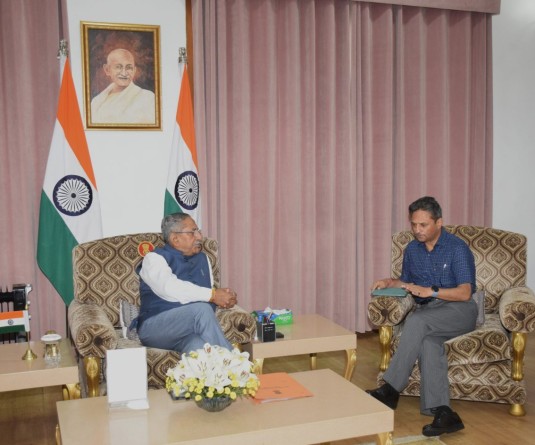
The Centre’s emissaries, Minister for Planning and Programme Implementation Oscar Fernandes and K Padmanabhaiah, are leaving for Bangkok on Friday night for the two-day talks with the Naga rebels. Sources said that the NSCN leaders Isak Chisi Swu and Thuingaleng Muivah were likely to lay their cards on the table only on Monday, January 30.
It is the first time that the Naga rebels have kept the government on tenterhooks till the very last moment before extending the ceasefire, which has lately become a little uneasy.
Sources said that with the dialogue process having reached a stalemate for quite some time over the contentious Greater Nagaland or ‘Nagalim’ issue, the government could not be sure that the ceasefire would be extended. ‘‘Even the NSCN does not have too many options and most likely will agree to the ceasefire extension, but they have created this air of uncertainty around the talks,’’ said a senior government official.
The NSCN leaders had of late acted a little difficult, sources said, alleging that the government was not sincere in achieving a long lasting solution to the decades-old Naga insurgency problem. In force since 1999, the ceasefire agreement was always extended for a period of one year.
However, in 2005, the insurgents had agreed to extend the ceasefire only by six-months, saying that if they were convinced of government’s sincerity, they would extend it further.
Government sources said that a Dutch NGO, Kreddha, had been helping and advising the NSCN leaders. ‘‘Muivah and Swu lack the sophistication in diplomacy and probably feel somewhat inadequate during negotiations. So a lawyer and executive president of the NGO, Michael C van Walt van Praag, has been helping them out. Accompanied by another activist, Praag has been sitting through the negotiations,’’ disclosed an official.
Though there were reports the NGO was officially appointed as a ‘third-party mediator’, sources said their role was only a ‘‘friendly and advisory’’ one.
The talks have been stuck mainly over the issue of Greater Nagaland, with the NSCN leaders insistent in their demand for the unification of all Naga inhabited areas, many of which were in Manipur, Arunachal Pradesh and Assam. ‘‘Even the suggestion of unifying the areas is enough to create unrest in the neighbouring states. The Centre cannot take any chances and is therefore, treading cautiously. The Centre can only consider demands within the Constitutional framework,’’ the official added.