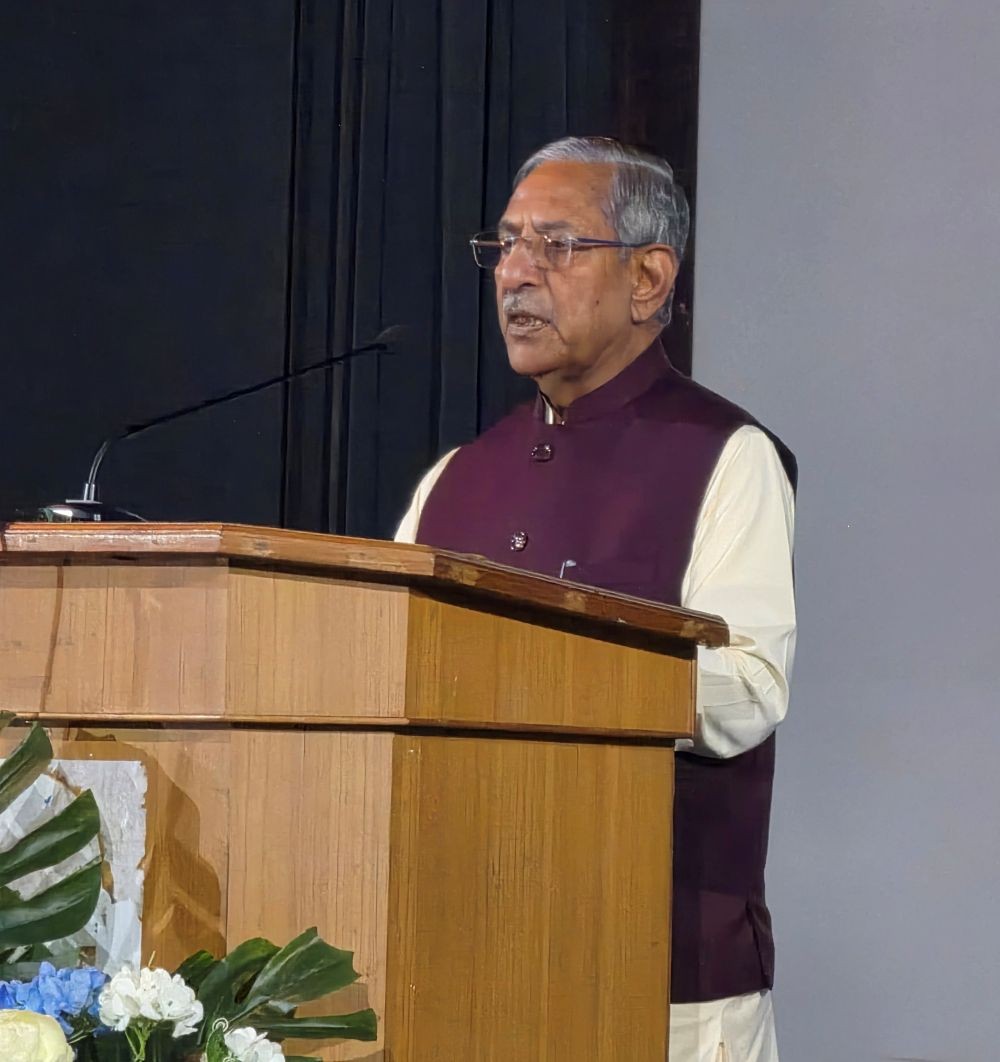
Governor of Nagaland, Nand Kishore Yadav addressing the inaugural programme of the 100th Regional Parents Meet (RPM) 2026 at RCEMPA Jotsoma on October 1.
NAPAD hosts 100th Regional Parents’ Meet
Morung Express News
Kohima | October 1
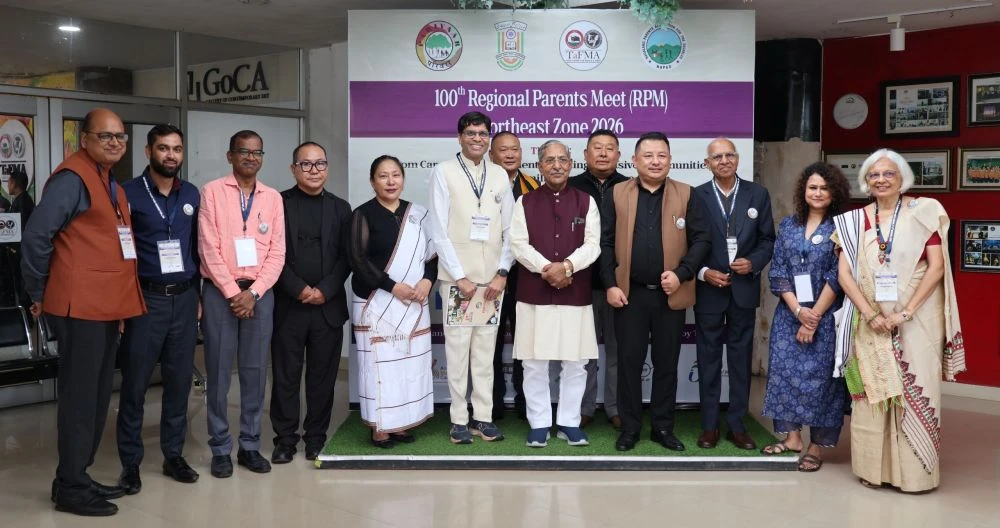
Marking a significant milestone, the 100th Regional Parents’ Meet (RPM) 2026 organized by PARIVAAR-National Confederation of Parents’ Organizations (NCPO) & Maulana Azad National Urdu University (MANUU), Hyderabad and hosted by Nagaland Parents’ Association for the Disabled (NAPAD) was held at RCEMPA Hall, Jotsoma on October 1.
Addressing the inaugural programme, Nand Kishore Yadav, Governor of Nagaland termed the theme of the meeting — “From Care to Empowerment: Building Inclusive Communities through Strong Families and Collective Action” as both timely and meaningful.
Stating that a century of such meetings reflects a sustained journey of dialogue, advocacy, solidarity and collective action, as well as the dedication of countless families working for dignity, opportunity and inclusion for persons with disabilities, he congratulated everyone associated with this remarkable journey.
Further exploring the theme, he underscored that, “care begins within the family” while pointing out that, “parents are often the first to recognise a child’s abilities, understand their challenges and provide the support and encouragement they need.”
However, he said that care must lead to empowerment with the goal to create conditions where persons with disabilities can learn, participate, work, create and lead with dignity and independence.
In this regard, he underlined that it requires a change in perspective — from asking “What can we do for persons with disabilities?” to asking “What opportunities and support can we create for them to realise their full potential?”
Asserting that a person should never be defined by a disability, he stated that every individual has abilities, aspirations and the capacity to contribute to society.
Reiterating that the family remains central to this journey, he said, “Strong and supportive family gives a child confidence, belonging and the assurance of being valued.”
Parents of children with disabilities often serve as caregivers, advocates, teachers and counsellors and their dedication deserves our recognition and respect, he pointed out.
At the same time, he said, “families should not have to shoulder this responsibility alone.”
The Governor also underlined that, “inclusion is a shared responsibility” and urged that Government, schools, healthcare institutions, local bodies, employers, civil society and communities must work together to create an environment where persons with disabilities can participate fully and with dignity.
Stating that inclusion must be visible in schools, public buildings, transport, workplaces, digital platforms and community spaces, he underlined that persons with disabilities should have equal access to education, skills, employment and public services, without unnecessary barriers or dependence.
This is why, he added, universal accessibility is so important while maintaining that accessibility should not be seen as a special provision for a few, but as an essential part of building a more inclusive, humane and equitable society.
‘Education must remain at the heart of inclusion’
Also asserting that education must remain at the heart of inclusion, he explained that, “Inclusive education means creating an environment where children with disabilities can learn, participate, interact and grow with confidence.”
This, he further said, requires trained teachers, accessible infrastructure, appropriate learning materials and informed parental support. Highlighting that the National Education Policy 2020 provides an important framework for inclusion and equity, he underscored, “our priority must be to translate these principles into meaningful action on the ground.”
Urging that the journey should not end with education, he expounded that young persons with disabilities need a clear pathway from education to skills, skills to employment and employment to economic independence.
He called for strengthening vocational training, skill development, entrepreneurship and employment opportunities, wherein the private sector also plays an important role and added that, “workplaces should promote equal opportunities where persons with disabilities can be recruited, trained, entrusted with responsibilities and advance on the basis of their abilities and performance.”
In Nagaland, he remarked that, “our challenging terrain and dispersed settlements make inclusive services particularly important” while highlighting that families in remote areas may face difficulties accessing specialised healthcare, rehabilitation, assistive devices and inclusive education.
In this regard, he impressed upon the need for decentralised and innovative approaches that take services closer to the people. “Technology, tele-consultation and stronger coordination among district administrations, communities and specialised institutions can help bridge geographical gaps”, he said and emphasized, “inclusion must reach beyond State and district headquarters and become a reality in every village and community of Nagaland.”
Also citing the need for a deeper change in our social attitudes, he said that, “Persons with disabilities need respect, equal opportunity and the removal of barriers, rather than sympathy alone” and urged for shifting focus from limitations to abilities, talents and possibilities.
Most importantly, he said that, “persons with disabilities themselves must be at the centre of decisions concerning their lives” while underlining that nothing about persons with disabilities should be decided without their meaningful participation. “Their voices and experiences must guide our policies, programmes and actions,” he stated.
‘Inclusion requires collective effort’
Tongpang L Jamir, State Commissioner for Persons with Disabilities remarked that inclusion cannot be achieved by the Commission alone while emphasising that it requires the collective effort of government, professions, organisations, parents, teachers and society. He also exuded hope that the regional parents’ meet would renew their commitment, strengthen their partnerships and inspire practical action.
Pankaj Maru, National President, PARIVAAR-NCPO highlighted the 4 Ps of disability sector, namely, persons with disabilities, parents, professionals and policymakers and policy implementers, and urged that all the 4 Ps have to work together.
Highlights of the inaugural programme included invocation by Zajamo Odyuo, Associate Pastor City Church, Kohima, welcome address by Kapachu-o Naleo, President, NAPAD, Special number by N Mhonchumo Shitio, ‘Beyond Limits’ by The Special Squad and vote of thanks by Kevirhebi Mor, Executive Member, NAPAD while Renbeni Odyuo, Executive Member, NAPAD was the compere.