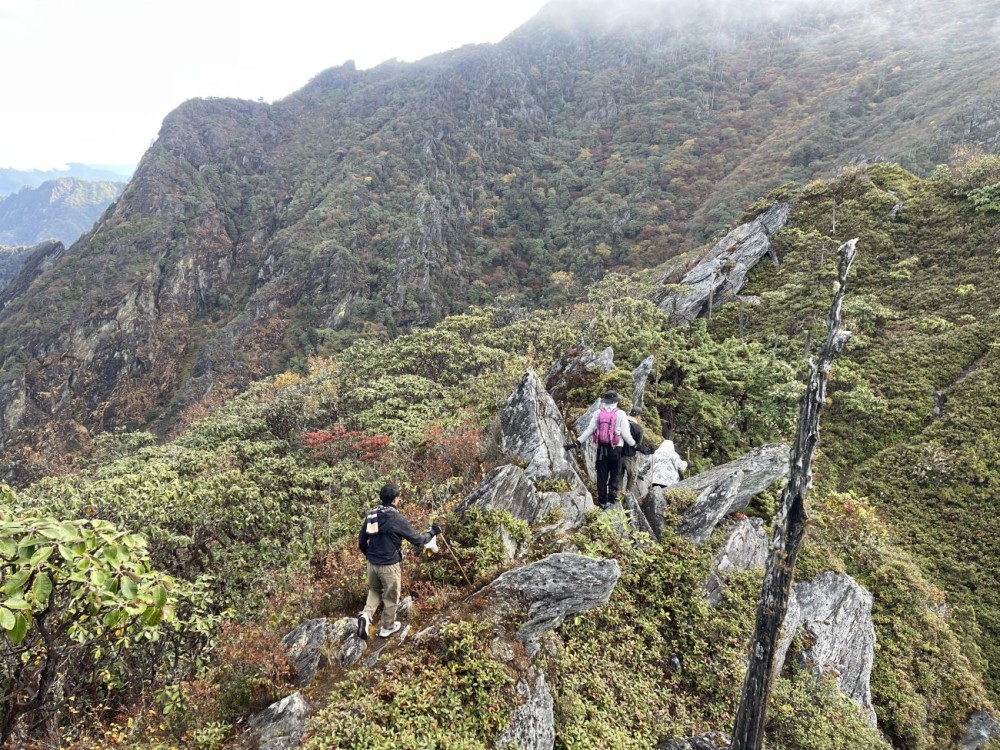
A group of the Livingstone Foundation Group of Institutions (LFGI) hikers ascends a steep, rocky mountain ridge on Mt. Saramati, surrounded by dense, vibrant green vegetation and exposed rock formations under a partly cloudy sky. (Photo Courtesy: LFGI)
Morung Express News
Dimapur | November 7
Beyond classrooms and textbooks, a group of students and educators from Nagaland ventured into the state’s rugged mountain landscapes, scaling six peaks across six districts in a synchronised expedition aimed at promoting peace, unity, prosperity and adventure tourism.
Described by the organisers as an unprecedented feat in Nagaland’s history, the initiative brought together six teams from the Livingstone Foundation Group of Institutions (LFGI), testing their physical endurance, teamwork and determination while drawing attention to the state’s largely unexplored mountain destinations.
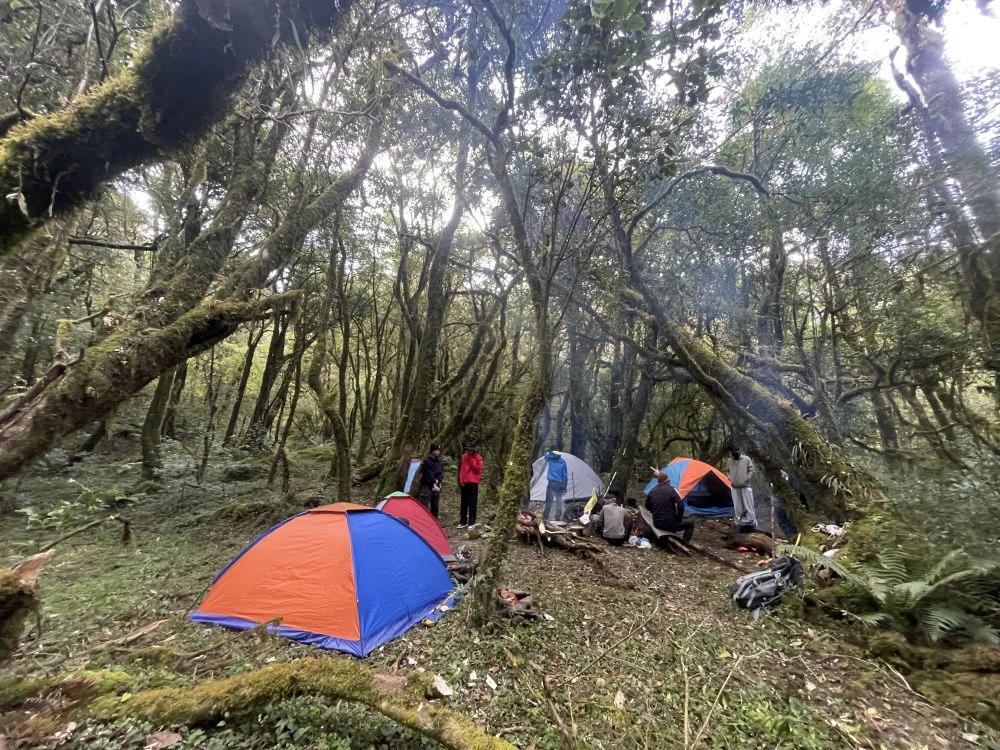
Held in October under the theme ‘Beyond the Peak – Discovering Strength Within’, the expedition was conceptualised by LFGI Chairman Dr Andrew Ahoto Sema and Director Ani Yepthomi. It involved students and staff from Livingstone Foundation International (LFI), Livingstone Foundation College and Livingstone Foundation College of Nursing, which began operations this year.
Speaking at a press conference at LFI in Dimapur on November 7, Sema said the idea was to do something different by deploying six teams to scale Nagaland’s six highest peaks at the same time. The initiative also sought to involve students from the school, college and nursing institutions, taking learning beyond conventional classrooms and textbooks.
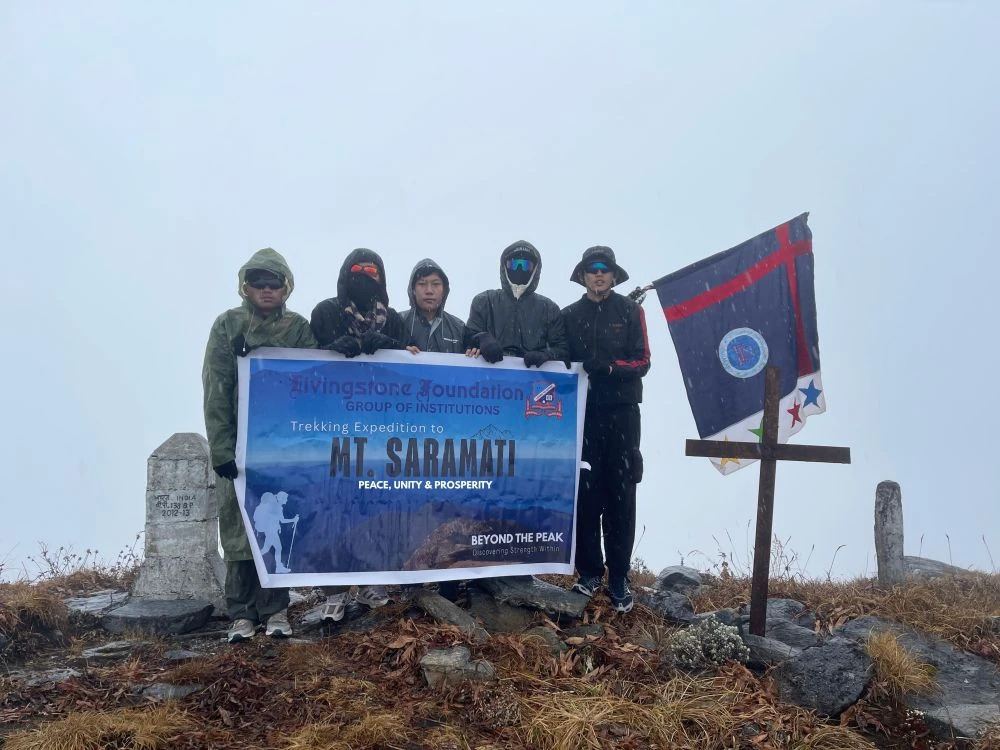
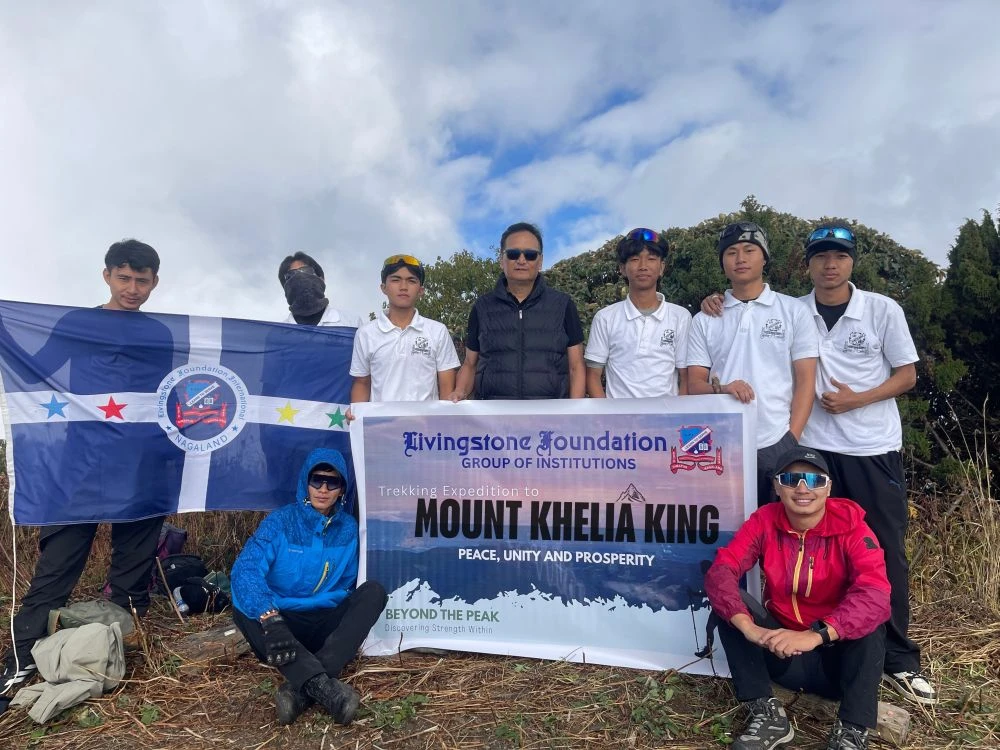
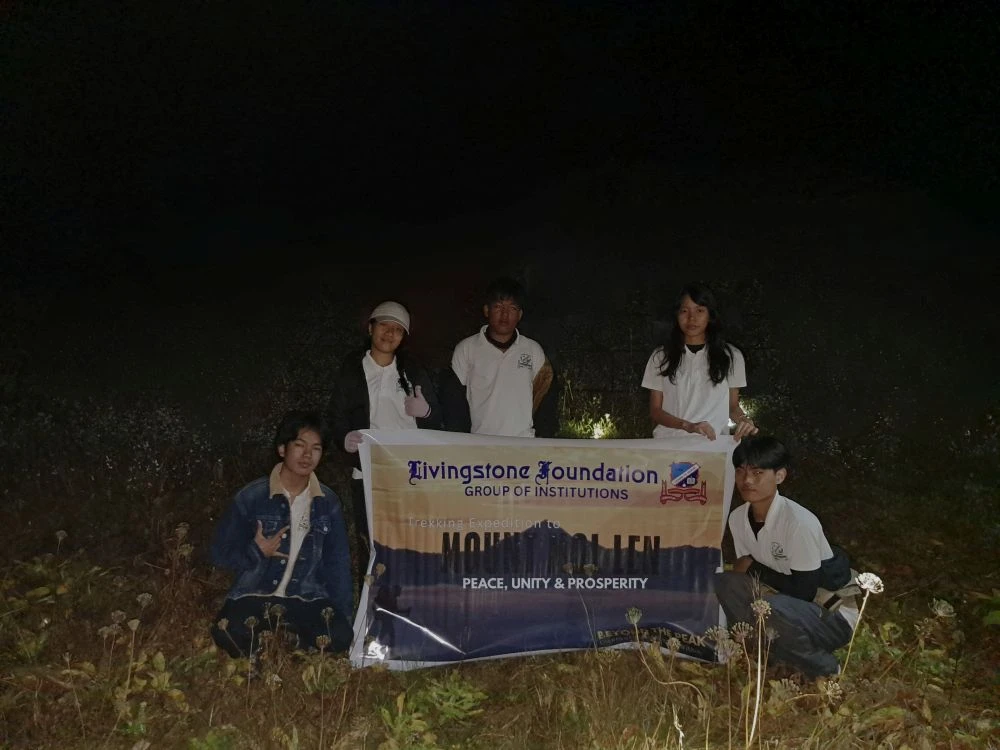
The six peaks were Mt Saramati in Kiphire district, Mt Khelia King in Noklak district, Mt Mol Len in Meluri district, Mt Japfü in Kohima district, Mt Pauna in Peren district and Mt Kapamoudzü in Phek district.
Sema said the expedition was guided by three broader objectives, peace, unity and prosperity, maintaining that tourism and development opportunities could flourish only in an atmosphere of peace and collective harmony.
“We wanted peace to prevail in Nagaland. If there is peace, there will be tourism and more people coming from outside. We also need unity among our people. Without peace and unity, there cannot be prosperity,” he said.
Among the six climbs, Mt Khelia King, described by Sema as the state’s second-highest peak, presented a particularly demanding challenge. He said he personally attempted the climb, recording an elevation of approximately 3,476 metres, compared with Mt Saramati’s height of around 3,800 metres.
Despite the difference in elevation, the ascent was exceptionally steep. Starting near Chokla village, from a bridge marking the beginning of the route, the team negotiated an uncharted trail without established road access. As part of an exercise assigned to the students, the team estimated that the uphill and downhill journey involved around 23,000 to 24,000 steps.
The difficult terrain was offset by the mountain’s natural beauty. Sema described the landscape as remarkable, with perennial water springs, dense vegetation and extensive rhododendron growth. He suggested that the area could have the highest concentration of rhododendron trees in Nagaland, while acknowledging that the observation required further verification. He also appreciated the support of local residents and noted that churches in the area had organised medical camps.
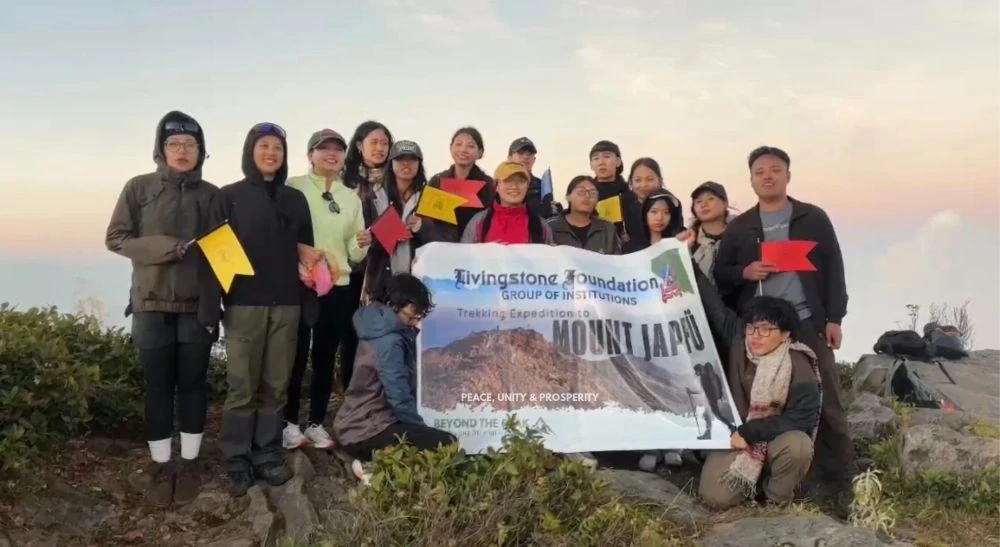
The expedition nevertheless tested the participants in several ways. Steep slopes, dense forests, leeches, darkness, exhausted phone batteries and stretches without mobile connectivity added to the difficulties. Heavy backpacks, swollen feet and aching knees further strained the trekkers.
Alemmeren Jamir, a Class 11 student who climbed Mt Mol Len, said the journey was his first major physical challenge. He recalled how team members motivated one another, helped carry luggage and continued despite exhaustion. During the night-time descent, a teacher’s rendition of a creepy song provided an unexpected moment of humour amid the difficult conditions.
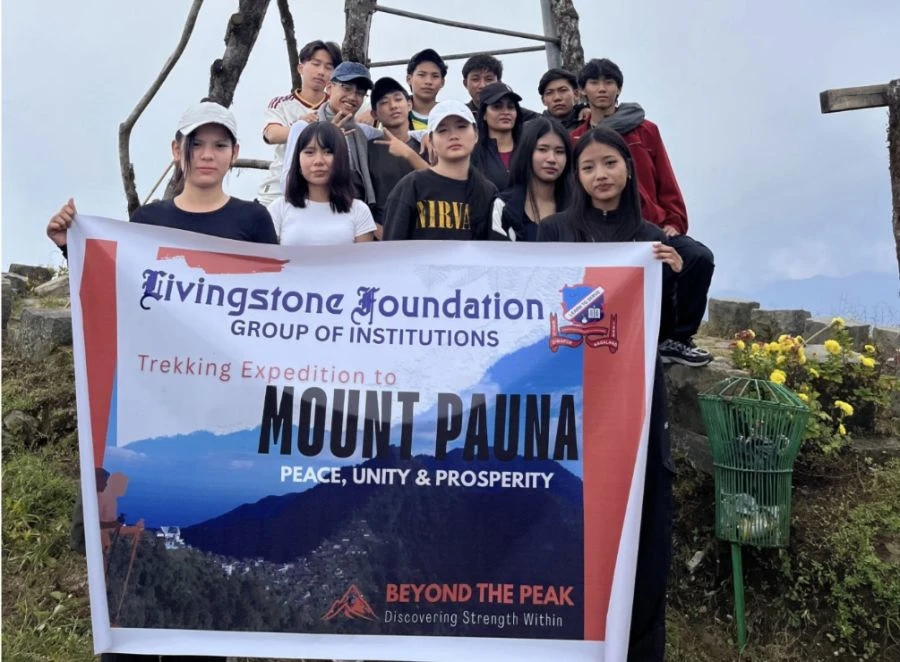
Khaplem, a Class 10 student who climbed Mt Japfü, said hearing about a 70-year-old man who had previously scaled the mountain had initially encouraged him to take up the challenge. The actual climb, however, taught him that success depended not simply on age but also on individual strength and experience.
A mentor accompanying the Japfü team recalled that some students began questioning their ability to complete the climb barely five minutes after setting out. Several struggled with swollen toes and legs and the weight of their backpacks. Encouragement from fellow students and teachers, however, helped the entire team reach the summit.
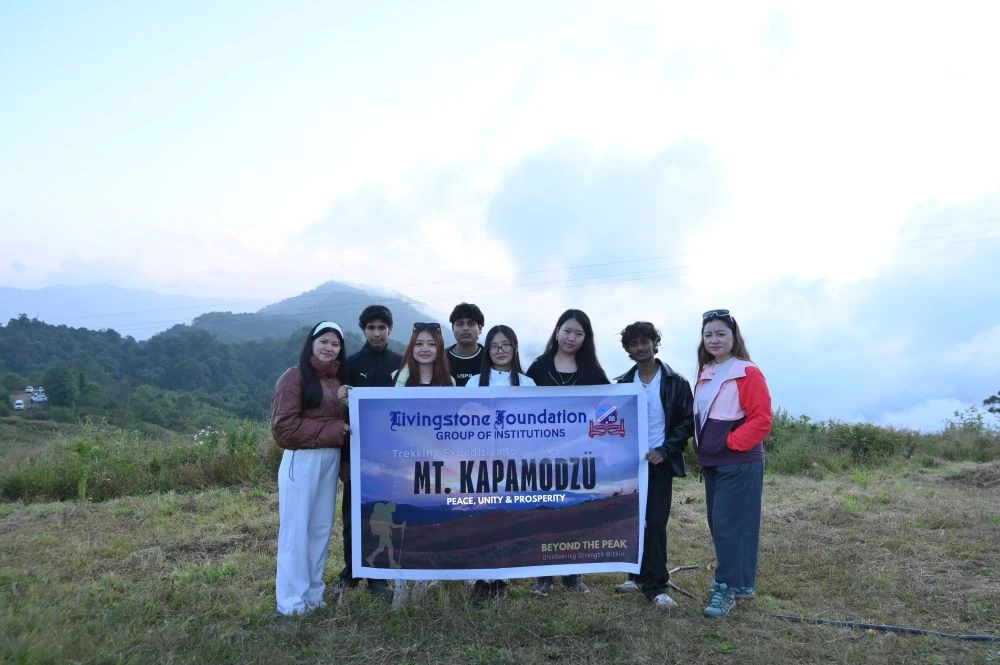
The expedition lasted approximately five days, with advance teams setting out earlier for the more distant peaks, including Saramati, Khelia King and Mol Len. The teams coordinated their schedules to reach their respective summits simultaneously, with October 19 identified as the target date during the interaction.
Preparation was a crucial part of the undertaking. According to Sema, participants assigned to the more demanding routes underwent two to three months of physical training, including running, walking and sports for at least two hours daily. The youngest participants were 15-year-old students, while the teams also included adult staff members.
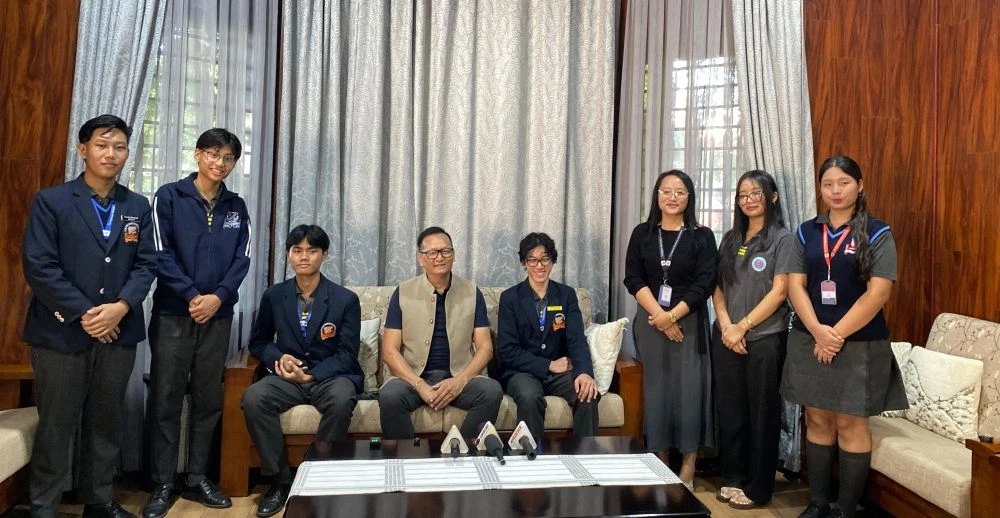
Sema said girls were not included in some of the most demanding high-altitude climbs because of the level of physical preparation required. However, two girls successfully completed the Mol Len expedition. Their journey began at around 6 am and ended at 3.30 pm the following day, underscoring the difficulty of the route.
The organisers reported no untoward incidents. Sema cautioned that future trekkers must be adequately trained and equipped, carrying first-aid supplies, sufficient water, emergency food for one or two days, a whistle and basic survival equipment. He also warned against underestimating the cold and steep terrain at higher elevations.
For the students, the experience offered lessons beyond mountain climbing. They said outdoor activities helped them discover their abilities, reconnect with nature and step away from the pressures of academic life.