Photographer: Haoreima
Acima Colaco
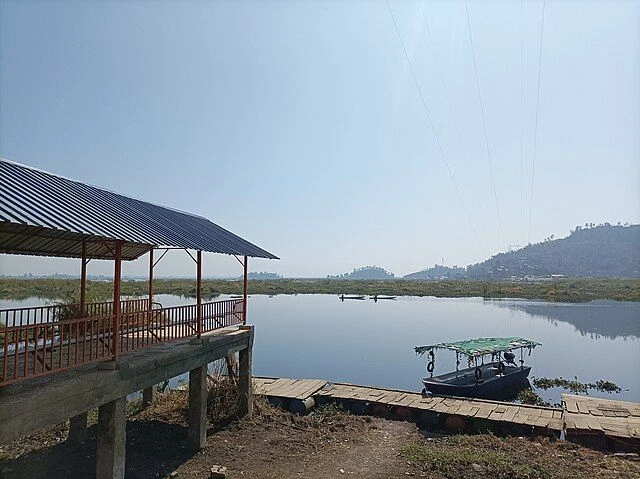
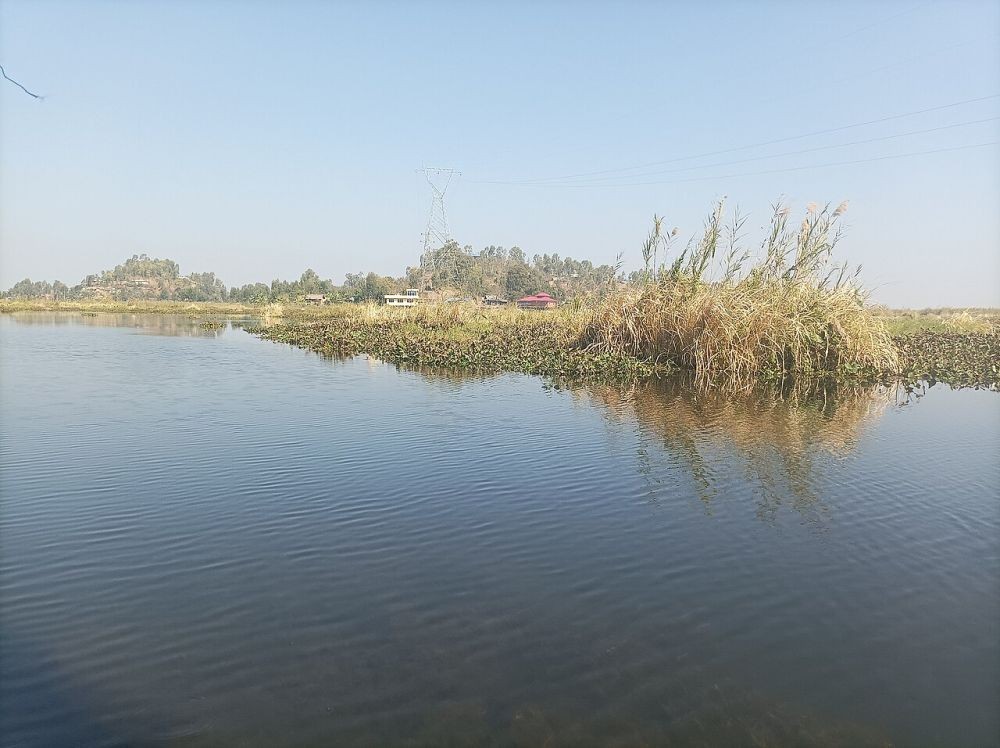
Loktak Lake is the largest freshwater lake in northeast India and is an ecological paradise, a cultural wonder located in Manipur. This expanse of shimmering water is not just a lake; it’s an ecosystem. A living and dynamic one — known the world over for its uniqueness – the phumdis.
Phumdis are literally: a heterogeneous mass of vegetation, soil, and organic matter at various stages of decomposition that have been naturally created through the accretion process. They differ in thickness and size. Some are so large that we can live on them. This remarkable topography also accounts for the lake's odd and fabulous look: an enormous, impossible mosaic of green islands that float across its surface.
Phumdis most important ecological role is their function as the exclusive habitat for Sangai (Rucervus eldii eldii), or the Manipur Brow-Antlered Deer. This beautiful beast, the state animal of Manipur, is critically endangered. A part of the southern end of this lake — where the concentration of phumdis is greatest has been protected, in what has become known as the “Keibul Lamjao National Park”— the only floating national park in the world. The Sangai depends on this floating island for its habitat and food; the survival of the phumdis is crucial for the preservation of the critically endangered species.
Loktak has been the lifeline of the surrounding human societies for centuries. Several tens of thousands of fishermen, mainly from the Meitei community, depend for their living at this lake. Both groups practice a traditional sustainable form of fishing using small nets for checking out fish exoletus, and they also construct assemblages of vegetation to intentionally catch the fish (in circular fishing enclosures), which are built on top of the smaller phumdis. Containing this floating land is crucial for the survival of the Sangai, as they take refuge and feed on these phumdis
Loktak has been a lifeline for the people in the neighbourhood for centuries. Thousands of fisherfolk, mainly from the Meitei community, eke out a living from the lake. They have a traditional practice of sustainable fishing, and they build their own unique round fishing enclosures made from the vegetative mass that also float over the smaller phumdis.
The Loktak ecosystem, however, is crucially under threat. "Most of the problem lies in the fact that a dam was constructed for a hydroelectric project called the Loktak Hydroelectric Project, which changed the natural fluctuation cycle of water level. Artificial maintenance of a higher water level prevents the phumdis from settling on the lake bed during the wet season, and in turn prevents them from absorbing nutrients during the dry season. This loss of contact with the lake bed causes decomposition and thinning, which ultimately affects the phumdi by breaking it up, thereby directly threatening the habitat of the Sangai.
The other problems are sedimentation from flooded deforested hills, water pollution by sewage and agricultural debris, and the proliferation of introduced aquatic organisms. Together, these stressors threaten the lake's high level of biodiversity, affecting both the flora and fauna.
Loktak Lake deserves a future of conservation where development requirements are not prioritized over the ecological health of the wetland. Such measures are essential, and projects for phumdis scientific treatment, pollution source control, and reducing the harm of hydro-power towards the lake's ecology should be implemented. Implementing sustainable management of water and sustainable tourism could enhance the conservation of this unique, fragile wetland, once part of the natural hydrological cycle. Loktak Lake is much more than a lake; it is a heritage, a biodiversity hotspot, and the epitome of an extraordinary co-existence system of human and nature, proving how nature can be preserved while allowing human interventions to accommodate.
Acima Colaco is a dedicated teacher trainee with a passion for literature and language. Currently pursuing her B.Ed. degree, she also translates poems on StoryWeaver.org.in, a digital platform for children's literature.