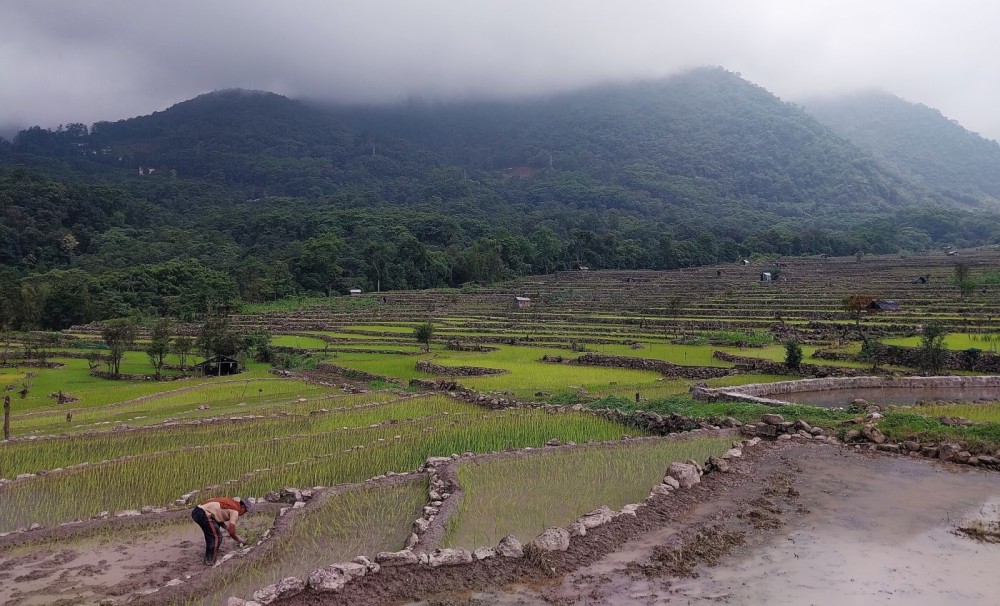
A farmer planting rice paddy in a field somewhere in Nagaland. (Morung file Photo)
Kohima, April 28 (MExN): In view of the upcoming Kharif season, the Department of Agriculture, Nagaland, has issued a Monsoon Preparedness Advisory, directing all District Agriculture Officers (DAOs), Sub-Divisional Agriculture Officers (SDAOs), departmental officers, field staff, and ATMA personnel, to remain at their respective places of posting to ensure close monitoring and timely support to farmers.
The directive, aimed at minimising crop damage during the monsoon, all officers have been instructed to remain vigilant and undertake real-time assessment of crop conditions, pest and disease incidences, and any natural calamities. The officers have been asked to submit timely field reports through designated WhatsApp groups to the Directorate for prompt intervention.
In a statement, the department emphasised the need for coordinated pest surveillance, especially for Fall Army Worm (FAW) in maize. Regular monitoring of pest incidences above Economic Threshold Levels (ETL) is to be carried out in coordination with Krishi Vigyan Kendras (KVKs) and ATMA personnel. District and sub-divisional offices have also been directed to conduct farmers’ training and awareness programmes on monsoon crop management and contingency preparedness, it stated.
Advisories for farmers
For farmers practicing hill agriculture, including jhum or shifting cultivation, the department has recommended staggered log bunding across slopes to reduce runoff, plugging gullies with locally available materials, stacking lodged crops, and sowing short-duration crops such as maize, pulses, and oilseeds up to the third week of June.
For terrace rice cultivation and wetland rice cultivation (WRC), farmers have been advised to adopt staggered nursery sowing at two-week intervals, prepare side drains around nursery beds, use young seedlings for better yield, and undertake early field preparation with direct seeding where feasible.
The department reaffirmed its commitment to timely monitoring, farmer outreach, and coordinated pest management to safeguard crop production during the monsoon season. Farmer advisories will be disseminated through field staff and ATMA Farmers’ Friends.