L H Thangi Mannen
Director, Earth Alliance Nagaland
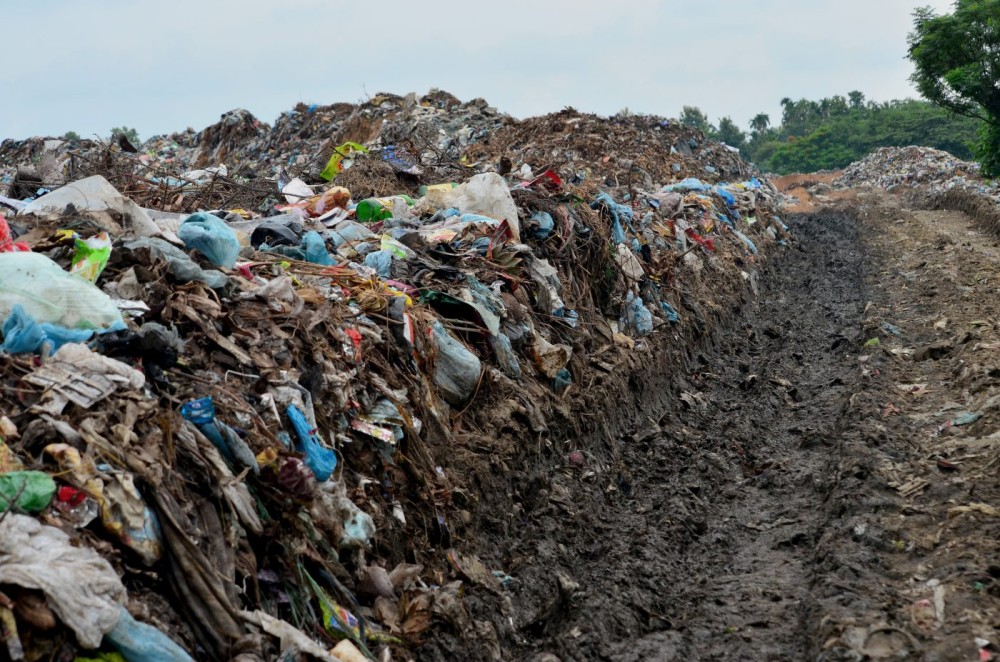
Waste management is a critical, yet often ignored imperative of modern life that directly impacts public health, environmental sustainability, and climate change. While improper disposal leads to overflowing landfills, land and water pollution, toxic air from burning, urban flooding and plastic blocked drains etc., the "ignored" aspect stems from governance apathy, a general lack of public awareness/total lack of civic sense, poor infrastructure, and failure to adopt circular economy practices at the household level. From our first breath to our final rest, every human being is a relentless architect of waste. Yet while we all are expert producers, we remain amateur escapists – happy to create the problem, but unwilling to own the solution. We have mastered the art of consumption but abandon the responsibility of disposal.
Nagaland generates over 300 tons of urban waste daily, with cities like Kohima and Dimapur facing severe waste management challenges due to rapid urbanization. The state’s per capita waste generation is high, often exceeding the national average with over 50% being compostable organic waste. Open dumbing remains the primary unsustainable disposal method. The recent CAG report has also exposed a total collapse of the urban waste system, citing systematic failures, lack of transparency, significant financial irregularities and lack of accountability Recent local media coverage has also highlighted the critical state of waste management in Nagaland, with particular reference to Dimapur’s growing waste, and the saturation of its existing dumpsite at Sunrise Colony, forcing a ban on external waste. This is further compounded by the fact that that the new dumpsite purchased by the government has been found to be environmentally unsuitable and have also met with local resistance. Similar fate awaits for any future proposed dumpsite in other districts/places. In the broader context of Nagaland, the struggle to establish new waste facilities is not just about "NIMBY" (Not in My Backyard) sentiment; it is rooted in a history of failed management and legal /environmental complexities that have eroded public trust.
The “ignored” aspect of this reality is also imposing significant legal and financial burdens on the state government. The National Green Tribunal (NGT) has repeatedly “rapped” the state authorities for failing to manage the waste crisis. In a major ruling in November 2022, the NGT slapped a Rs 200 Crore environmental compensation penalty on the State for persistent failure in solid and liquid waste management. As of date, there has been no official public confirmation that the state has created the account or deposited a partial or full amount of Rs 200 Crore into the designated “ring fenced account” While the account was ordered to be established and operated by the Chief Secretary for waste management infrastructure, recent legal filings indicate a lack of transparency and continued compliance gap. As of early 2026 the state remains in “willful disobedience” of the timelines, leading to ongoing legal pressure and potential further fines of Rs 1 lakh to Rs 10 lakh per month for continued noncompliance. As compared to other penalized states, Nagaland’s performance is at the bottom
Summary Table: Deposit Comparison (Regional States)
State |
| Penalty Amount |
| Status of Ring-Fenced Deposit |
Nagaland |
| Rs 200 Crore |
| Pending/Undisclosed (focus on "fund collection") |
Meghalaya |
| N/A (Project based) |
| Rs 60.53 Crore deposited as of March 2025 |
Puducherry |
| Rs 178.92 Crore |
| Rs 191.37 Crore ring-fenced as of 2024 |
West Bengal |
| Rs 3,500 Crore |
| Fully Deposited in November 2022 |
Sources: National Green Tribunal (NGT) Official Reports
Nagaland also faces a critical bottleneck in managing legacy waste across 39 ULBs and the three Municipalities, where actual treatment remains largely stalled despite increasing pressure from the NGT. While the state is tethered to a September 2026 deadline – aligned with the national “Mission Zero Dumpsite” , under the new Solid Waste Management Rules 2026, and the broader vision of Viksit Bharat 2047, the lack of tangible progress on the ground threatens these sustainable goals. In comparison and according to a Down to Earth article, Tripura reported achieving zero legacy waste across 20 ULBs. So what is stopping Nagaland to achieve the same?
Nagaland’s sanitation roadmap is at a crossroads: while the recent roll out (Independence Day 2025) of 41 GPS enabled vehicles for 20 ULBs and a Rs 59.67 crore investment for 13 new Fecal Sludge Treatment Plants (FSTPs), across Nagaland and one ongoing FSTP in Dimapur (Rs 61.62 crore) shows promise, the ‘white elephant status’ of the Lerie (Rs 48.04 crore) and Meriema (Rs 32.22 crore) waste management units casts a long shadow. These multi crore assets have remain dormant since, their inception – represents a staggering drain on the state’s limited fiscal resources and a systematic failure to align infrastructure development with functional oversight. It is understood that the government and the KMC are drafting a “reactivation Plan” to revive these defunct units. If executed with technical precision, this plan could provide respite for Kohima’s escalating waste crisis, ensuring that stalled public funds finally deliver their intended environmental and social values
Nagaland’s waste management system has thus reached a critical breaking point, leaving us with a narrow window of opportunity to act. Unless both the government and the public collectively acknowledge the urgency of this crisis, the financial and technical cost of remediation will soon spiral beyond our reach. In alignment with the national vision for Viksit Bharat @2047 (Developed India by 2047), the ongoing district level stakeholders’ consultations offer a platform to address this. It is essential that waste management and sanitation are prominently integrated into these deliberations, ensuring that Nagaland’s roadmap to 2047 is built on a foundation of environmental sustainability and public accountability.
The war on waste in Nagaland cannot be a siloed effort. It must be a collective mission mandated by a robust hierarchy of state and local functionaries. By integrating the administrative weight of Urban Development, Municipal Affairs, PHE and RD departments with localized agility of the Village councils and the fresh mandate of the Municipal Councils and the ULBs, the state can build a comprehensive sanitation machinery, under the watchful oversight of the District Task Force, This collaborative instituted ecosystem can ensure that interventions, from urban centers to the furthest rural reaches – is coordinated, accountable and sustainable
The persistent failure of waste management in the state can be traced to governance deficit and a lack of accountability. Despite numerous plastic ban orders, the absence of enforcement has rendered these policies ineffective. Policies provide the blueprint, but only unweaving political will provides the power. For Nagaland to truly solve the waste crisis, our leaders must move beyond administrative lip service and demonstrate the courage to prioritize sanitation as a core pillar of governance. Without this ‘top down conviction’ the ‘bottom up’ change we seek will remain an elusive dream.
The state, now has a critical opportunity for a turnaround by strictly complying with the new Solid Waste Management Rules 2026 (SWM 2026) for both urban and rural Nagaland. This framework not only mandates rigorous monitoring and public participation but also aligns perfectly with the Viksit Bharat@2047 vision- especially the goals of sustainable urban transformation, the creation of a circular economy and the enhancement of ease of living for every citizen
Acknowledging that the comprehensive nature of the SWM Rules 2026 presents significant logistical challenges for Nagaland, a phased implementation strategy is perhaps the way to move forward. By focusing on the immediate enforcement efforts on the foundational pillars of source segregation, decentralized composting and polluters pay principle, the state can establish a viable operational framework,. These high impact, low capital initiatives will create the necessary accountability and cultural shift required to eventually achieve full systematic compliance. A simplified Ward/Village level template can be created, and can be used by ULBs/Village councils in Nagaland to bridge the gap between SWM Rules 2026 and ground level reality.
The responsibility, now lies with the Government to initiate the notification of the SWM Rules 2026 for Nagaland and develop a workable time bound Action Plan frame work for all urban and rural authorities. Success will depend on an extensive Education, Information and Communication (EIC) campaign designed to build public awareness and win over community confidence, ensuring that the public becomes an active partner in the government‘s initiative.
For decades the issue of waste management has been treated as secondary concern - a peripheral problem relegated to the outskirts of our cities/towns and depths of our ravines. Today that luxury of indifference has evaporated. Waste management in our state has officially crossed the threshold from a logistical challenge to a state wide emergency. It is a crisis that can no longer be ignored, for it has begun to infiltrate the very air we breathe, the water we drink and the soil that sustain us. It’s time for Action at all levels.