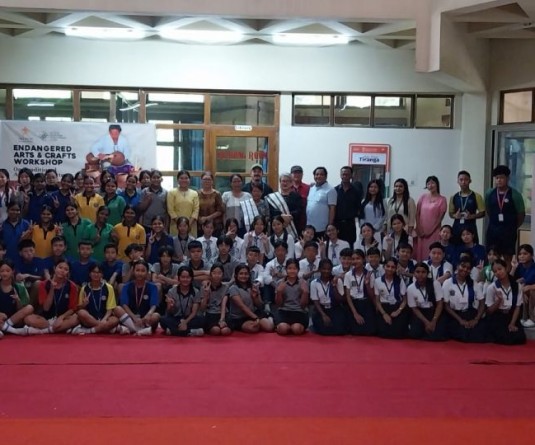
Attendees during the inaugural day of the the National Conference on Biodiversity Conservation & Climate Resilience in North East India–2026 at Nagaland University, Lumami, on October 6. (Photo Courtesy: NU)
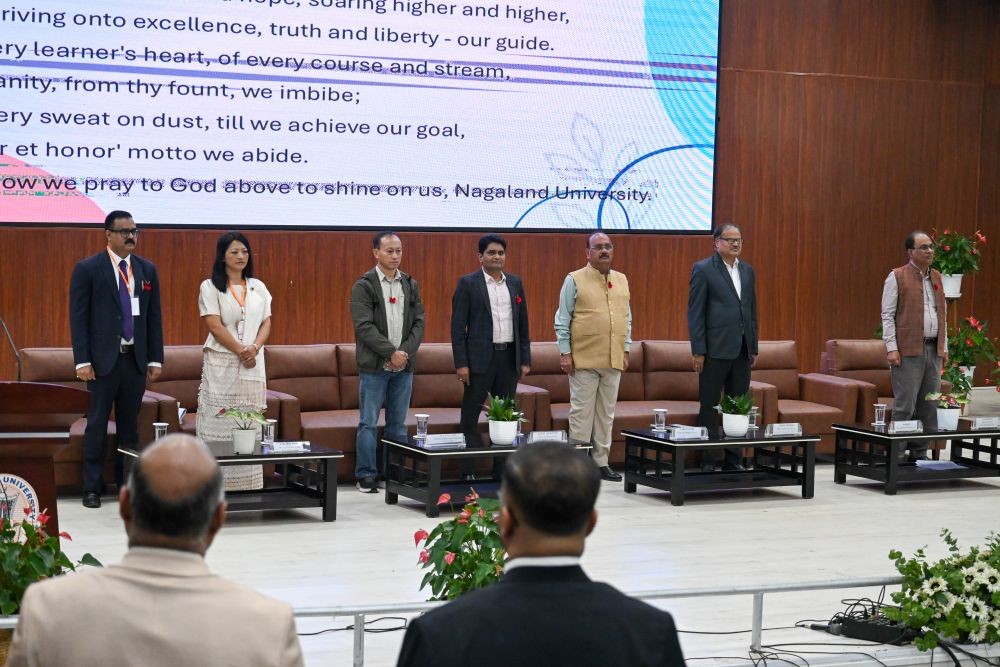
Lumami, October 7 (MExN): The need to integrate indigenous knowledge with modern science and policy to address biodiversity loss and growing climate risks in North-East India was emphasised at the inaugural session of the National Conference on Biodiversity Conservation & Climate Resilience in North East India–2026 (NCBCCR-2026) at Nagaland University, Lumami, on October 6.
The conference brings together researchers, academics and other stakeholders to deliberate on biodiversity conservation and climate resilience in the region.
Conference Convener Prof Ashutosh Tripathi, outlining the objectives, highlighted NE’s rich forest cover, diverse ecosystems and traditional indigenous knowledge.
He said rising climate risks and biodiversity loss called for an integrated, multidisciplinary approach linking science, policy and practice, while keeping conservation strategies community-centred and culturally grounded.
Formally inaugurated the conference, Chief Guest Prof PK Mishra, Professor (HAG), Chemical Engineering, IIT (BHU), Varanasi, and former Vice-Chancellor of AKTU, Uttar Pradesh, and JTU, Jharkhand cautioned that continued ecological degradation posed risks to human survival and called for sustainable practices that enable communities to live in harmony with nature.
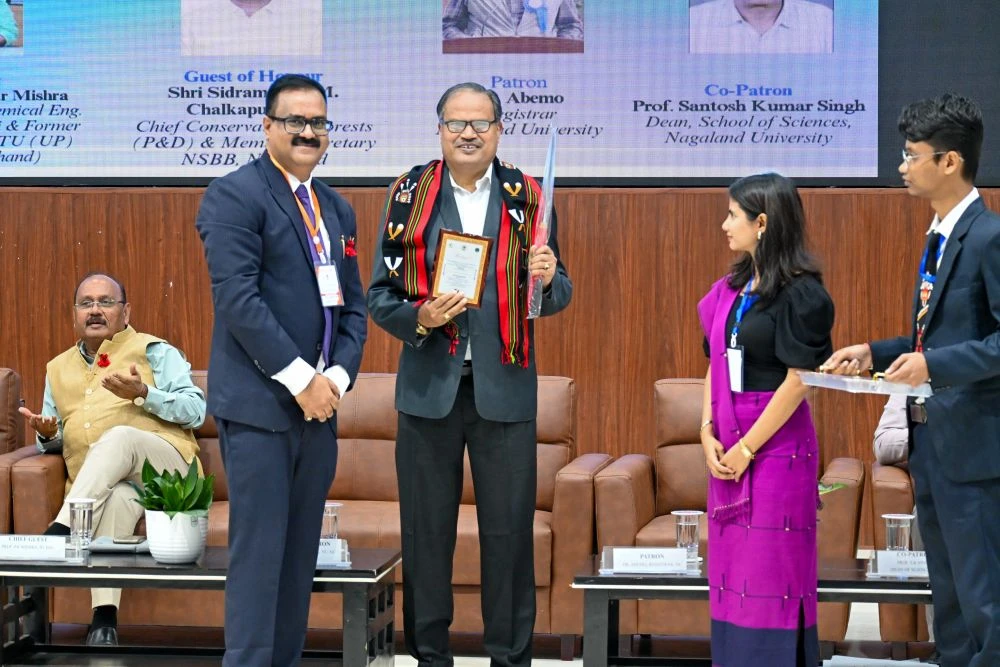
Guest of Honour Sridramappa M Chalkpure noted that Nagaland’s concentration of endemic species made it particularly vulnerable to environmental degradation.
He said traditional conservation practices had come under pressure from modern development and highlighted initiatives such as Biodiversity Management Committees as mechanisms for strengthening community participation in conservation.
NU’s Vice-Chancellor and Chief Patron Prof JK Patnaik said the State had historically preserved its forests but recent development and modernisation had coincided with increasing natural disruptions, including landslides and cloudbursts.
He urged researchers to document environmental changes at a finer scale to inform conservation efforts.
Prof Santosh Kumar Singh, Dean, School of Sciences and Co-Patron, stressed that climate change was an immediate threat to the region and called for the integration of indigenous knowledge with scientific research.
The inaugural session of the two-day was attended by 91 participants, including 14 resource persons, 67 registered delegates and 10 Nagaland University faculty members, informed an NU release.