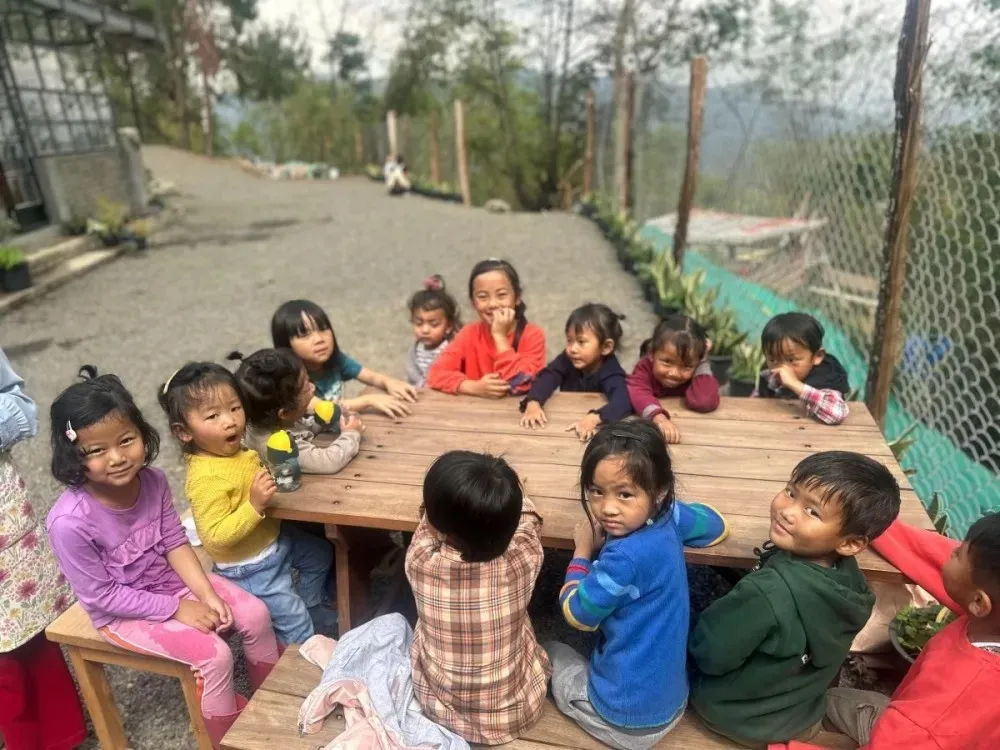
Students at Badze Leshüki, an alternative learning centre in Kohima Village.
Tania and Dr Theyiesinuo Keditsu
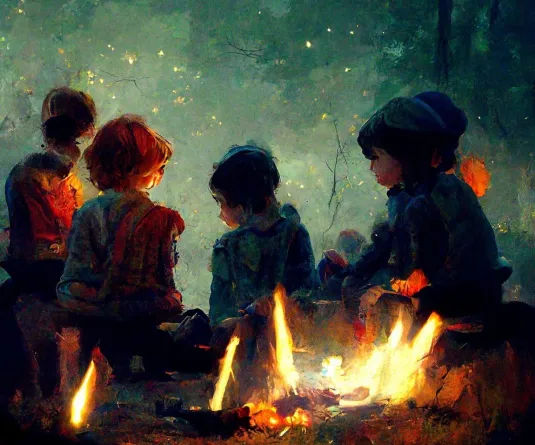
Long before the introduction of formal schooling in Nagaland, learning was deeply embedded in the everyday lives of its communities. Children acquired knowledge through observation, imitation, participation and the gradual assumption of responsibilities within their families and villages. The land was both the context and the material for learning. To cultivate a field required an understanding of soil, seasons, weather and the relationships between different forms of life. To participate in the affairs of the community required familiarity with its histories, customs, language and social obligations. Knowledge was acquired through use, and its value was demonstrated in the ability to apply it. Children grew up learning to read their natural and social worlds, acquiring forms of literacy that enabled them to participate meaningfully in the life of their communities.
There is, of course, little reason to romanticise these arrangements. Indigenous societies had their own hierarchies, exclusions and restrictions, including those determined by gender, age and social position. Access to knowledge was not necessarily equal, nor were all inherited practices worthy of perpetuation.
Yet there were certain merits to these ways of learning that deserve our attention, particularly in the present context of educational reform. Learning was situated within a recognisable world, where knowledge was connected to experience and where the community, its language and its environment were integral to the educational process. What John Dewey would later articulate in his philosophy of experiential education, particularly the relationship between learning and doing, was already familiar to indigenous communities through our everyday practices. Knowledge was seldom divided into the discrete disciplines through which we have subsequently come to organise education. Because the practical business of living required children to draw upon several kinds of knowledge at once.
At Badze Leshüki, an alternative learning centre in Kohima Village, we have been experimenting with ways to bring these principles into contemporary educational practice. Children learn about soil and decomposition by making compost and observe the growth of plants they cultivate. They encounter mathematical and scientific concepts while cooking these same vegetables they have grown and learn about their community through its languages, stories and everyday practices. The forest, river, garden and kitchen stand as equal learning spaces where learning arises from the children's immediate experiences and questions. These experiments have also made us conscious of the possibilities that emerge when indigenous knowledge is brought into conversation with contemporary pedagogical approaches. Such an encounter, however, is possible today because of the educational foundations laid by generations of teachers and institutions through the expansion of formal schooling in Nagaland.
The introduction and expansion of modern education brought profound changes to Nagaland. Formal schooling opened access to literacy, scientific knowledge, higher education and professions that had previously been beyond the reach of most communities. It enabled generations of young people to participate in a much wider world of intellectual, economic and social opportunities. Much of this progress has been made possible through the sustained efforts of teachers, educational institutions and the state's education department, often under difficult circumstances. Their contributions deserve recognition, particularly when we consider how far education in Nagaland has travelled within a relatively short period of time.
Yet the expansion of formal education has also come at a cost. The organisation of knowledge into subjects, examinations and prescribed pathways of achievement has gradually distanced learning from the places and communities in which children live. The natural world, once an immediate source of knowledge, is increasingly encountered as information in a textbook. Indigenous languages, through which generations have named, classified and understood their environments, occupy a diminishing place in formal learning. Today it is not uncommon to hear children conversing in English, even within the home and to their parents. It has thus become a matter of concern that most children acquire qualifications without developing a corresponding familiarity with the ecological and social worlds to which they belong. It is true, education prepares them for particular disciplines, professions and forms of employment, and yet many of the practical, relational and ecological competencies required for living remain outside its recognised measures of achievement.
This is not an argument against modern education or the opportunities it has created. Rather, we feel it is important to examine what has been lost in the process of its expansion, and what might now be recovered and reconsidered. Indeed, it is precisely the progress made in formal education that has brought us to a point where such an encounter has become possible. We have the benefit of established educational institutions, trained teachers, access to contemporary pedagogical research and a growing recognition of the need to make education more responsive to the lives of learners. At the same time, we possess rich indigenous traditions of knowledge that continue to inform how our communities understand and inhabit their worlds. The question before us is how these different intellectual and educational resources might enter into dialogue, and what new possibilities for learning might emerge from that exchange.
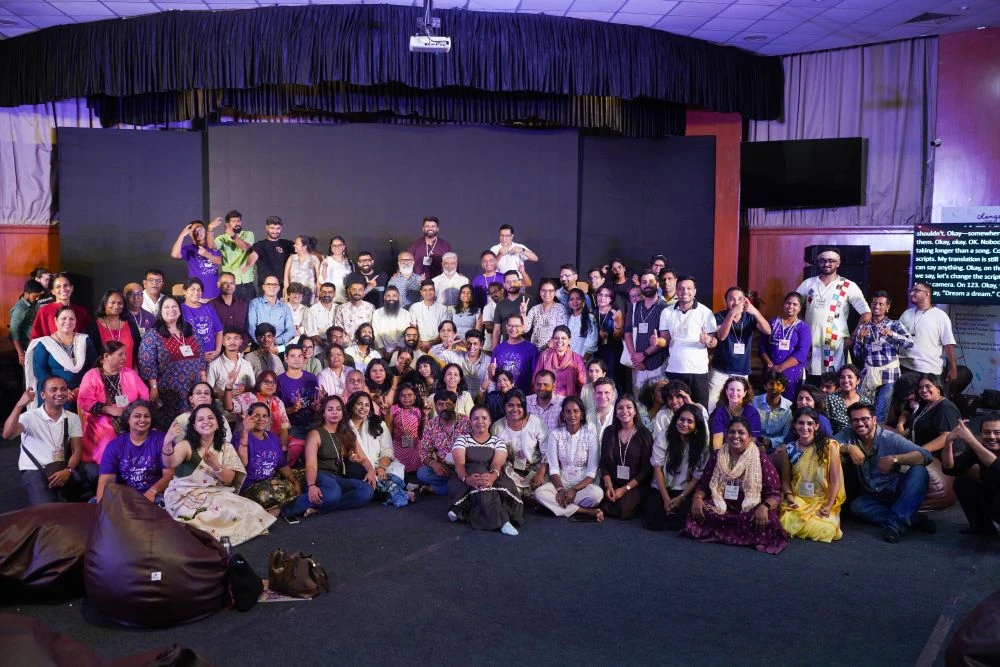
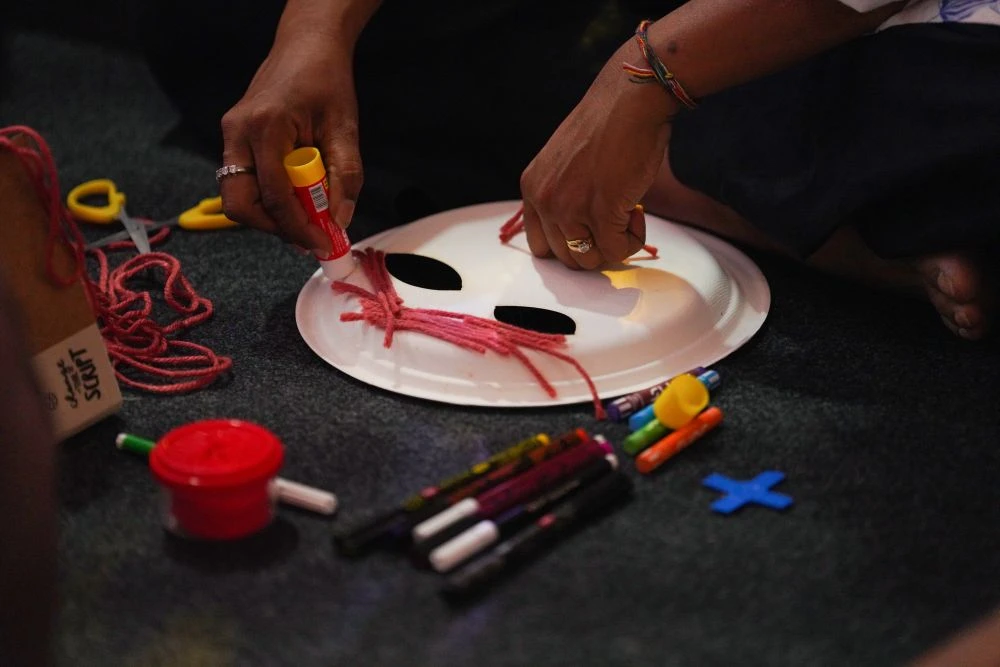
It is in this context that initiatives such as Change the Script offer a particularly pertinent space for reflection. Convened by Dream a Dream, a Bengaluru-based non-profit organisation, the gathering brings together educators, policymakers, young people and others invested in rethinking the purposes and practices of education. Such conversations are especially relevant to Nagaland, where the possibilities for educational reform may lie in bringing contemporary pedagogical thinking into conversation with the meritorious aspects of indigenous learning. Questions of belonging, agency, responsibility, wellbeing and the relationship between knowledge and lived experience are already familiar to both traditions, even if they have been articulated and pursued differently. Their intersection offers opportunities to reconsider what we teach, how we teach and, perhaps most importantly, what we understand education to be for.
A study of social and emotional wellbeing in 30 government schools across Mon, Zunheboto, Mokokchung and Kohima surveyed 902 students, along with their teachers and parents. Teachers and parents reported that students hesitated to ask questions or join classroom discussions. A young person can attend every lesson and still struggle to say, “I have not understood.” The ability to seek help, express uncertainty and participate in learning matters. In August this year, we were at Change the Script, a gathering convened by Dream a Dream. Over 100 people, including education representatives from Nagaland, came together to ask what success means and what it costs. Young people shared their experiences. For some, success had become a burden: the duty to lift an entire family, met at the cost of their own childhood. One young person put it plainly:
“Everyone celebrates being the first in your bloodline to make it. Nobody asks what it costs. You carry your whole family on your back, and somewhere in there you stop getting to be a child. Some days it feels less like a dream and more like a curse.”
The gathering left us with a question: what kind of educational system would allow children the freedom to learn and grow without making their worth contingent upon particular measures of success?
There is already a practical attempt to look beyond marks in Nagaland. The Thriving Progress Profile, co-developed by the Nagaland Board of School Education and Dream a Dream, was piloted for Classes 9 and 11 in 17 schools across 10 districts. It recognised a student's growth beyond academic results, including wellbeing, relationships and agency. This has the potential to broaden the questions schools ask about student progress and how teachers and schools respond to their needs.
Perhaps the task before us, then, is to consider how the advances of modern education might be brought into a more meaningful relationship with the knowledge, experiences and aspirations of the communities it serves. Young people deserve qualifications and a fair chance to earn a living, but they also deserve an education that enables them to understand themselves, their communities and the world they inhabit. Schools, families and communities have a responsibility to ensure that a low mark does not diminish a child's sense of worth, and that belonging is never made contingent upon securing a particular post. Nor should a young person have to choose between leaving home and being valued at home. The possibilities opened by Change the Script invite us to reconsider these inherited divisions and to imagine an education in which the knowledge of one's own world becomes a meaningful starting point for engaging with the wider one.
Ultimately, reforming education does not require abandoning modern advancements, nor does it mean uncritical adherence to the past. Instead, as demonstrated by initiatives like Badze Leshüki, it calls for re-rooting learning within the lived realities of our communities. By bridging formal instruction with the holistic, experiential wisdom of indigenous practices, we can cultivate an educational framework that is both deeply grounded in its environment and fully capable of preparing children for the world to thrive.
About the authors:
Dr Theyiesinuo Keditsu is a Kohima-based poet, educator, feminist scholar, and cultural conservationist, and an Assistant Professor at Kohima College. Founder of Badze Leshüki. Writing as T Keditsu, she is an author and co-founder of CIKAL whose work champions Naga textiles and Indigenous histories.
Tania is a trauma-informed psychotherapist, creative arts facilitator, and a community connector at Dream a Dream, working at the intersection of mental health, education, and social identity. With over a decade of experience supporting practitioners and young people, Tania brings a critical, reflective lens shaped by narrative and trauma-informed approaches.