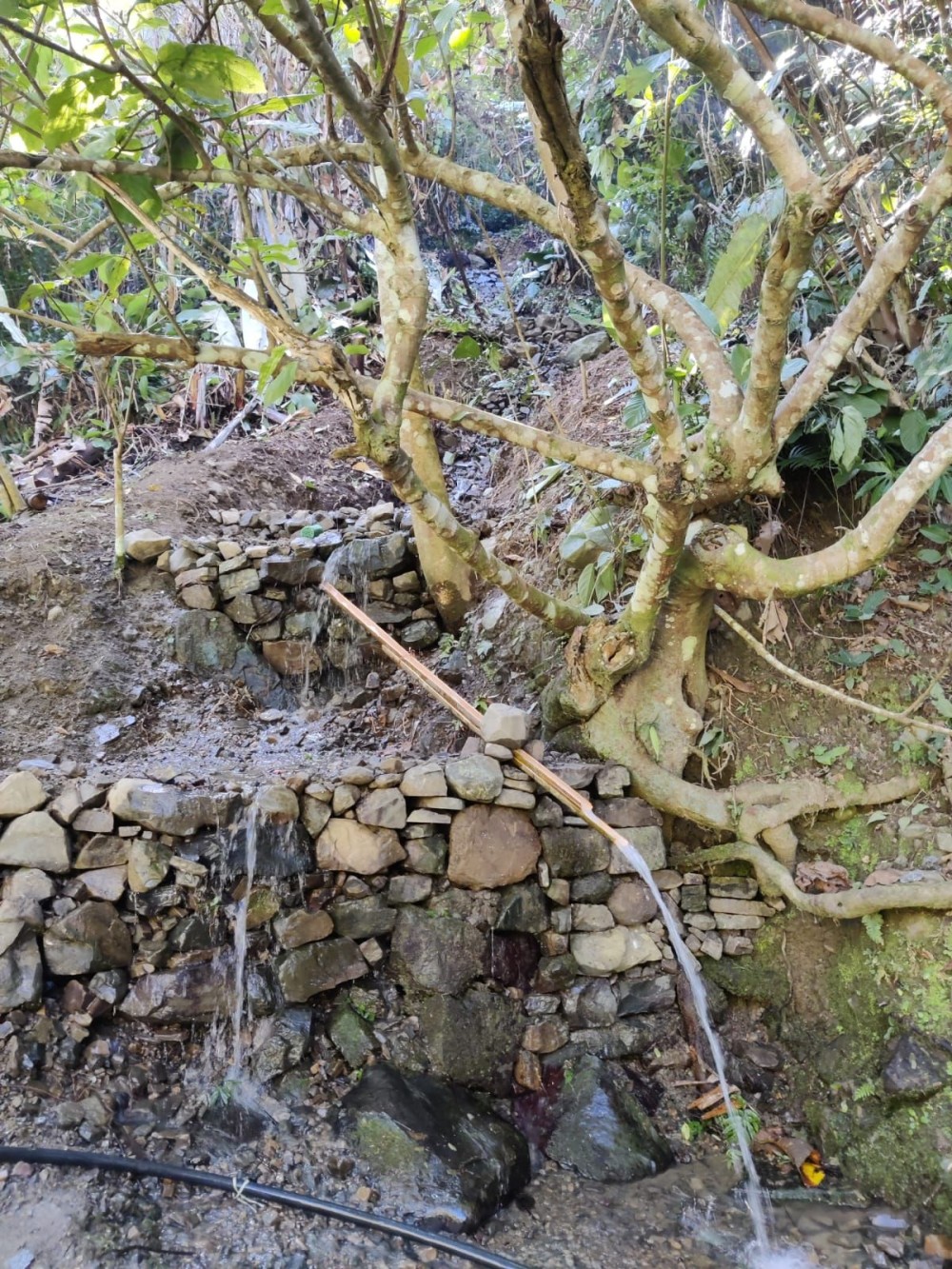
Natural spring at Langzanger village under Kiphire district.
Morung Express News
Dimapur | March 21
As the world observes World Water Day on March 22, grassroots conservationist and Whitley Award winner Dr Y Nuklu Phom highlights that Nagaland’s worsening water crisis stems not only a governance failures but also from unsustainable infrastructure and deforestation.
In a conversation with The Morung Express, Phom identified that roads in the ecologically fragile hill state must be “built differently and governed better” to prevent further watershed degradation and spring depletion.
Phom, team leader of LEMSACHENLOK, highlighted the challenge of balancing infrastructure and ecology in Nagaland, noting poorly planned road construction has accelerated environmental damage, the situation in rural areas is not beyond redemption.
“Our Naga society has long been rooted in principles of sustainability, even before global institutions like the United Nations popularised the concept of ‘sustainable development’,” he said, adding that traditional practices ensured responsible use of natural resources while preserving them for future generations.
.webp)
However, he noted that globalisation and modern demands have led to deviations from these age-old practices. “Unsuitable engineering methods such as vertical hill cutting, inadequate drainage, and vegetation clearance have led to slope instability, soil erosion and depletion of springs that rural communities depend upon.”
Phom, winner of 2021 Whitley Award, often called the ‘Green Oscar,’ for establishing ‘Biodiversity Peace Corridors’ for establishing “Biodiversity Peace Corridors”, emphasised that roads are essential for livelihoods and basic services in a geographically isolated state like Nagaland. Therefore, the focus should shift to improving infrastructure planning and execution rather than building less.
He called for ecosystem-sensitive road construction incorporating slope stabilisation, watershed management, and community oversight. Specific measures, according to him, include replacing vertical hill cutting with benched grading, deploying bio-engineered retaining walls, and proper cross-drainage systems.
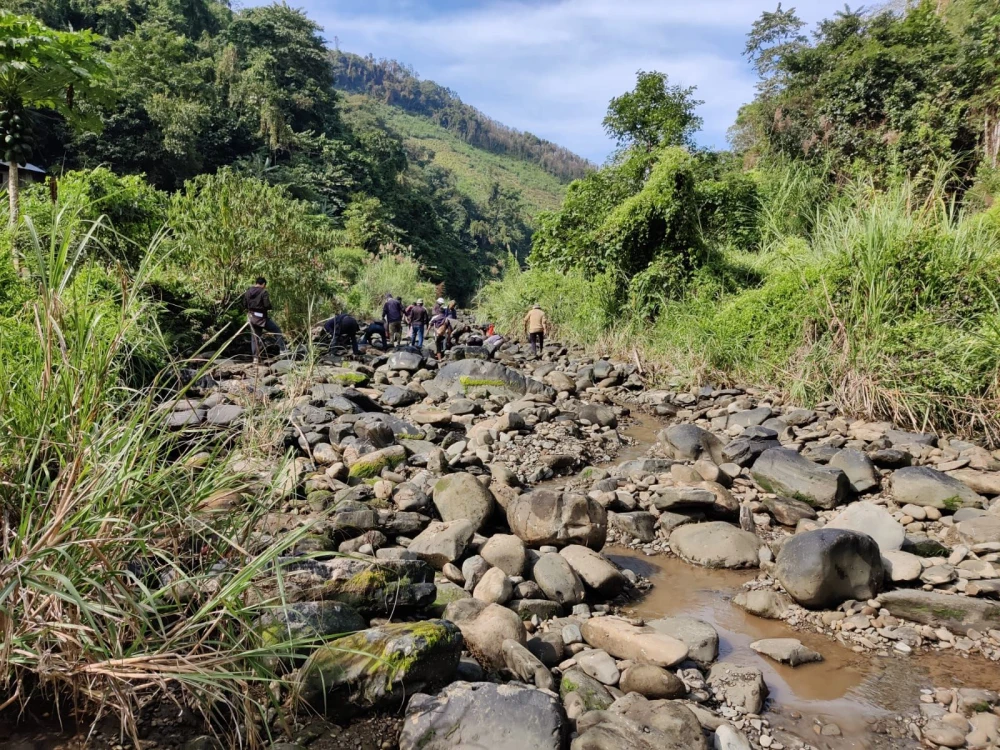
The conservationist urged agencies like the PWD and NHIDCL to integrate spring-shed mapping into project reports to protect groundwater recharge zones before construction. He also stressed that programmes such as Jal Jeevan Mission must safeguard spring recharge zones while expanding water supply, and advocated using GIS and AI for climate-resilient planning alongside strong policy enforcement.
“The policy frameworks for sustainable development in Nagaland already exist. The main challenge lies in effective implementation, ensuring stronger enforcement, adequate funding, and political will,” he said.
Sustainable infrastructure, he said, requires active involvement from local communities, village councils, government agencies, and civil society. Noting that many rural villages still practice sustainable forest use, he called for blending modern science with traditional knowledge.
Phom urged a multi-departmental strategy to address Nagaland’s water crisis—moving beyond symbolic plantations to legally notify and protect critical recharge zones through coordinated, science-based, community-driven efforts involving Forest, Soil & Water Conservation departments, and Village Councils. “Forests, soil, water and communities are all connected and must be managed together,” he added.
‘Spring Custodians’
He proposed training “Spring Custodians” - local conservationists, youth, and village authorities -to lead on-ground efforts. The plan, according to him, requires adequate government funding and must cover every village in Nagaland. Each village should demarcate critical catchment areas, enforce strict protection rules, and implement soil and water conservation measures like contour trenches and check dams to enhance groundwater recharge.
.webp)
For restoration, Phom called for water-conserving, fast-growing, and indigenous plant species to ensure ecological balance and higher survival rates, and saplings should be geo-tagged to ensure accountability and monitoring. The ultimate measure of success should be “the revival of spring discharge, ensuring both ecological restoration and sustainable water security for present and future generations.”
Pair tradition with accountability
Phom called for pairing Nagaland’s customary land ownership with legal accountability to address deforestation and drying springs. He noted that while customary law ensures community ownership, it often diffuses responsibility. “However, the solution is not to replace this system, but to strengthen, formalize, and make it more accountable.”
He noted that the authority for such action already exists within the Village Council Act and customary laws. “The issue is not a lack of authority, but of effective implementation,” he said. “With rising resource use and human pressures, there is an urgent need to reinforce this responsibility through stronger awareness, better leadership, and transparent governance.”
.webp)
Phom suggested that Village Councils should frame simple, written rules identifying protected areas and specifying penalties, including fines and community service, formally recognised by the government to provide legal backing.
He also recommended appointing local guardians or “community custodians,” maintaining transparent records, and involving tribal bodies and churches to create social and moral pressure. “Positive incentives are equally important,” he said. For serious offences like illegal logging or destruction of catchment areas, Phom said Village Councils should coordinate with the Forest Department to ensure formal legal action.
“Ultimately, the goal is to retain the strength of Nagaland’s customary governance while making rules clearer, fixing responsibility, and integrating legal and institutional support,” he said. “By combining traditional authority with modern accountability, communities can effectively safeguard their forests, water sources, and land for future generations.”
.webp)
Nagaland-specific water policy
Phom said a Nagaland-specific water policy integrating traditional governance with scientific conservation is “necessary and timely,” though not a standalone solution. He noted that Village Councils already hold authority over land and resources, and “Linking customary laws with scientific conservation is practical and effective because Village Councils already hold authority over land and resources.” Scientific mapping of catchments and recharge zones, coupled with regular audits, is essential to prevent over-extraction and ecological degradation, he suggested.
Phom stressed that “equitable distribution” must underpin the policy to bridge urban-rural gaps, and called for “strict and enforceable regulation of borewell licenses,” cautioning that unregulated groundwater extraction is a key factor contributing to the drying up of springs across several regions.
Phom noted the policy’s success depends on community participation, transparent enforcement, and continuous monitoring. He explained that the water crisis stems from governance gaps, deforestation, degraded catchments, poor infrastructure, and climate change, issues policy alone cannot solve. A dedicated water policy must be complemented by forest conservation, watershed restoration, and improved infrastructure and climate-resilient planning, he said, adding, “Only through this integrated approach can Nagaland ensure long-term water security.”