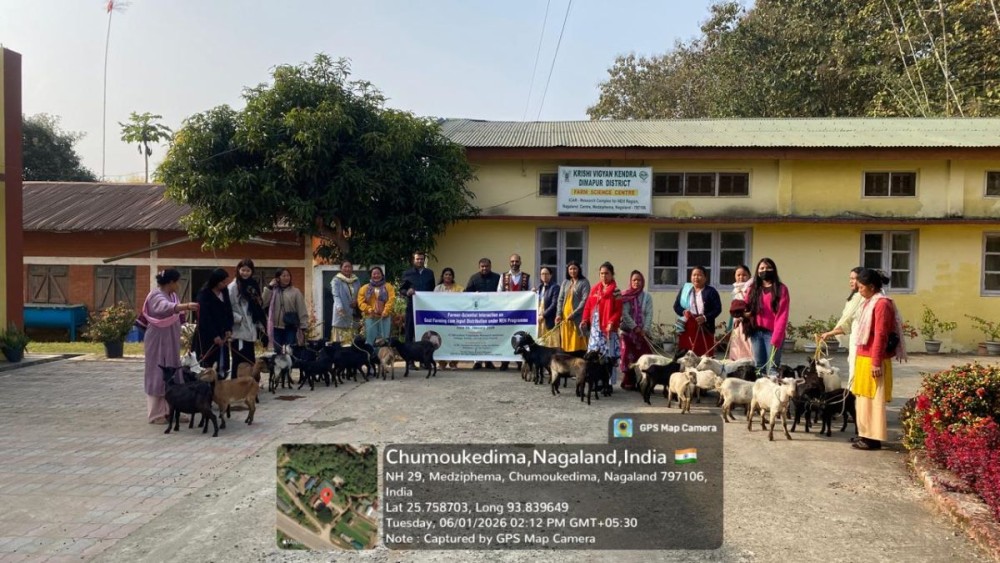
Kohima, January 6 (MExN): A Scientist–Farmer Interaction-cum Goat Distribution programme was organised for the upliftment of farmers, with a special focus on women livestock rearers, in Chümoukedima district.
The programme was organised by ICAR–Indian Veterinary Research Institute (IVRI), Bareilly, Uttar Pradesh, under its NEH Programme, in collaboration with ICAR–National Research Centre (NRC) on Mithun and ICAR–Krishi Vigyan Kendra (KVK), Dimapur.
It was conducted for female livestock farmers of Chümoukedima district on the theme “Empowering Women through Scientific Goatery and Goat Seed Village Development: Pathways to Sustainable Livelihoods and Income Generation in the NEH Region.”
The programme was attended by Dr Kathiravan Periasamy, Principal Scientist, ICAR–NRC on Mithun; Dr Hari Om Pandey, Principal Scientist, LPM Section, ICAR–IVRI, Izatnagar, Bareilly; Dr Phool Kumari, Senior Scientist and Head, ICAR–KVK, Dimapur; Dr Yathish H M, Senior Scientist; and Dr L Sunitibala Devi, Scientist, ICAR–NRC on Mithun.
During the interaction, women farmers were provided training on scientific goat-rearing practices, including selection of does and breeding bucks, controlled mating, kidding care, low-cost housing, and balanced feeding using local fodder resources. Guidance was also given on the use of mineral mixtures, clean drinking water, and ration formulation.
Health management aspects such as biosecurity measures, deworming schedules, vaccination, ectoparasite control, and early disease reporting were emphasised. Participants were also oriented on maintaining basic records and tracking costs and benefits.
As part of livelihood support, three Assam Hill goats were distributed to each of the 14 selected female farmer beneficiaries, totalling 40 goats. In addition, two Assam Hill breeding bucks were provided for use as community breeding stock at a 20:1 ratio. Farmers were instructed on proper acclimatisation and quarantine practices.
The programme also included a question-and-answer session addressing local constraints in goat farming and encouraging women-led micro-enterprises.
Follow-up technical support was assured, while linkages with veterinary services, self-help groups, and markets were discussed to sustain the goat seed village model, informed a press release.