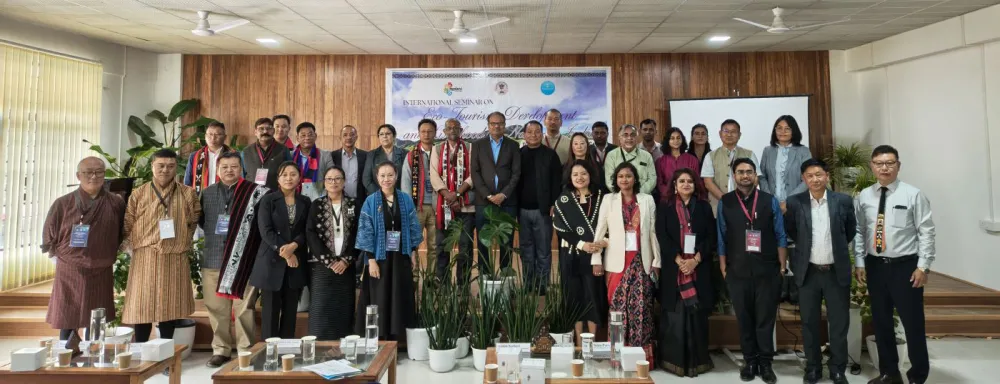
Organisers, speakers and participants of the international seminar on “Ecotourism, Livelihood and Development in Northeast India” at Nagaland University, Lumami, on November 19. (Morung Photo)
Morung Express News
Lumami | November 19
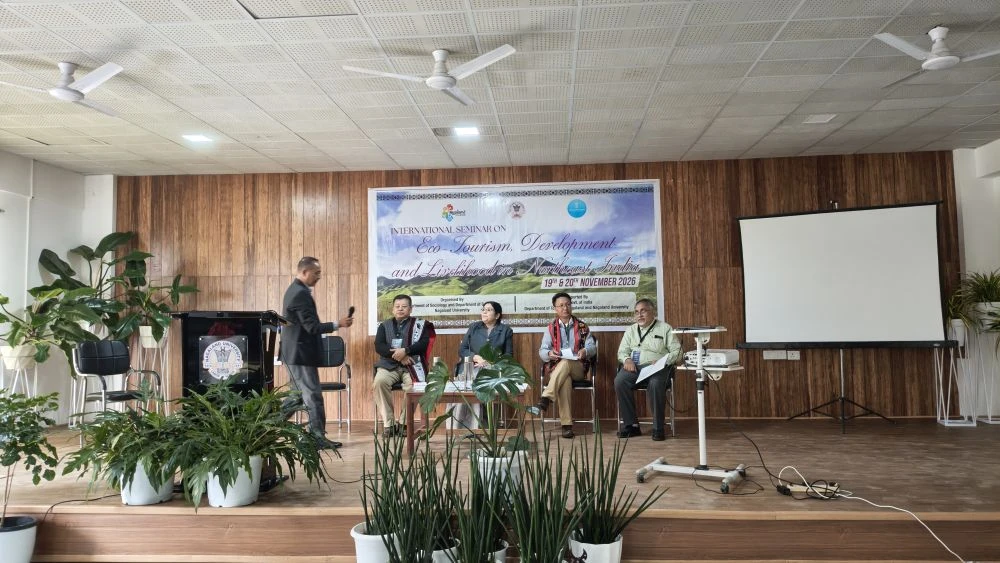
Nagaland University began a two-day international seminar on “Ecotourism, Livelihood and Development in Northeast India” on November 19.
Organised by the university’s Departments of Sociology and Geography, the seminar brings together academics, policymakers, tourism practitioners and community representatives to discuss tourism’s impact on livelihoods, culture and the environment.
Dr Sandeep Gupta, co-convenor of the seminar, said tourism should be examined beyond visitor numbers, infrastructure development and economic growth. He identified community participation, control over tourism resources, distribution of benefits and environmental and social costs as key areas for discussion.
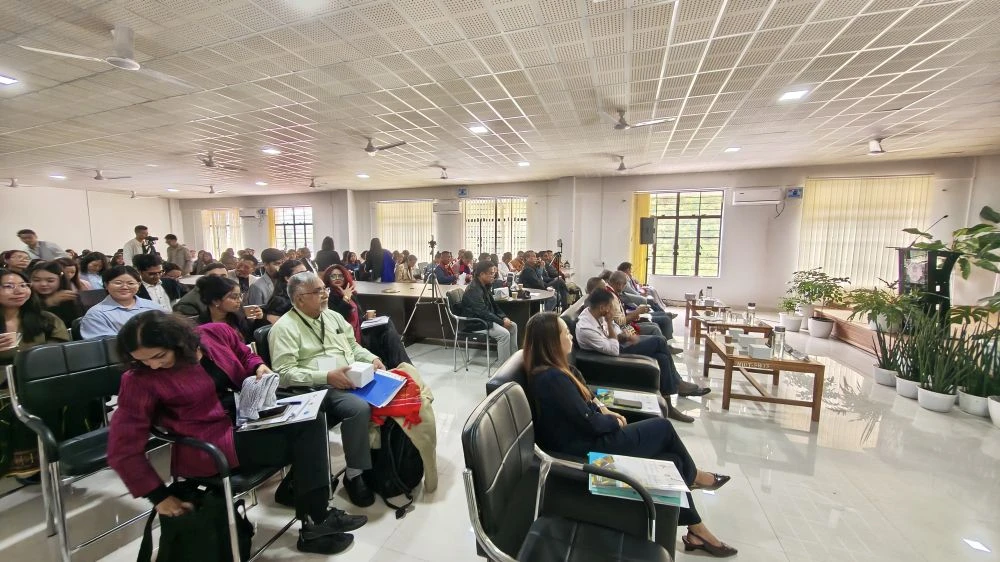
According to the organisers, 43 papers were selected for presentation from the submissions received. The programme includes discussions involving researchers, policymakers and grassroots practitioners.
The organisers also plan to prepare an academic volume and a policy document based on the seminar’s proceedings. A concluding roundtable will bring together resource persons and participants to discuss recommendations for policymakers.
Kovi Meyase, Commissioner and Secretary of the Nagaland Department of Tourism, outlined the state’s potential for ecotourism, cultural tourism, rural tourism, adventure tourism and agro-tourism.
Meyase said tourism development should be linked with environmental conservation, community participation and local livelihoods. The Tourism Department identified rural homestays, local employment, women’s participation, skill development, biodiversity conservation, plastic-free zones and improved waste management as important areas of sustainable tourism.
Khonoma, Dzuleke, Dzukou Valley, Mount Saramati and the Green Dikhu Project were cited during the seminar as examples of initiatives connecting tourism with conservation and community development.
Meyase also identified several challenges facing the sector, including poor road connectivity, limited transport facilities, permit-related difficulties, inadequate waste management, a shortage of trained tourism workers and the lack of standardised homestay facilities.
The seminar also discussed the possible effects of unregulated tourism on local culture and traditional practices. Participants called for local communities to be involved in decisions concerning cultural presentation, sacred places, natural resources and tourism-related activities.
The programme will continue on November 20 with further presentations and discussions on ecotourism, livelihoods, conservation and development in Northeast India.