Dr. Zhokusheyi Rhakho
Lozaphuhu Village
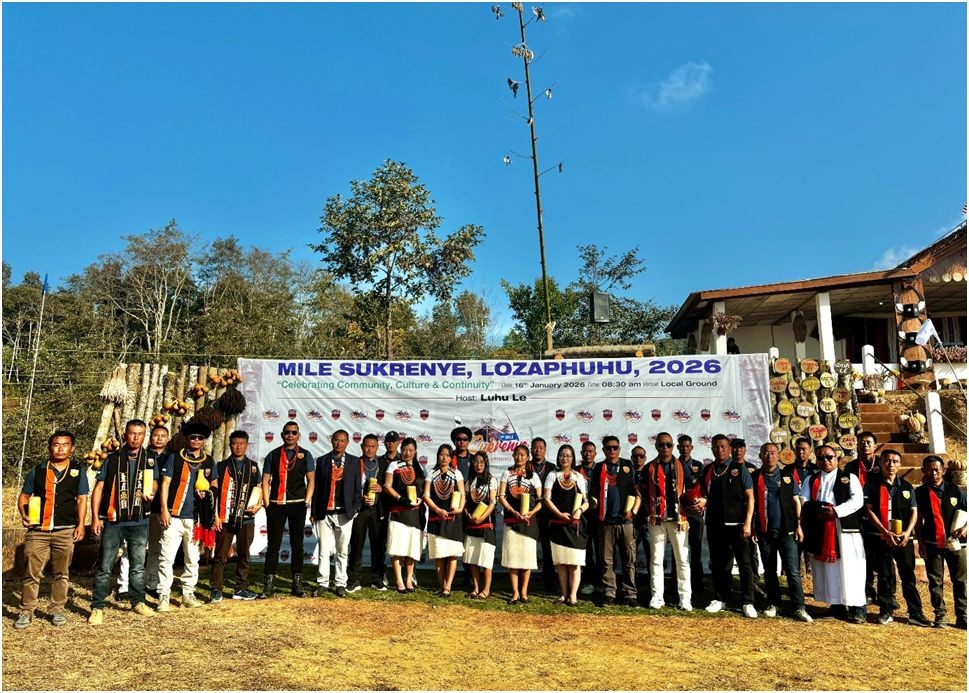
Sukrenye festival was celebrated at Lozaphuhu Village from January 14 to 16 and on the final day, Mi-Le Sukrenye programme was held under the theme, “Celebrating Community, Culture & Continuity” with Er Vechiso Chakhesang, Additional Director, Treasuries & Accounts, as the Special guest. This year Sukrenye feast was hosted by Luhu Le peer group where they offered feast to the whole Village.
It was a whole day affair which began at 7:30 a.m. with all menfolk march from the end point of the village to the venue where flags were hosted and trumpet was blown. The formal programme began with a prayer by Rev. Fr. Vekupa George Rhakho and welcome note was brought on behalf of Luhu Le by Vekusheyi Rhakho (NCS), Dy Secy Geology & Mining. In commemoration of the event, a souvenir was released by Veni Vese (NPS), ADCP, Chümoukedima along with other dignitaries. Greeting was brought by Khusuzo Khamo, VCC Lozaphuhu. Folks songs and folk fusion were sung by various groups and individuals and narration about the traditional past was brought by Vekudu Tsutso.
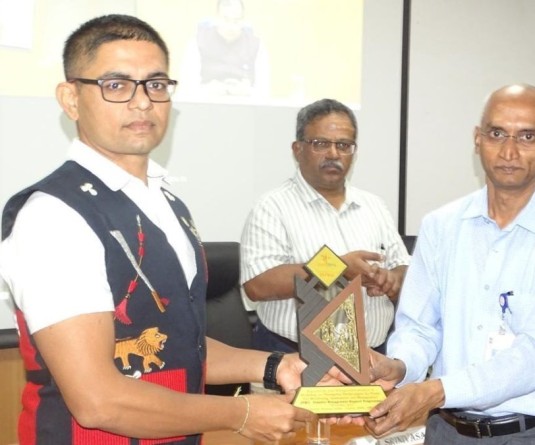
The special guest exhorted, encouraged and challenged the community to always keep striving forward while being rooted in our age old values and principles. Competitions were held in tug of war, top spinning, penalty shoot-out and prizes to the winners were given away by Nesakho Sakha, GT, GHSS, Phek Town and vote of thanks was pronounced by Thupuzo Rhakho, Head Teacher, GPS Lozaphuhu. Prayer for the feast was invoked by Rev. Kevengo-i Sakha, Pastor LBC and the de-hoisting of flag was done by Venechi Vese, AO, Dept. of Agriculture, Phek. Comperes for the day were Povepa Vese and Kutholu Rhakho while the program was chaired by Dr. Zhokusheyi Rhakho.
After every alternate year, Sukrenye feast is hosted by one peer group known as Mi-Le for all other peer groups in the Village. Mi-Le is a traditional peer group organisation where one remains part of it for life and it is compulsory for every menfolk of the village to be a member of a Mi-Le whether one resides in the village or not.
Traditionally, Sukrenye was a festival of sanctification where children were sanctified (sukreyi) and blessed by parents. The sukreyi of boys involves cooking of chicken on a separate hearth which normally took place in middle compartment of the house (chedzuche). Freshly cut wood (pine) will be kept near the village and will be collected in the morning to be used as cooking place (meso). Until sukreyi was done, its kuni/genna for a child to eat any meat that had nails or killed by wild animals. Girls normally undergo sukre only once before they reach puberty which takes place near the entrance of the house (chelukhro), but boys can undergo many times. An elderly men or men of integrity can also sukre for the whole community too.
Sukrenye in traditional times normally falls in the month of January (Sukrenye Khri). The starting of celebration was normally adjusted according to the lunar calendar in such a way that full moon doesn’t fall on the days of Chedu, Thupusukre and Thunosukre. Even though the actual celebration were 9 days, yet number of rituals/gennas to the event were observed before and after, connected with the festival once the season sets in:
1. Kuthuna- it was a muna/genna but no restriction for field visit even though work cannot be undertaken.
2. Tsakri- it was a muna which involve restrictions like no dry cooking-roasting, no smoking, no travelling, no hosting guest, no catching of animals, etc. Working in field restricted. On this day, feast rice beer making begins.
3-5 were working days where one can do works like carrying of firewood but no spade work or cutting of fresh fire wood.
6. Thitso: this day signalled the start of Sukrenye where an announcement for meat cutting and its distribution was made. Can visit ones’ field but no working with spade or dao.
7. Thiza: cutting and distribution of sukrenye meat was done on this day.
8. Chedu: on this day, clans host feast (unone zune) to all their married daughters and husbands for that particular year, who normally goes around accompanied by their clansmen amidst singing of folk song and taste the rice-beer and food (normally the choicest) served to them. It was a core part of the celebration and it was genna to do any work.
9. Thupusukre: on this day, all menfolk go hunting and the hunted were hang on a bamboo pole placed near the entrance of the village gate which then will be carried amidst folksong and erected at the assigned place inside the village by evening. Boys were sanctified (sukreyi) on this day. It was a core part of the celebration and it was genna to do any other work.
10. Thunosukre: normal feasting continues. Girls were sanctified (sukreyi) on this day. It was a core part of the celebration and it was genna to do any work.
11. Cheduzomu-I: Meat cutters will observe kuni with restriction from working but rest of the villagers can visit field however no spade/dao work or any other strenuous works can be undertaken.
11. Cheduzomu-II: whole community will observe kuni with work restriction but meat cutters can visit field but then no spade/dao work or any other strenuous works can be undertaken
12. Thinye mukra: one can visit field but no spade/dao work or any other strenuous works can be undertaken.
13. Nyeso: one can visit field but no spade/dao work or any other strenuous works can be undertaken. This was the concluding part of Sukrenye.
14 & 15 were normal working days.
16: Thinyezho muna: it was a genna connected with the ending of sukrenye. One can visit field but no spade/dao work or any other strenuous works can be undertaken.
From thitso to nyeso, where continues celebration for 9 days ensued was counted as the main days of sukrenye. The first 3 days (from Thitso to chedu) were called as nyelu, the middle 3 days (from thupusukre to cheduzomu-I) were called nyero and the last 3 days (from cheduzomu-II to nyeso) were called as nyeso.
Sukrenye is celebrated every year but in today’s context it happens on a much lesser number of days yet still celebrated with the old gusto, enthusiasm and fun blended with the praxis of time. It is celebrated with not much intention of attracting tourism but more of continuity of tradition.