Veronica Nriame addresses the students during a seminar on mental health held at Pfutsero Government College on August 21.
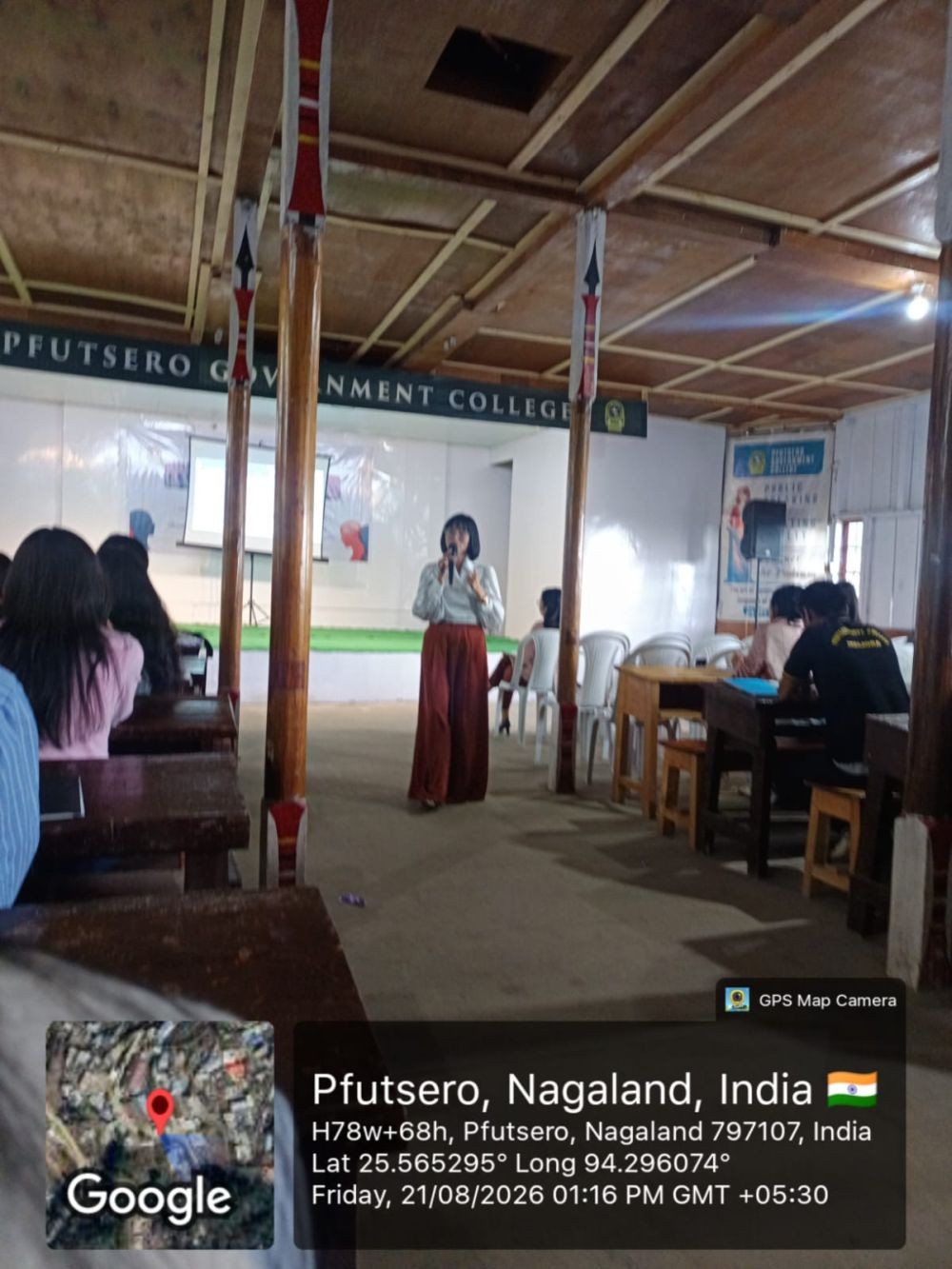
Pfutsero, August 21 (MExN): Pfutsero Government College (PGC) organised a one-day seminar on mental health on the theme “Supporting Young Minds: Building Hope and Resilience”, focusing on awareness of mental health challenges and ways to promote emotional well-being among students.
The seminar was organised by the Mental Health Cell, Department of Sociology and Department of Education, Pfutsero Government College.
Veronica Nriame, Psychiatric Social Worker, District Mental Health Programme (DMHP), Naga Hospital Authority, Kohima, and Chuti Semy, Counsellor, Rengma Baptist Church, were the resource persons.
Vice Principal Neichupe Kapfo delivered the welcome address, while Dr Meyetsolo Riste, Assistant Professor, Department of Education, chaired the programme.
In the first technical session, Nriame spoke on mental health as a positive dimension of overall well-being, stressing that it was not merely the absence of mental illness but also the ability to cope with everyday challenges, regulate emotions, maintain healthy relationships and lead a meaningful and productive life.
She discussed common mental health concerns among young people, including depression and anxiety, suicide, internet addiction, alcohol and substance abuse or dependency, and stress.
While addressing substance abuse, Nriame cautioned students against experimenting with drugs, saying their lives should not be treated as a “science lab” for experimenting with substances. She highlighted the harmful effects of substance use on the brain and stressed the importance of informed and responsible choices.
Nriame also outlined practical ways to promote mental well-being and build resilience, encouraging students to strengthen themselves as individuals and regulate their emotions through healthy coping mechanisms.
She suggested talking openly about emotions, maintaining a journal, seeking professional help or therapy when necessary, exercising regularly and maintaining good nutrition. She also encouraged students to focus on personal growth and strive to “be a better person than yesterday”.
In the second technical session, Semy spoke on “Understanding Addiction: A Biopsychosocial Perspective”. He explained addiction as a learned and compulsive behaviour driven by the brain's reward system and noted that it extends beyond substance use to behaviours such as gambling, gaming, social media, internet use, streaming, reels and online shopping.
He said such behaviours could disrupt the balance between pleasure and discomfort, resulting in irritability, boredom and restlessness. Stress, early exposure to substances and advancing technology, he noted, could increase vulnerability to addiction.
Semy also highlighted possible consequences of addiction, including increased stress and anxiety, relationship difficulties and procrastination.
To help break the cycle of addiction, he suggested dopamine fasting, self-binding strategies, time and space binding, setting boundaries, uninstalling addictive applications and learning to tolerate discomfort.
The seminar also featured an interactive session during which students engaged with the resource persons and discussed mental health, emotional challenges and healthy ways of coping with stress.