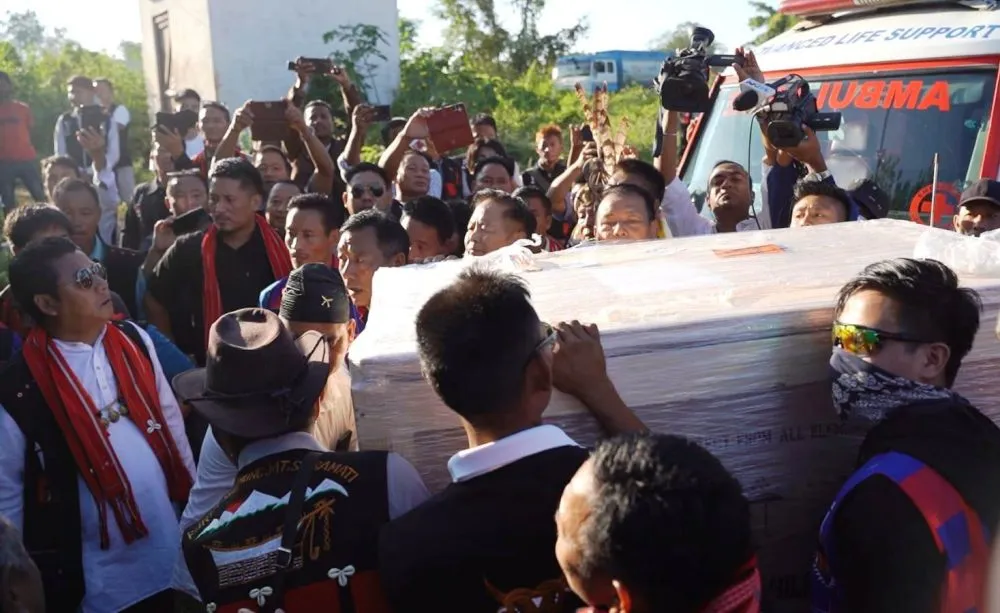
Volunteers carry a coffin of the Naga ancestral human remains upon its arrival at Dimapur Airport on November 27. (Morung Photo)
Morung Express News
Dimapur | November 27
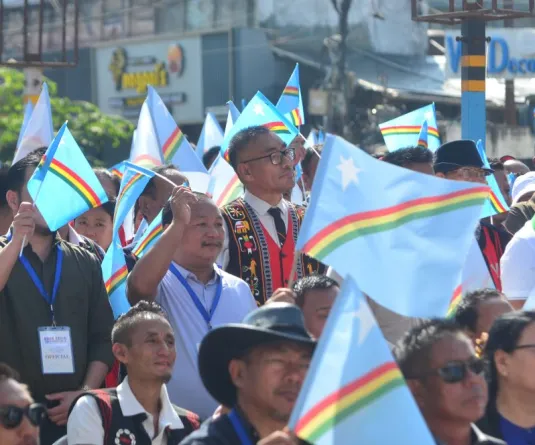
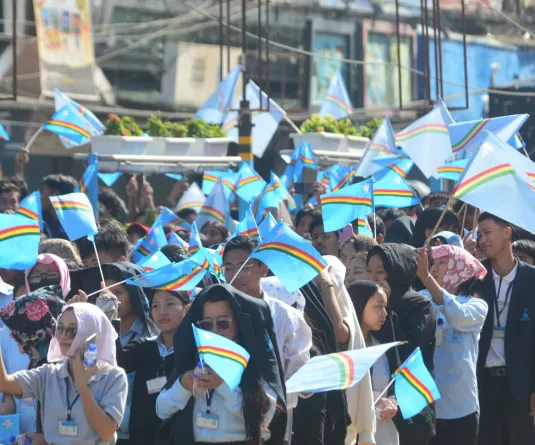
A long wait, traditional chants, echoes of Naga war cries and a gathering of men and women in tribal attire from across Nagaland, as 39 Naga ancestral human remains returned home after more than a century, one message rang out at Dimapur Airport on Friday: They are home.
As the plane touched down, people who had waited for hours at the airport’s side gate erupted in celebration, marking a homecoming that transcended tribal identities and brought together Nagas in a rare moment of shared history, grief, joy and remembrance.
Outside the waiting area, laughter, conversations and friendships across tribes filled the air. The gathering offered a glimpse of a unity that Nagas have long aspired to achieve, as people stood together to welcome their ancestors back to the land from which they were taken during the colonial era.
For many, it was more than the return of human remains. It was the restoration of a connection severed for over a century, with the ancestors having been taken from the Naga hills and housed in the glass cases of the Pitt Rivers Museum (PRM), University of Oxford, in the United Kingdom.
The homecoming, following six years of dialogue and engagement that began in 2020, was also seen as the beginning of a journey towards healing, reconciliation and renewed solidarity among the Naga people.
Speaking at the reception programme at Dimapur Airport, Phom Peoples’ Council (PPC) vice-president NT Thamlong Phom described the return as a historic moment and urged the present and future generations to draw meaning from it.
He said the return of the ancestral remains and their eventual burial with dignity was not the end of the journey, but the beginning of another, one towards self-healing, unity and peace among the Nagas.
“Even the dead, that is, our ancestors, have suffered silently for more than a century and have testified to Naga history. So, it is my sincere appeal to all that let us all, the living, that is, the present generation and the future generation, let us all try to testify to the Naga history that we are one family, and that we share common roots, and there is no place for a narrow mindset,” he said.
The Journey of 39 Naga Ancestral Human Remain
The repatriation process was facilitated by the Forum for Naga Reconciliation (FNR), with the Recover, Restore and Decolonise (RRaD) team undertaking participatory research and community engagement. The Naga Tribes Hoho came together to lead the process, seeking to bring the ancestral remains back through a collective approach rooted in the oneness and unity of the Naga people.
The University of Oxford Council formally decided on July 13, 2026, to return the 39 ancestral human remains. A Naga delegation led by tribal leaders left for Oxford on November 7 and held a private time of prayer with the remains on November 8.
The formal transfer of title to the Naga people took place at a public ceremony at Rhodes House on November 9, following which the remains left the Pitt Rivers Museum for Heathrow Airport.
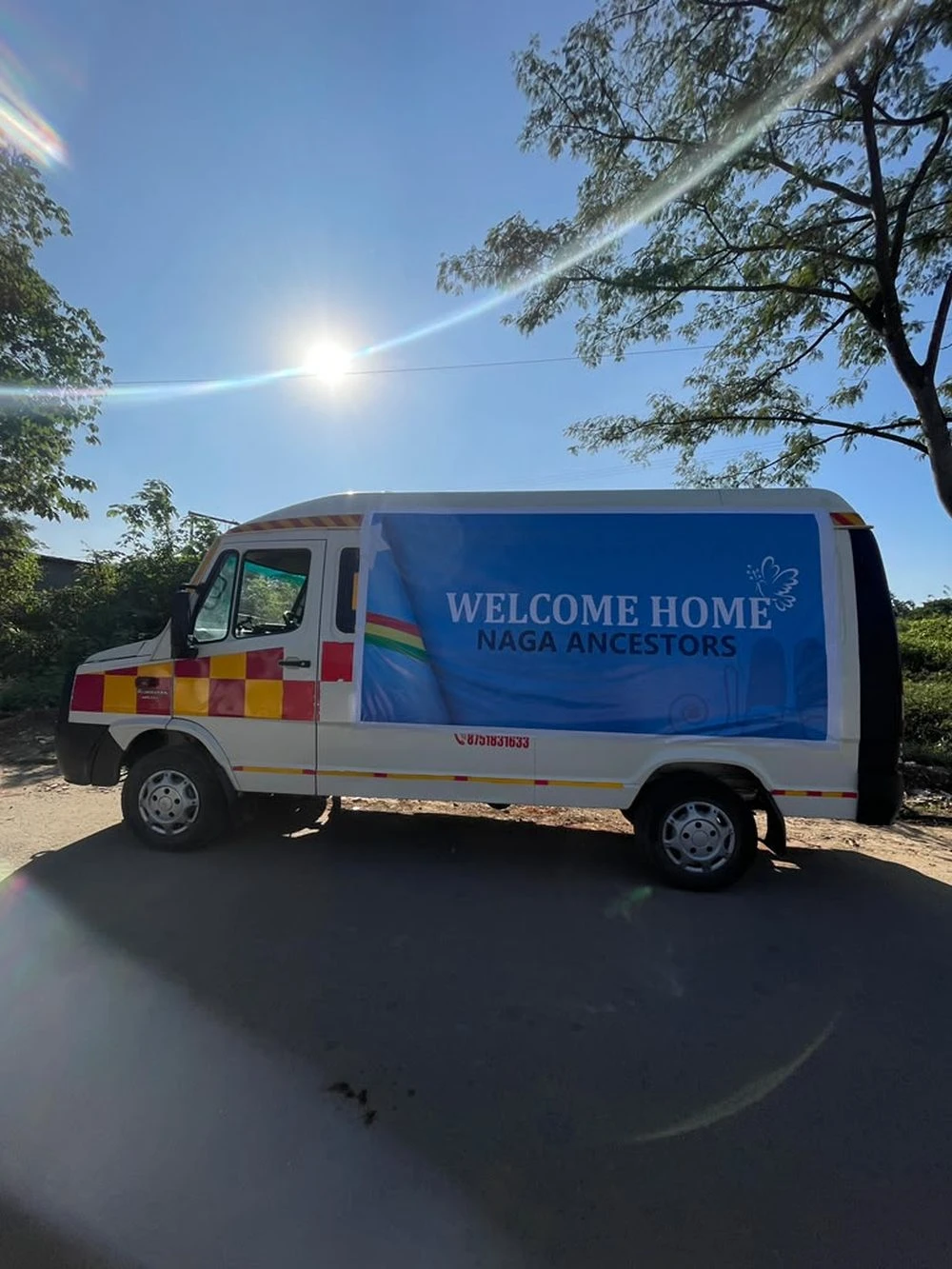
After completing official procedures and obtaining the necessary permits, the remains departed London on November 24 and reached Delhi on November 25, where they were kept in a safe holding area. Naga student leaders in Delhi visited the remains on November 26 to pay their respects through a solemn prayer before they departed for Dimapur on Friday.
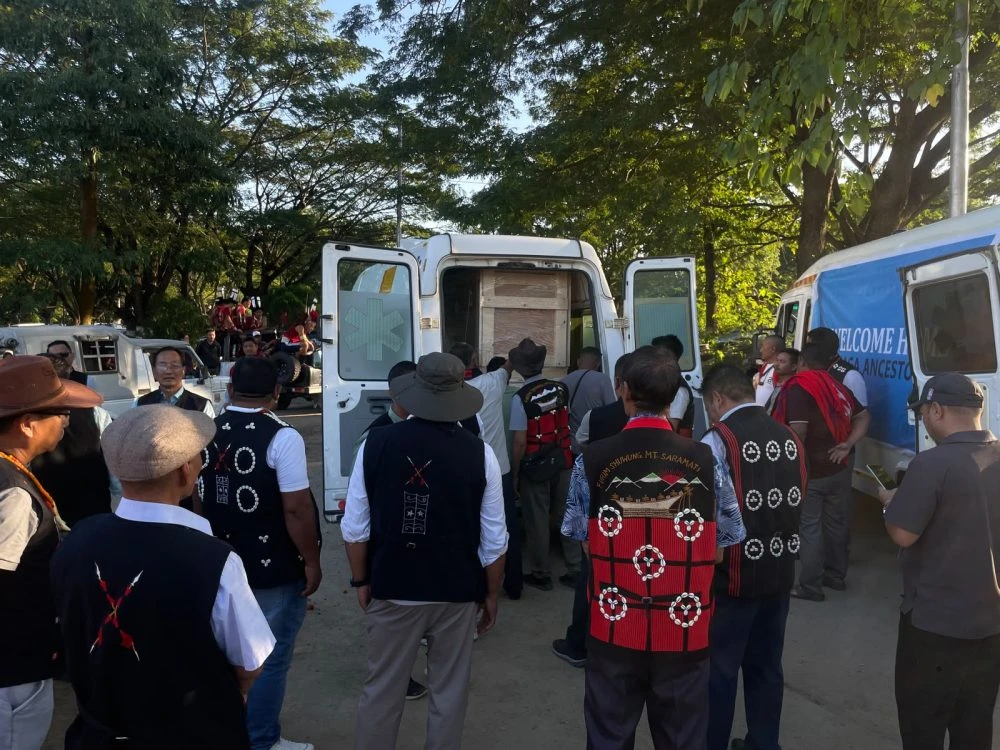
Following their arrival, a team of archaeologists and anthropologists from Nagaland University, along with the RRaD team, is to unpack the pallets containing the ancestral human remains in a safe, cordoned-off area.
The remains will be taken to the NBCC Convention Hall in Kohima, where a public homecoming ceremony will be held at noon on November 28. They will be open for public viewing from November 28, with viewing continuing from 9 am on November 29.
The burial ceremony is scheduled for November 30 at 2 pm at the Naga Solidarity Park, Kohima.
The park, envisioned by the Naga Students’ Federation and the Naga Peoples’ Movement for Human Rights, was created following the ‘Naga Week’ in 1993, held to commemorate the United Nations International Year of the World’s Indigenous Peoples. Conceived as a sacred sanctuary for Nagas to come together “towards our rightful place through healing of our spirits”, it stands today as a symbol of Naga identity, resilience and solidarity.