Image from Pixabay | For representational purpose only
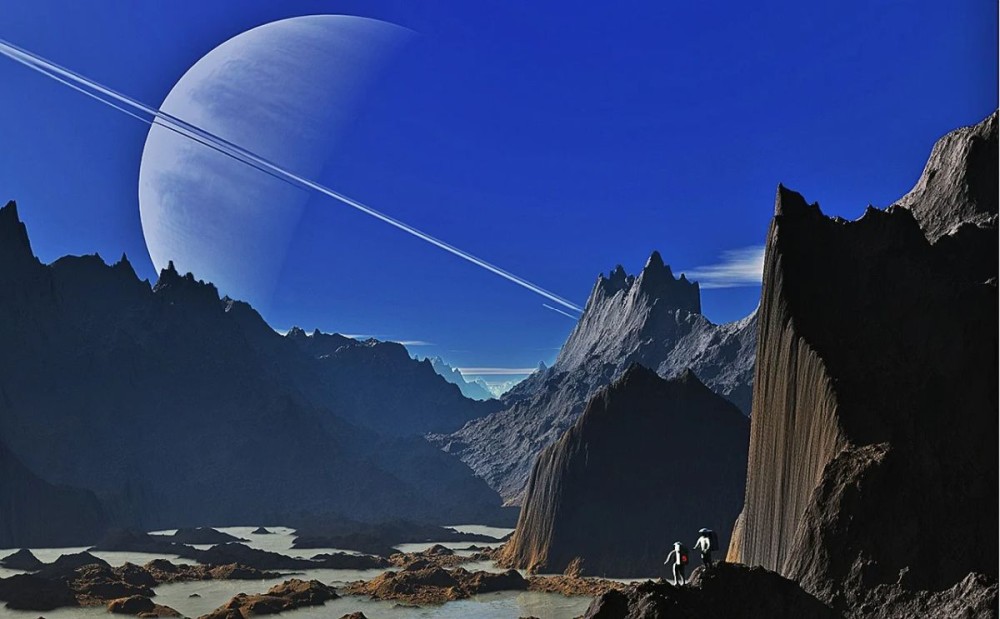
“Earth is the cradle of humanity, but mankind cannot stay in the cradle forever.”- Konstantin Tsiolkovsky
Jigisha
2nd Year, B.Tech, Plaksha University, Mohali
Introduction
Around the world, forty-three countries now have satellites orbiting in space. France, Russia, China, Japan and India are steadily challenging the US’s dominance in the commercial satellite launch market. As of 2026, 637 people from 47 countries have travelled to Earth orbit. Why does mankind invest so much effort in reaching outer space?
The fundamental motivations behind human spaceflight stem from humanity's enduring fascination with venturing into the skies for exploration and adventure. Since the late 1950s, space travel has, with very few exceptions, remained restricted to highly trained astronauts. However, there is an increasing expectation that technological advancements will eventually enable members of the public to visit and vacation in space. This emerging concept is known as space tourism. This article will explore the history of space tourism, the challenges facing the industry, potential solutions, and its prospects.
Background and Context
The shift started in the late 1990s and early 2000s as private companies and wealthy individuals expressed interest in commercial spaceflight. Denis Tito, the first self-funded space tourist in 2001, marked a historic moment by spending eight days aboard the International Space Station. His journey showed that non-career astronauts could travel to space safely with the right training. Since then, advances in reusable rocket technology, materials engineering, and automation have greatly lowered launch costs, making public space travel feel more realistic. Today, companies like SpaceX, Blue Origin, and Virgin Galactic are developing spacecraft designed specifically for tourists, rather than just astronauts. These innovations represent a shift from exclusive government missions to a growing industry where everyday people might one day see Earth from orbit.
Space tourism, at its core, refers to commercial travel beyond Earth’s atmosphere for leisure, research, or personal experience. Although it may seem like a futuristic concept, its origins date back several decades. The idea began to take shape during the Space Race, when human spaceflight demonstrated that people could survive and even work in microgravity. However, these early missions were government-funded, extremely expensive and restricted to highly trained astronauts, leaving the general public with little to no access to space travel.
A shift began in the late 1990s and early 2000s as private companies and wealthy individuals started expressing interest in commercial spaceflight. In 2001, Dennis Tito became the first self-funded space tourist, marking a historic milestone by spending eight days aboard the International Space Station. His journey demonstrated that individuals outside the professional astronaut community could travel to space with the appropriate training. Since then, advancements in reusable rocket technology, materials engineering and automation have significantly reduced launch costs, bringing public space travel closer to reality.
Today, companies such as SpaceX, Blue Origin and Virgin Galactic are developing spacecraft specifically designed to accommodate tourists rather than exclusively trained astronauts. These innovations represent a transition from government-dominated space missions towards an emerging commercial industry in which ordinary people may one day have the opportunity to see Earth from orbit.
Existing Gaps And Challenges
Despite rapid technological advancements, the space tourism industry continues to face significant challenges that prevent it from becoming a widely accessible mode of travel. One of the most prominent barriers is cost. Even with reusable rockets helping to reduce expenses, ticket prices remain exceptionally high, often ranging from hundreds of thousands to millions of dollars. This makes space travel accessible primarily to the ultra-wealthy. Until launch costs are reduced further, widespread participation will remain unrealistic.
Another major challenge is safety. Spaceflight is inherently risky due to extreme acceleration forces, radiation exposure, micrometeoroids and the possibility of system failures. Incidents such as the Virgin Galactic SpaceShipTwo crash in 2014 highlight the potential dangers involved. Without established and reliable safety standards, many potential travellers may be reluctant to undertake such journeys.
Additionally, the industry faces regulatory and ethical challenges. International space law is still evolving, leaving several questions unresolved, including passenger liability, environmental responsibilities and the management of increasing traffic in Earth's orbit. The environmental impact of rocket launches, particularly the release of black carbon particles into the upper atmosphere, presents another significant concern.
Finally, infrastructure limitations, including the lack of adequate spaceports, trained personnel and orbital facilities, further constrain the industry's ability to expand.
Possible Solutions
A promising path toward making space tourism safer, more affordable, and more sustainable is developing a coordinated system called the Integrated Space Tourism Ecosystem (ISTE). This system combines reusable launch technology, standardized safety training, and environmentally responsible operations. The key to this solution lies in next-generation partly or fully reusable spacecraft, which can significantly cut launch costs by reducing the need to rebuild components after every mission. Companies like SpaceX have already shown the economic benefits of reusability, and expanding this approach throughout the industry could make space travel more accessible. Along with technological improvements, the ISTE suggests a universal safety certification program for all tourists, similar to scuba diving. This standardized curriculum would ensure that passengers worldwide receive medically supervised preparation, microgravity training, and emergency response drills, greatly reducing risks linked to inexperience. To address environmental concerns, the model includes moving toward low-emission propulsion systems, such as methane-oxygen engines or hybrid propellants, along with strict limits on particulate emissions. Finally, establishing modular orbital facilities would create safe destinations for tourists and reduce traffic around the International Space Station.
Implications and Impact
A promising approach to making space tourism safer, more affordable and more sustainable is the development of a coordinated system called the Integrated Space Tourism Ecosystem (ISTE). This system brings together reusable launch technology, standardised safety training and environmentally responsible operations.
A key component of this solution is the development of next-generation partially or fully reusable spacecraft, which can significantly reduce launch costs by eliminating the need to rebuild components after every mission. Companies such as SpaceX have already demonstrated the economic benefits of reusable technology, and extending this approach across the industry could make space travel more accessible.
Alongside technological advancements, the ISTE proposes a universal safety certification programme for all space tourists, similar to existing certification systems for scuba diving. This standardised curriculum would ensure that passengers worldwide undergo medically supervised preparation, microgravity training and emergency response drills, thereby reducing risks associated with inexperience.
To address environmental concerns, the model also advocates a transition towards low-emission propulsion systems, such as methane-oxygen engines or hybrid propellants, accompanied by strict limits on particulate emissions. Finally, the establishment of modular orbital facilities would provide dedicated and safe destinations for tourists while helping reduce traffic around the International Space Station.
Conclusion
Space tourism stands at a pivotal moment in human history, transforming what was once a distant dream into an emerging reality. From the early days of government-led missions to the rise of private companies developing reusable rockets, the progress towards making space more accessible has been remarkable. However, significant challenges remain, including high costs, safety concerns, regulatory gaps and environmental issues, which continue to limit the ability of ordinary people to travel beyond Earth.
The proposed Integrated Space Tourism Ecosystem offers a comprehensive approach to addressing these obstacles. By combining reusable spacecraft, standardised safety certification, sustainable propulsion systems and modular orbital infrastructure, this model aims to make space travel safer, more affordable and more sustainable. Its potential impact extends beyond tourism, with the capacity to stimulate new industries, accelerate technological innovation and encourage global scientific curiosity.
Ultimately, the future of space tourism is not merely about sending people into orbit for leisure. It reflects humanity's broader desire to explore, innovate, and push the boundaries of what is possible. As more people experience the beauty of Earth from space, it may foster a greater sense of global unity and environmental responsibility. With careful planning and continued innovation, space tourism could become a catalyst for scientific progress and a more connected, forward-looking world.