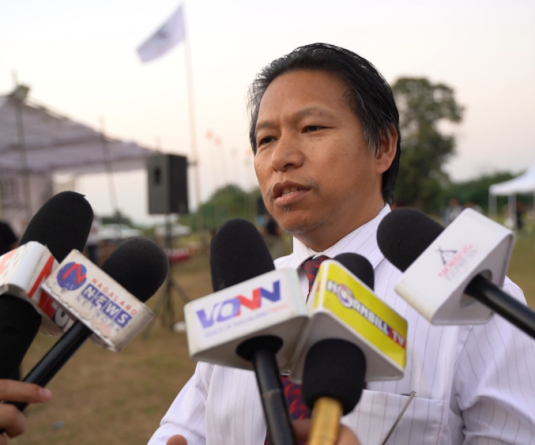
9th session of 14th NLA adjourned sine die. (File Photo)
Our Correspondent
Kohima | September 3
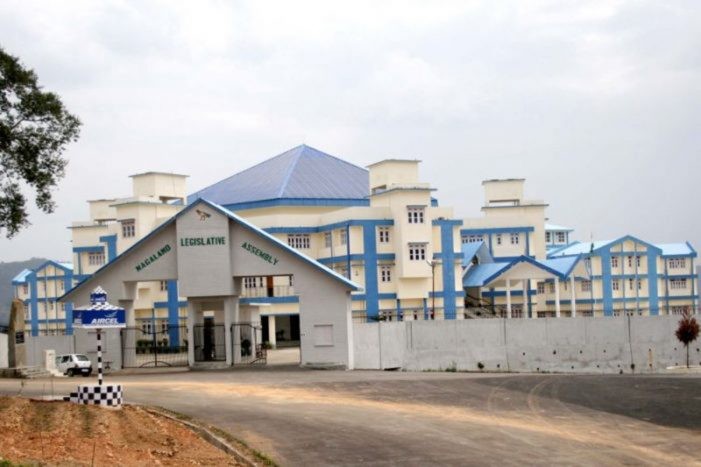
The ninth session of the 14th Nagaland Legislative Assembly was adjourned sine die on September 3 after the House completed all listed business.
Speaker Sharingain Longkumer said the two-day session, apart from Question Hour, witnessed the consideration and passage of six Bills, adoption of one resolution and deliberations on various matters of public interest.
Earlier, Chief Minister Neiphiu Rio, who also holds the Finance portfolio, tabled two reports of the Comptroller and Auditor General of India (CAG).
These included the CAG Report No. 1 of 2026 on Social, Economic, General and Revenue Sectors, including Local Governments Audit, for the year ended March 31, 2024, and Report No. 2 of 2026 on the State Finances of Nagaland for 2024-25.
During Question Hour, issues ranging from delays in retirement benefits and government project implementation to police salaries and minimum wages were raised.
Five Mon villages selected as Horticulture Model Villages
Minister for Women Resource Development and Horticulture Salhoutuonuo Kruse informed the Assembly that five villages in Mon district have been selected as Horticulture Model Villages (HMVs) under the Mission for Integrated Development of Horticulture (MIDH).
She was responding to a question from MLA A Nyamnyei Konyak on the implementation status and beneficiaries of the scheme in Mon district.
The selected villages are Tanhai for citrus, Chenwetnyu for large cardamom, Yonghong and Changlangsu for kiwi, and Sangsa for Naga Mircha.
Konyak also asked about the appointment of a Sub-Divisional Horticulture Officer at Tobu subdivision following the retirement of the previous officer two years ago. Kruse informed the House that a new SDHO had since been appointed.
Government cites procedural delays in retirement benefits
Chief Minister Neiphiu Rio said recurring delays in the payment of pension, gratuity, GPF and other retirement benefits to State Government employees were primarily due to procedural lapses at various stages.
Replying to a starred question from MLA Nuklutoshi, Rio cited inadequate guidance to retiring employees, delayed issuance of provisional release orders, late submission of pension papers and the practice in some departments of compiling pension papers of multiple employees before processing them.
He also cited incorrect entries in Service Books, errors in pay fixation following promotions or grant of MACP, and delays in forwarding pension papers to the Office of the Accountant General.
During a supplementary, Nuklutoshi said retirement benefits were not a favour but a rightful entitlement earned by employees after years of service. He said delays could cause serious hardship to retired employees, particularly those dependent on pensions for medical and household expenses.
He suggested that discrepancies in Service Books, GPF records, NOCs and other documents should be identified well before retirement, ideally around two years in advance. He also called for a time-bound tracking mechanism allowing retiring employees to monitor their pension cases.
Referring to systems in other northeastern states, Nuklutoshi said online pension processing and tracking mechanisms in Assam and Arunachal Pradesh, along with digital workflows and automated payments in Meghalaya and Mizoram, showed that such systems were feasible in the region.
Rio said the government was already examining ways to improve the existing system. He said pension papers were required to be forwarded to the Accountant General at least six months before retirement so that pensionary benefits could be finalised in time. The Chief Minister said delays could also arise from late issuance of provisional pension orders and No Demand Certificates, as well as incomplete documents and discrepancies in service or GPF records.
He further acknowledged instances where employees had continued in service beyond the prescribed retirement age because retirement and pension formalities had not been completed on time.
Rio informed the House that the government had constituted a committee to examine the existing system and recommend measures to streamline the process.
He said departments needed to identify employees due to retire well in advance and complete the necessary formalities on time.
PIMS deciding factor for police salary drawal
Deputy Chief Minister Yanthungo Patton said the Personnel Information Management System (PIMS) was the deciding factor for salary drawal following the introduction of the e-Pay system in Nagaland.
Replying to a starred question from MLA Kuzholuzo Nienu on PIMS and salary drawal by Nagaland Police personnel, Patton said the sanctioned strength of posts was being strictly adhered to while drawing salaries.
On cases of police personnel allegedly drawing salaries from multiple sources, Patton said the Home Department had constituted a Special Investigation Team to investigate alleged fraudulent drawal of multiple salaries, including cases involving salary and life pension from more than one source within the State Government.
He said the investigation covered government employees from several departments, including the Nagaland Police.
10 projects foreclosed, funds surrendered
Deputy Chief Minister TR Zeliang said 10 government projects had already been foreclosed and their sanctioned funds surrendered, with landowner-related issues among the major reasons.
The issue was raised by Advisor for SCERT and Food Processing Achumbemo Kikon, who questioned the recurring closure of projects due to implementation delays.
Referring to a project for conversion of a workshop into a bus station, night parking and market complex, Kikon said funds had been sanctioned in 2016 but the project could begin only in October 2020 following delays in project clearance.
“If the money was sanctioned in 2016 and the project took off only in 2020, we are four years behind,” Kikon said, questioning whether such delays were due to bureaucratic red tape, inefficiency in preparing Detailed Project Reports and completing technical formalities, or contractors failing to execute works within the stipulated period.
He also cited cases where delays in submitting utilisation certificates had prevented the release of balance funds, resulting in the surrender of sanctioned amounts.
Kikon raised concerns over the surrender of development funds at a time when the State was facing financial constraints.
On road projects, he said progress on the Noklak-Thonoknyu road had been affected by landslides during the monsoon and disturbances from landowners seeking compensation. Similar problems, he said, had affected other projects.
“People want good roads, they want big roads and they want better infrastructure, but when projects fall within their jurisdiction, we face problems from landowners,” Kikon said.
He also referred to infrastructure development at Government Higher Secondary School, Mayangnokcha, where construction could not continue due to landowner issues. The unutilised amount of approximately Rs 101.67 lakh was subsequently refunded to the North Eastern Council and the project closed.
Responding, Zeliang said delays often began at the departmental level when administrative approvals and tendering procedures were not processed in time.
He said that even after funds were sanctioned by agencies such as the Ministry of Road Transport and Highways and the North Eastern Council, departments sometimes failed to initiate administrative processes and tendering within the stipulated period.
Zeliang said some of the foreclosed projects had remained incomplete for years, including projects sanctioned in 2012, 2017 and 2022.
He urged Ministers and Advisors to take greater responsibility for monitoring projects and to regularly review progress with departmental officers.
The Deputy Chief Minister also highlighted the financial implications of delayed implementation of centrally assisted projects, saying the State's committed liability had risen to around 11 percent.
He warned that unless it was brought below five percent, Nagaland could face difficulties in securing additional projects and funds in future.
Zeliang said the government had therefore been compelled to consider foreclosure of certain projects to reduce committed liability. Although such action resulted in surrender of funds and penalties, he said it was necessary to maintain eligibility for further assistance.
He said the State had subsequently begun receiving approval for new projects from concerned agencies, and stressed that departments must learn from the experience and implement projects within stipulated timelines.
NSHRC wage recommendations await finalisation
MLA Nuklutoshi raised concerns over the low wages being paid to workers engaged under the government and sought action on recommendations of the Nagaland State Human Rights Commission (NSHRC) for revision of minimum wages.
He said the existing rates were Rs 176 per day for unskilled workers, Rs 210 for Grade-I skilled workers andRs 235 for Grade-II skilled workers, and called for an upward revision in view of the rising cost of living and wage rates in neighbouring states.
Replying, Deputy Chief Minister TR Zeliang said the State Advisory Board had met on March 12, 2025, to consider revision and fixation of minimum wages.
The Board had proposed daily wage rates of Rs 297 for unskilled workers,Rs 365 for semi-skilled workers, Rs 400 for skilled workers and Rs 450 for highly skilled workers.
Zeliang said the draft recommendations of the State Advisory Board on fixation of minimum wages for 2025 were referred to the Departments of Law and Justice and Finance for vetting and concurrence.
A Cabinet memorandum was subsequently submitted, followed by a Cabinet meeting on March 23, 2026. Pursuant to the Cabinet's directives, the matter was re-examined by the Finance Department, which reiterated its earlier position. The department's view had previously been concurred with through U.O. No. 199 dated June 19, 2025.