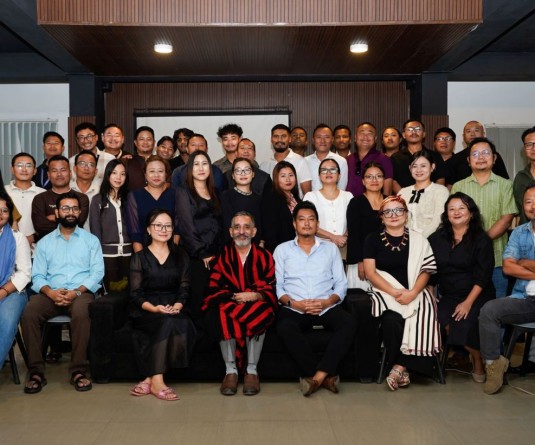
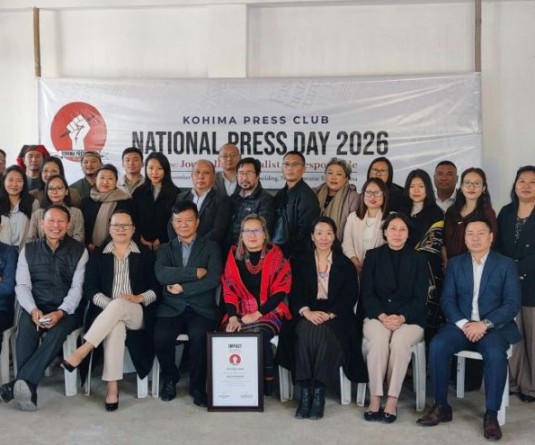
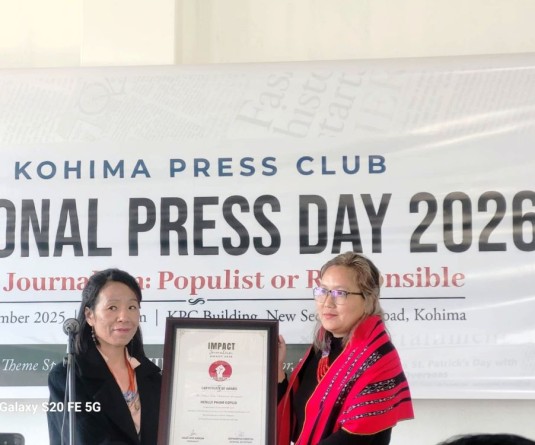
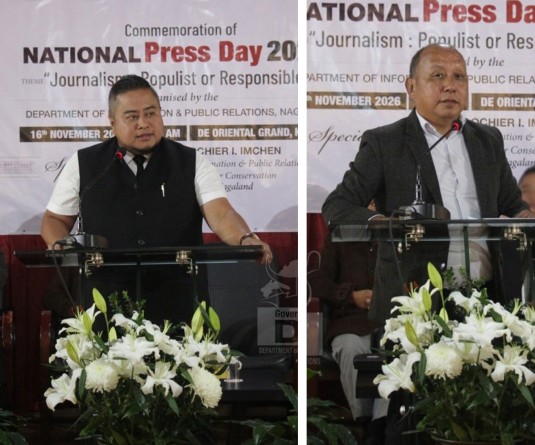
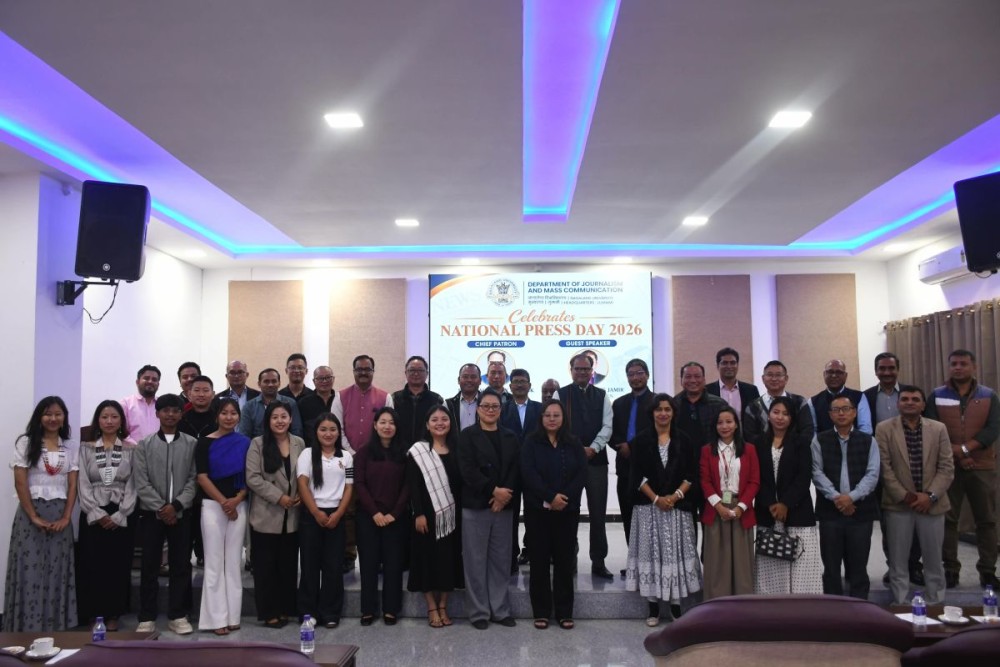
Officials and participants during the National Press Day programme held at Nagaland University, Lumami on November 16. (Morung Photo)
Morung Express News
Lumami | November 16
Journalists must give greater importance to accuracy, verification and public accountability than to being the first to publish a report, Editor of Ao Milen Akangnungsang Jamir said on Monday.
Speaking at a National Press Day programme at Nagaland University, Jamir said the rapid growth of smartphones and social media had changed the way news was produced and consumed. Although information was now available within seconds, he questioned whether people were necessarily better informed. He said the main difference between a professional journalist and a content creator was the responsibility to verify information, check sources and provide proper context.
“Speed matters, but accuracy defines the profession. Being first means nothing if the report is false,” Jamir said.
Referring to the challenges faced by regional newspapers, he said rising printing costs, changing reading habits and financial difficulties were affecting small media organisations. He added that dependence on government advertising could sometimes create pressure on editorial independence.
According to Jamir, building sustainable and diversified sources of revenue was important for protecting independent journalism.
He also stressed the importance of local and vernacular newspapers, saying they reported issues that were often ignored by national media. Problems such as damaged village roads, teacher shortages and the lack of essential supplies in health centres directly affected local communities, he said.
Jamir said vernacular newspapers in Nagaland also helped connect communities and preserve indigenous languages and cultural memory.
Speaking about artificial intelligence, he said the technology could help newsrooms with transcription, translation and data analysis. However, he warned that AI could also increase the spread of fabricated images, cloned voices and misleading videos.
“AI can summarize information, but it cannot walk into a remote village, interview witnesses, or verify official records,” he said, adding that moral and legal responsibility for published content remained with human beings.
Jamir also criticised the growing political polarisation and sensationalism in parts of the media. He said journalism should examine the actions of both the government and the opposition on the basis of facts and evidence.
Addressing students of Journalism and Mass Communication, he urged them to learn digital storytelling, data journalism and fact-checking while continuing to follow the basic principles of responsible reporting.
He said the future of journalism would depend on truth, integrity and public trust, regardless of changes in technology and media platforms.