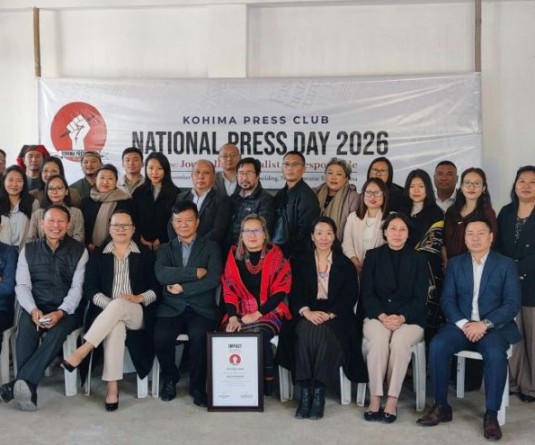
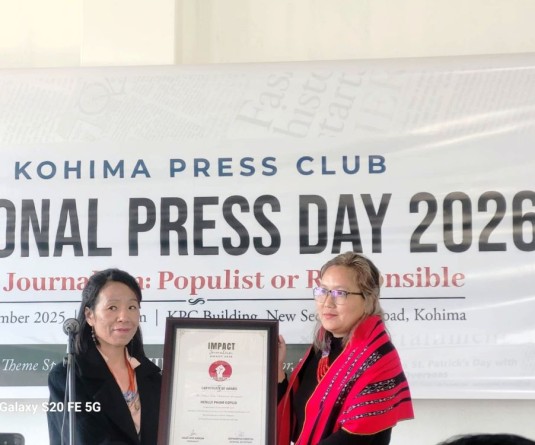
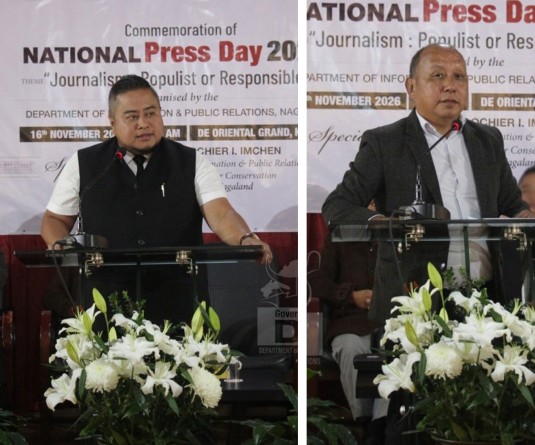
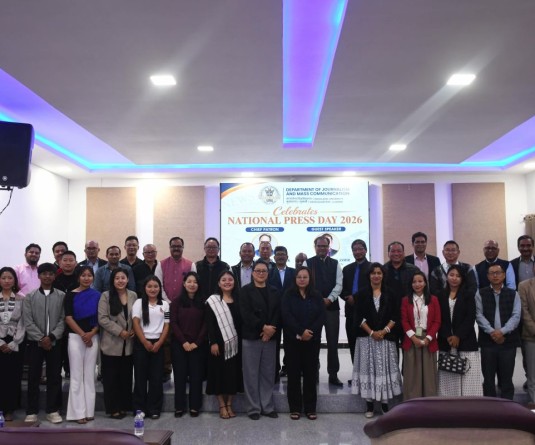
Theme speaker Nitin Sethi with members of the Dimapur Press Club and media fraternity during the National Press Day observance at E-Space, Dimapur on November 16. (Morung Photo)
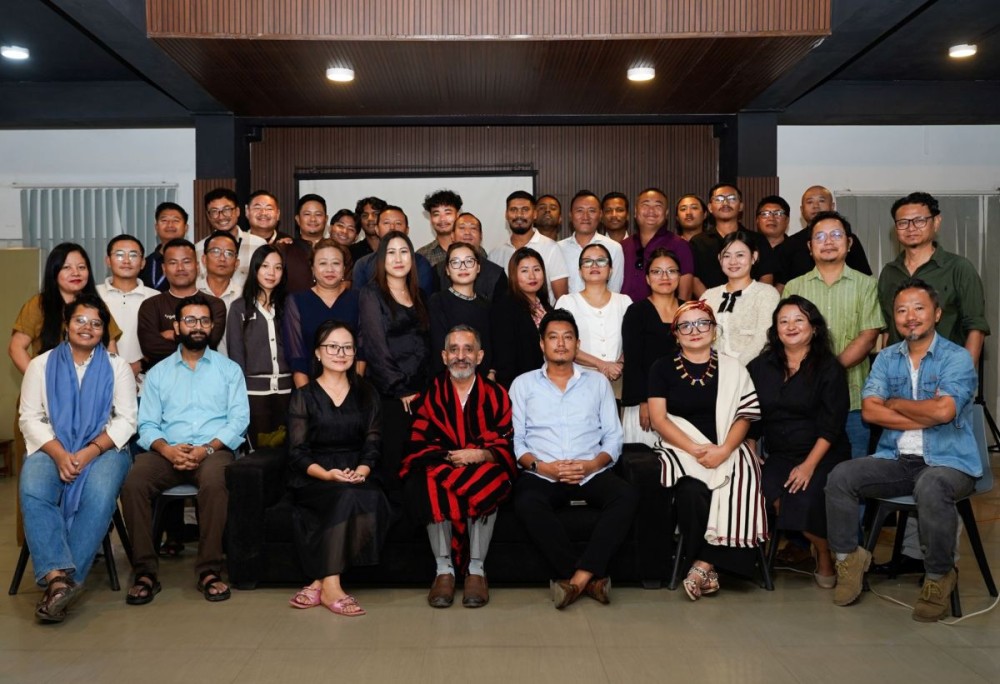
Dimapur Press Club observes National Press Day
Morung Express News
Dimapur | November 16
Nitin Sethi, Founding Editor of The Reporters’ Collective, today urged journalists in Nagaland to adapt to emerging technologies, remain open to new forms of journalism and continue holding the powerful accountable, while recognising the unique challenges of practising journalism in the region.
Speaking as the theme speaker at the National Press Day celebration organised by the Dimapur Press Club at E-Space, Duncan Basti, Sethi said journalists in Nagaland, Arunachal Pradesh and Manipur often face challenges that are distinct from those encountered in other parts of the country.
Held under the theme “Journalism: Populist or Responsibility,” Sethi said that those gathered for the occasion already understood that “populism is not what journalism is about.” He said the more important question was, “when we say we need to be responsible, what are we trying to be responsible towards?”
He observed that journalism in the region operates in societies negotiating their relationship with the state, while balancing traditional values with new civic relationships. Journalists, he said, are often caught between community pressures and the need to report independently.
“We are renegotiating what is journalism,” said Sethi, adding that journalists in the region have to navigate pressures from groups, communities and leadership not to report on certain individuals or issues because of their community affiliations.
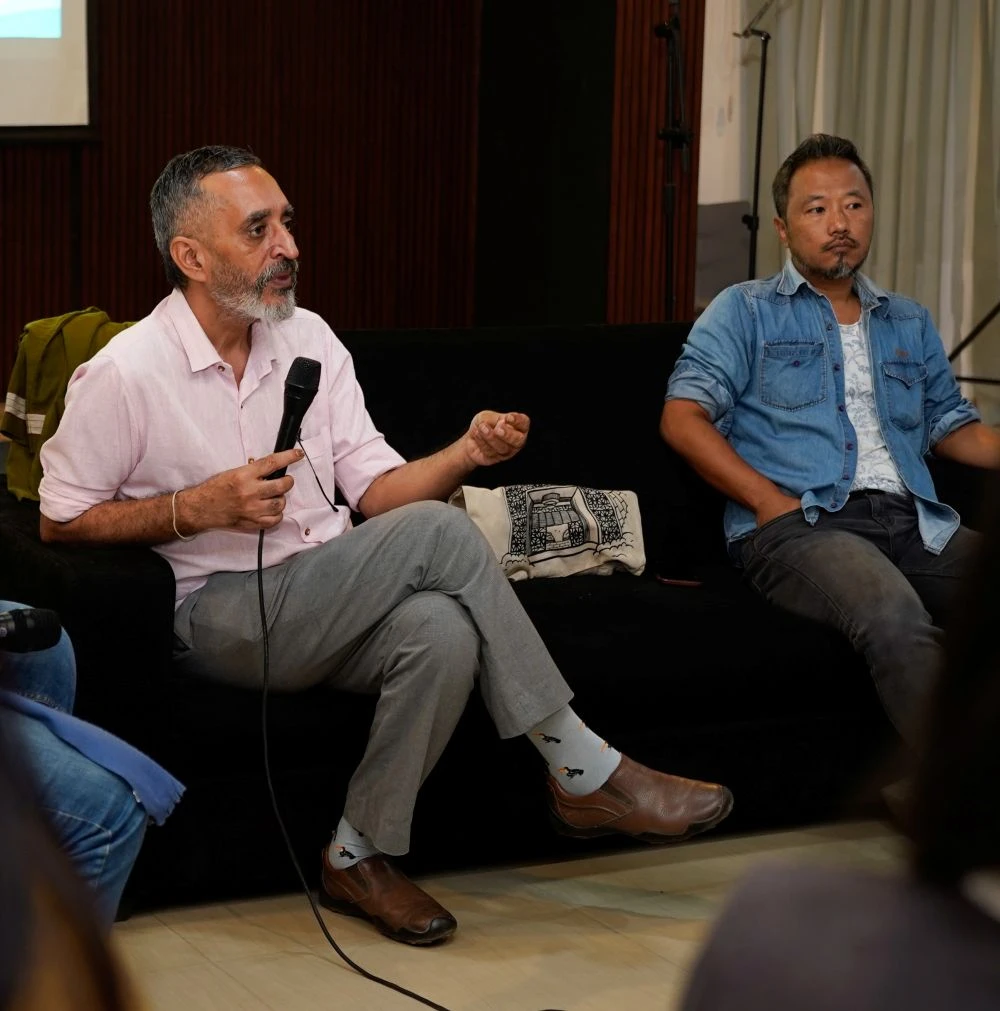
Describing journalists as “interlocutors between many worlds,” Sethi said their responsibility was to bridge the relationship between individuals and the state, communities, and different realities. “At our best, we are often the interlocutors between the powerful and the powerless. Our job is to make the powerful feel accountable to the most powerless while we ourselves are quite powerless,” he said.
He acknowledged that the nature of the profession can be challenging and often leave journalists feeling that they have not achieved enough. However, he cautioned against measuring their work solely by immediate outcomes, noting that social change cannot be achieved within one lifetime.
On the changing media landscape, Sethi said technology has opened up journalism to people who could previously not afford to enter the profession. Rather than dismissing emerging platforms and independent content creators, he encouraged the press to find ways to engage with them.
“By ostracising it and saying these are not journalists and we are, I think we are getting fossilised,” he said, while adding journalists must adapt to technological changes, including artificial intelligence, and treat them as tools rather than threats.
He also encouraged those in the print media to build their presence online and develop direct relationships with readers and audiences.
Calling for greater recognition within the profession, Sethi suggested that journalists could collectively set aside small contributions to recognise outstanding work among their peers, adding that such recognition need not be limited to National Press Day. While acknowledging that journalism may not bring financial comforts, he said the profession carried a greater sense of purpose, passion and responsibility.
“We are ants, but as ants we are quite powerful,” he said, urging the media fraternity to remain persistent in their efforts to bring accountability and positive change in society.
Delivering the presidential address on behalf of DPC president, Bendangchuba the Vice President of DPC said the day was not merely a celebration but a reminder of the responsibility entrusted to the media by the public to uphold a free, fair and fearless press.
He said journalism today faced the challenge of balancing the pressure to be fast and viral with the responsibility to remain accurate, fair and ethical. He urged journalists to prioritise credibility over clicks, unity over division and truth over trends.
The Vice President also appealed to the state government to treat the press as a partner and ensure the protection of journalists and urged the public to support local journalism and refrain from sharing fake news, while calling on media professionals to recommit themselves to ethical and responsible reporting.
In his welcome address, DPC advisor Imkong Walling described National Press Day as “our day,” calling it an opportunity for journalists to renew their commitment to the profession and reflect on the passion and purpose behind their work.
Although the fraternity in Nagaland was relatively small, he said it shared a strong sense of commitment and responsibility. Walling said the Constitution guaranteed journalists the rights and responsibility to act as watchdogs and question irregularities in the system.
Referring to this year's theme, he said it was particularly relevant in the present media landscape, where responsible journalism needed to be upheld amid growing political influence and changing news culture.
As part of the celebration, a Q&A session was also held, with discussions focusing on the evolving media scenario and the need for greater inclusivity towards the new and emerging mediums.