Aiesha D'lima
Chendang “Anou Chipen!”
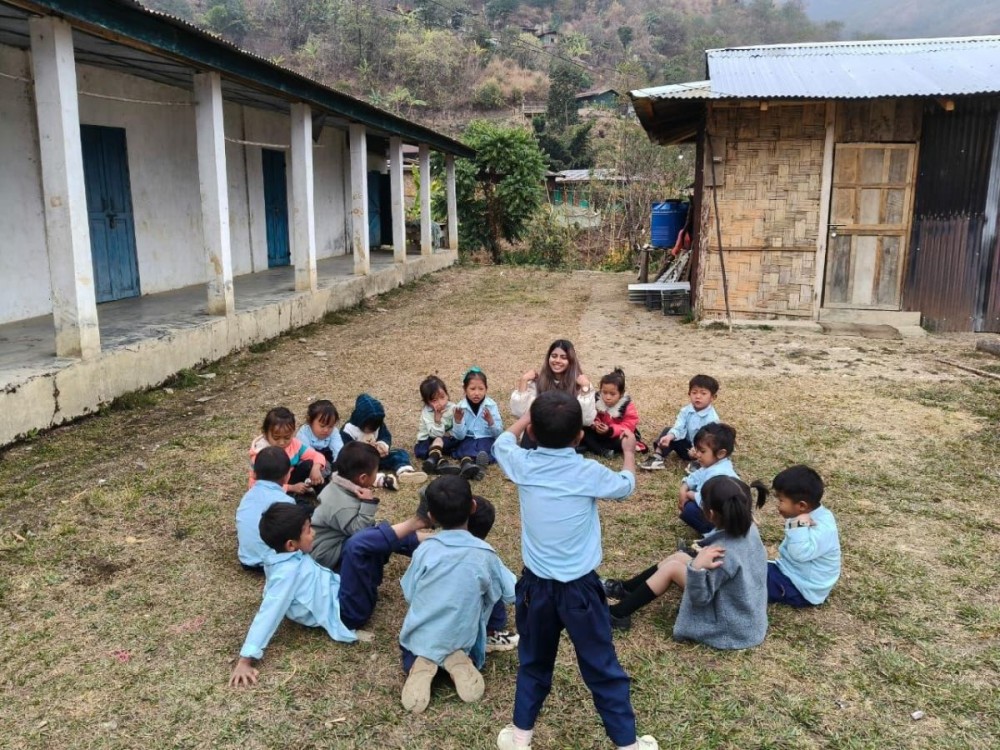
I hear this almost every time I walk through the village. Sometimes it comes from a group of children running towards me, sometimes from somewhere behind me, and sometimes from a house further up or down the mountain. I turn around and there they are, waving, laughing or simply waiting for me to notice them.
By now, I don't even think twice before turning around. I know they are calling me.
About a month into my fellowship, I was given a Chang name - Chipen (which translates to Flower). It was another new word to learn at a time when everything around me was still new. But slowly, I started hearing the children call me Anou Chipen.
For those who may not know, Anou means elder sister in the Chang dialect.
And once I started paying attention, I realised that the way people address each other here is deeply connected to relationships. Depending on our age and relationship, someone older than me may be addressed as Abou (dad), Anyu (mom), Akou (uncle), Anyi (aunt), Ajei (brother) or Anou (sister). These aren't just words used for family members. They are also how people address others in the community based on age and relationship.
I began noticing it everywhere. During my home visits, I would sit in someone's kitchen with a cup of tea and listen to conversations happening around me, hearing people call each other by these titles as naturally as we would call someone by their name. A child calling out for an Anyu, someone looking for their Ajei, or a person addressing an elder as Abou was simply part of everyday life.
I even noticed it at our offi ce. We have our project managers and director, but the designation doesn't replace the relationship. Someone can be senior to you professionally and still be your Ajei or Anou. The work hierarchy may tell you who is senior, but the way you address someone reminds you of the relationship you share with them.
I found that beautiful because we often introduce people by what they do. Here, there seems to be something more personal that comes fi rst: who that person is to you.
And then there are the children who call me Anou Chipen.
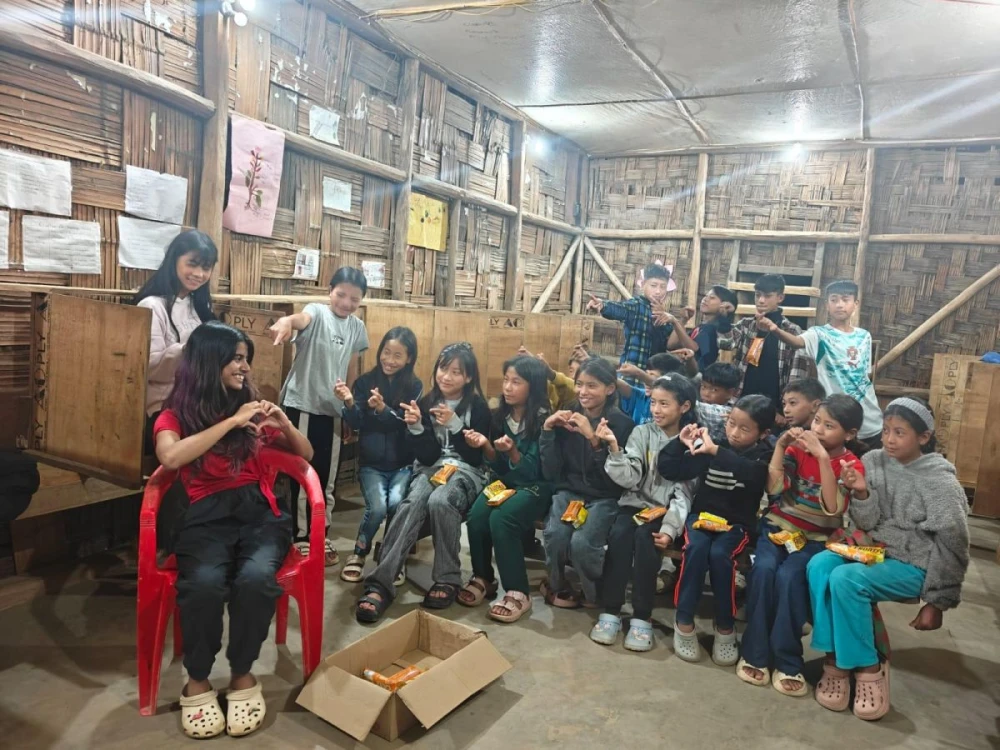
Sometimes they call me while I am walking back from a home visit. Sometimes I am carrying vegetables someone has given me. Sometimes I am simply trying to get home before it gets dark. I hear “Anou Chipen!” from somewhere behind me, turn around and fi nd a child standing there with something completely random to tell me.
We would often have these little conversations in the local dialect.
“Lato houda?” (“Where are you going?”)
Neida, Chocolate shavasav? (“I'm going back home, do you want a chocolate?”)
“Aiga!” (“Yess!”)
“Kho” (“Let's go”)
And they would accompany me all the way to my room.
Sometimes they called me because they wanted to show me something. Sometimes they wanted to ask a question. And sometimes, I suspect, they just wanted to see if I would turn around.
But I always did.
Aiesha is the name I have carried for 21 years of my life. Chipen is the name I received here. But Anou Chipen is the name that has become part of my everyday life in Chendang.
It is the name I hear from little voices echoing between the homes on the mountain, the name that makes me turn around, and the name that reminds me of the relationships I have built here.
I came to Chendang with one name. I didn't expect to leave with another, and I certainly didn't expect one of the little things I would miss most would be hearing, “Anou Chipen!” from somewhere up or down the mountain.
The writes is currently working with Eleutheros Christian Society NGO as an SBI youth for India Fellow 2025-26