Morung Express News
Dimapur | July 31
Archaeological discoveries from Nagaland’s ancient cave sites are challenging theories that the north-eastern region of India acted as a barrier to early human migration. According to archaeologist, Prof Tiatoshi Jamir, ancient DNA extracted from human remains from the Photangkhun Longkhap rock shelter site in Kiphire district pointed to ancient genetic mixture of Tibetan and Neolithic Asian ancestries, hinting at possible links to modern Naga populations. The rock shelter site, dated to 1800 BC and 2400 BC, was excavated by a team from the Department of Archaeology, Nagaland University (NU), in 2015, led by Jamir.
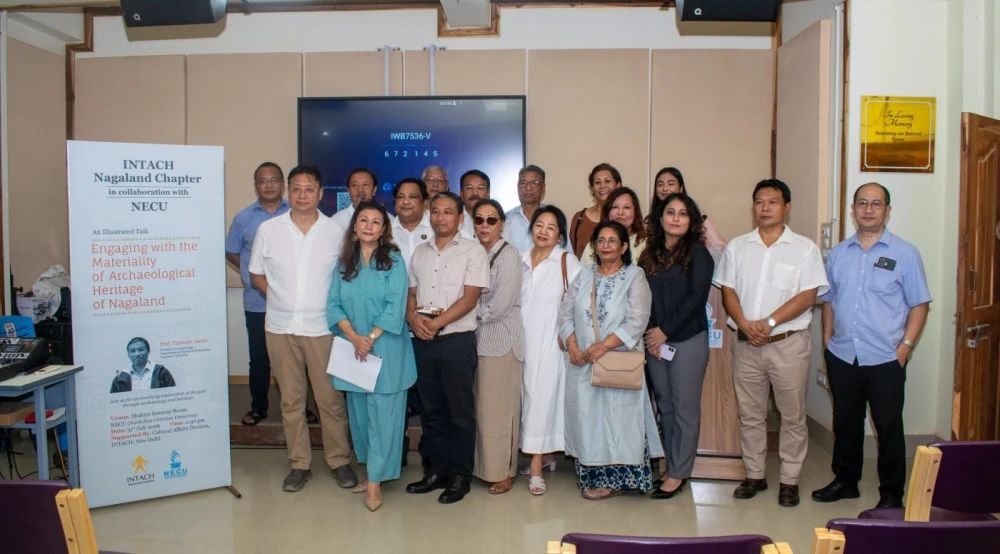
Jamir delivered a lecture organised by the INTACH Nagaland Chapter at the North East Christian University (NECU), Dimapur, on July 31. The lecture was titled ‘Engaging with the materiality of archaeological heritage of Nagaland,’ with Jamir exploring how the material remains of the past and archaeological evidence could unravel the shaping of cultures and beliefs.
“This is a talk which will center around engaging with the materiality of archaeological heritage of Nagaland,” he said, while adding that material remains are critical to understanding human behavior and experiences in the past.
A professor of archaeology at NU, Jamir cited prior studies based on modern genetics that suggested the far east of India, known as the Northeast, was a barrier to early migrations. “So, we wanted to test this hypothesis… whether we have any archaeological evidence to test this hypothesis derived from human genetics.” He said that the genetic analysis of the Photangkhun Longkhap remains identified the mitochondrial DNA haplogroup marker C7A1D, which is common among Tibeto-Burman speakers.
The research also documented early technological and agricultural developments in the Naga Hills. Excavations at the Laradvu ancestral site in Meluri, dating back to the 6th to 7th century AD, yielded some of the earliest archaeological evidence of Bos frontalis (mithun or gayal in Hindi) domestication in the Indian subcontinent. Additionally, archaeometallurgical investigations at Wui village in Noklak district identified iron-smelting tradition dating to the 8th to 9th century BC. Jamir disclosed that a working paper on these archaeogenetic findings was in progress, with plans for publication in scientific journals such as Science or Nature.
Despite the scientific value, Jamir said that these sites face the threat of anthropogenic obliteration, and called for community-led preservation. At the New Phor (Burakha) site, in Meluri, which is dated to the 3rd to 4th century BC, expanding settlements threaten to erase unexcavated remains. “As a result of expansion of the village, a lot of crucial evidence is going to be lost forever,” Jamir stated. He explained that researchers are utilising “total stations” and old British maps to document the sites before they are built over. Threats of defacement exist at the Ranya Khen and Tsie Khen cave sites, in Kiphire district, where graffiti and the removal of stalactites have occurred. He said that keeping the deposits undisturbed is crucial for future researchers.
The lecture also discussed the ‘ancestral site’ of Chungliyimti, which was documented by the British India administrator, JP Mills in 1923, and later excavated by NEHU’s pioneering archaeologist TC Sharma in 1974. The excavations at Chungliyimti and radiocarbon analysis placed it from between the 7th-8th century AD to the 16th-17th century AD. While the site is traditionally associated with Ao oral history, he said that other tribes such as the Sangtam, Chang, and a few Konyak villages also have claims.
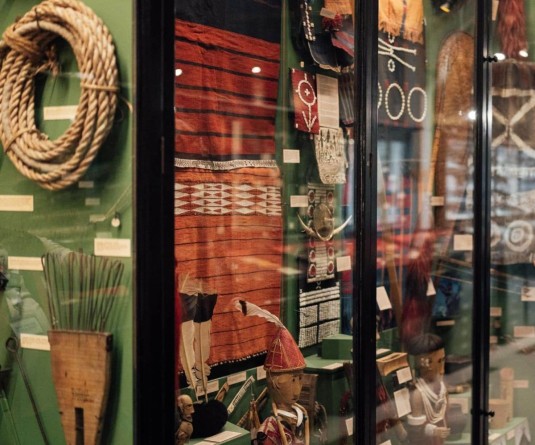
Jamir invited the public to visit the new archaeology gallery at the State Museum in Kohima, which showcases the discoveries. The lecture also highlighted the ongoing work of the INTACH Nagaland Chapter, which has engaged in cultural mapping and conserving historical structures across the state since its establishment in 2006.