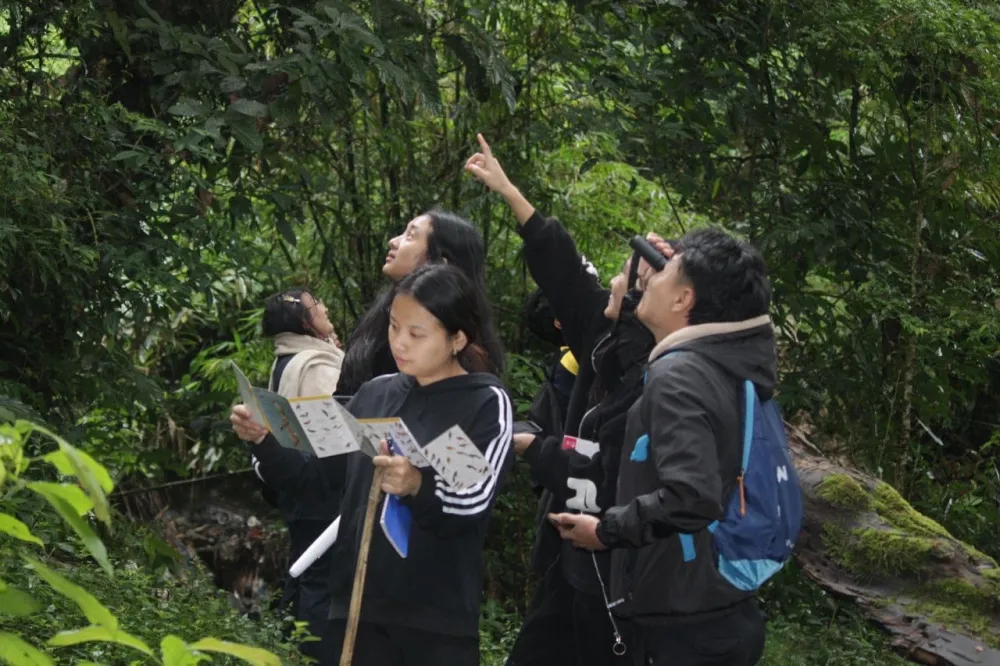
Tokhü Emong Bird Count, now in its fifth edition, has grown into a state-wide citizen-science movement in which birdwatchers, students and local communities document birdlife.
Meribeni T Kikon
Wokha | November 22
Growing up in Pungro village near the Myanmar border, Lesemew M saw how closely people and nature were bound together and the signs of loss, a bird that stopped returning, forest patches cleared, hunting that thinned out wildlife. Those experiences set him on a path to protect the environment.
That concern has now reached an international platform. He was the only participant from Nagaland among 130 young climate leaders from India, Brazil, South Africa and the Asia-Pacific region at Generation Earthshot 2026, held in Mumbai from November 14 to 17. Organised by The Earthshot Prize with Common Purpose, the programme brings together emerging leaders working on ecological and climate challenges.
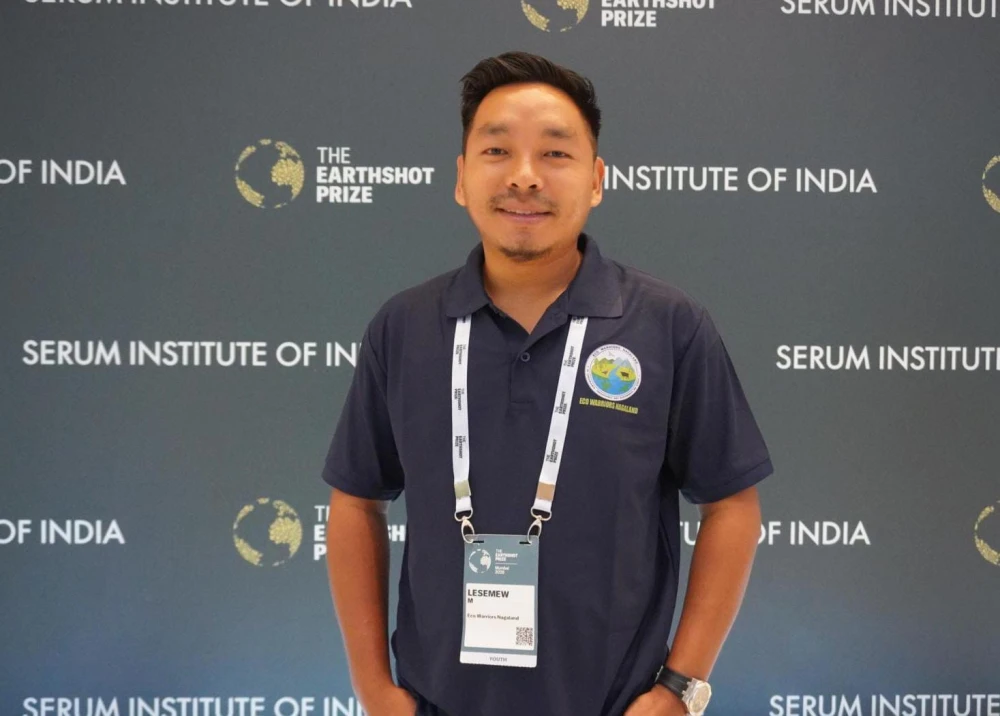
Lesemew M, Founder and Chairman of Eco Warriors Nagaland.
For Lesemew, Founder and Chairman of Eco Warriors Nagaland, the selection was a chance to bring Nagaland’s community conservation work into a wider conversation. “I read it more than once to be sure,” he said of receiving the news from Common Purpose.
He called the recognition a humbling responsibility, noting that Nagaland, a small state in the Northeast, is often far from the centre of national discussions. “I hope it tells young Nagas that their work in the field matters on the world stage,” he said.
Conservation rooted in community
Lesemew’s approach to conservation grows out of his upbringing in Pungro. He believes people and nature cannot be treated separately, especially in a state where land ownership, traditions, food systems and culture are tied to the natural environment.
He began his career as an intern with the Forest Department. Over time, he concluded that protecting forests and wildlife requires more than outside intervention or awareness campaigns; it must involve the people who live closest to these resources.
“Protection has to be taken up by people from within the community, not only by outsiders,” he said.
Wildlife ignores political and geographical boundaries, he added, so cooperation, local knowledge and respect for community ownership matter, especially in border regions.
Building a movement through citizen participation
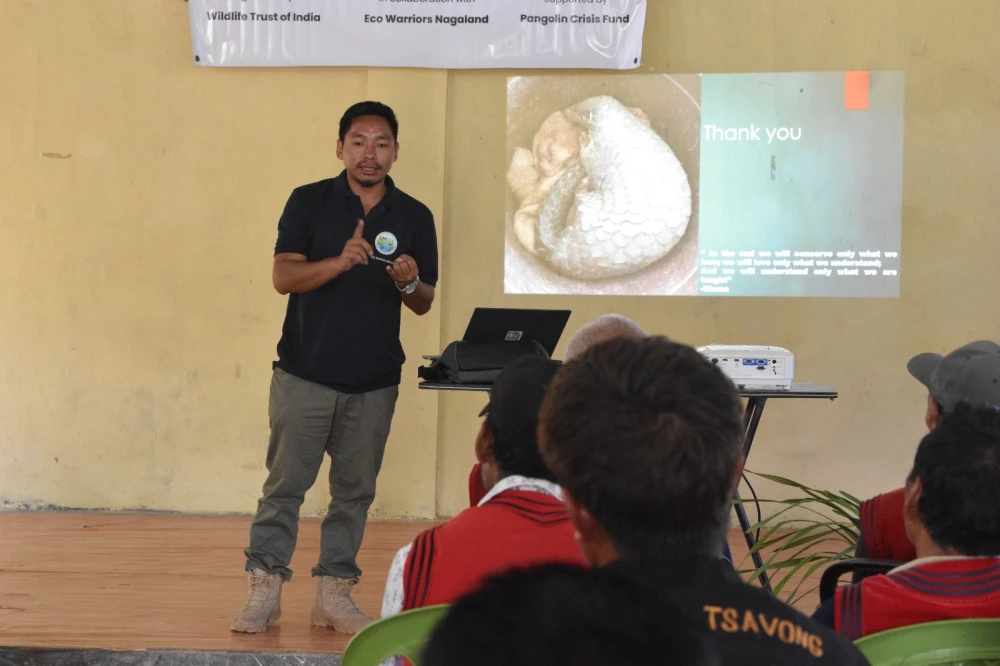
This thinking shapes Eco Warriors Nagaland, a youth-led wildlife conservation organisation based in Dimapur, active across all 17 districts.
Its best-known initiative, the Tokhü Emong Bird Count, now in its fifth edition, has grown into a state-wide citizen-science movement in which birdwatchers, students and local communities document birdlife. The organisation has also surveyed plant diversity in Mt Tiyi and Bhandari with the Forest Department, and runs the Tragopan Census in Kiphire and Run for Hornbill Against Time, many linking environmental awareness with local culture.
According to Lesemew, it has engaged about 4,000 people and organised or supported over 700 programmes. Its network of district coordinators, volunteers and students lets ordinary citizens contribute to biodiversity documentation and ecological research.
Grassroots conservation still faces serious challenges, he acknowledged habitat loss, hunting, shrinking forest covers and limited awareness of how fragile biodiversity is. Livelihood pressures also matter, and he stressed that conservation can only succeed if it accounts for the needs of people living nearest the forests.
That is why he sees citizen science as especially important in Nagaland, where most land is community-owned. “When people start noticing the birds around them, they start protecting them,” he said.
A global experience with local lessons
In Mumbai, Lesemew joined leadership sessions and met environmental innovators, scientists and young changemakers from around the world. His main takeaway: the need to combine science, innovation and community knowledge. Despite different backgrounds, many participants faced similar problems, habitat loss, climate pressure and the challenge of securing meaningful community participation.
One presentation stayed with him that of Franco Rodríguez Viau of Argentina, a 2026 Earthshot Prize finalist. Viau and friends founded Satellites on Fire at 16, using AI and satellite imagery to detect wildfires faster and alert people on the ground.
The idea resonated with Lesemew, as forest fires remain a serious concern in Nagaland during the dry season. It made him think about how young Nagas might use similar technology to protect forests. “It also showed me that much of the world’s best conservation work starts small, with people who simply refuse to give up,” he said.
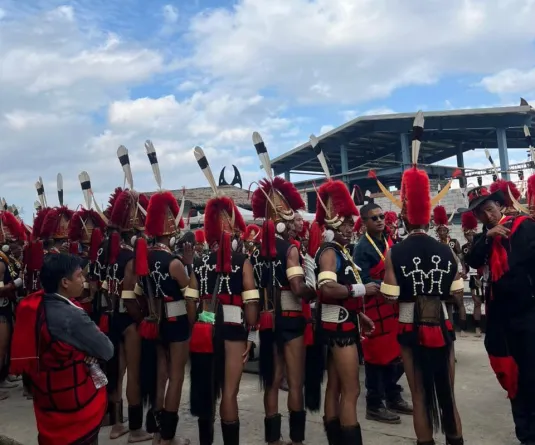
He also attended The Earthshot Prize Awards Night on November 17, the first time the prize was held in India, wearing traditional Naga attire. “Our attire reflects a culture that has lived alongside nature for generations. Wearing it was my way of saying that indigenous communities are not only affected by environmental change, we are also part of the solution,” he said.
Taking the experience home
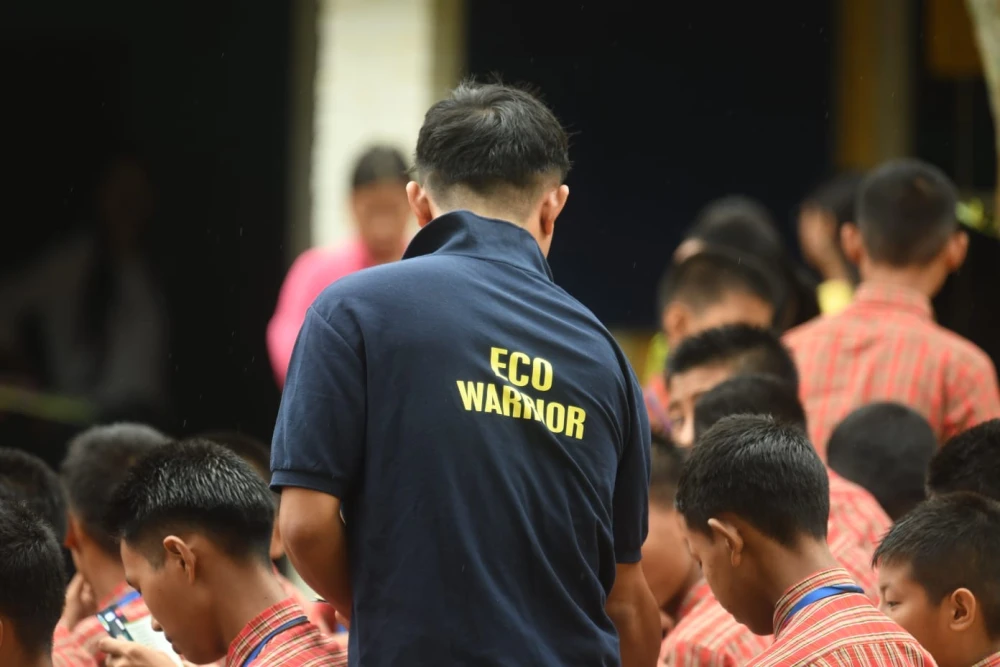
Back in Nagaland, Lesemew hopes to strengthen collaboration among young people, scientists, communities and innovators, and promote more data-driven, community-led conservation. He also wants to create mentorship and training opportunities so young conservationists can grow into future leaders.
He sees potential in linking conservation with responsible, community-led ecotourism, given the state’s rich birdlife, forests and living cultural traditions. But such initiatives must be developed carefully, with communities at the centre and nature protection as the priority. In his view, government agencies, village councils, civil society organisations and educational institutions all have roles to play, from policy support and enforcement to scientific collaboration and environmental education.
Eco Warriors Nagaland’s next focus is the Great Backyard Bird Count in February 2027, the 15th year of the count in India. The organisation hopes to bring more students and villages into the effort and plans to expand its youth programmes, citizen-science activities and work with schools and villages.
Lesemew envisions a Nagaland where forests thrive, wildlife recovers and conservation is a shared responsibility led by communities and young people.
His message to young people from small villages who hope to make a difference beyond their surroundings is simple: “Your village is not a limitation, it is your strength.”
“I have learned that the world listens when your work is honest and rooted in your community. Global change begins with local action,” he said.
Caption:
1.
2.