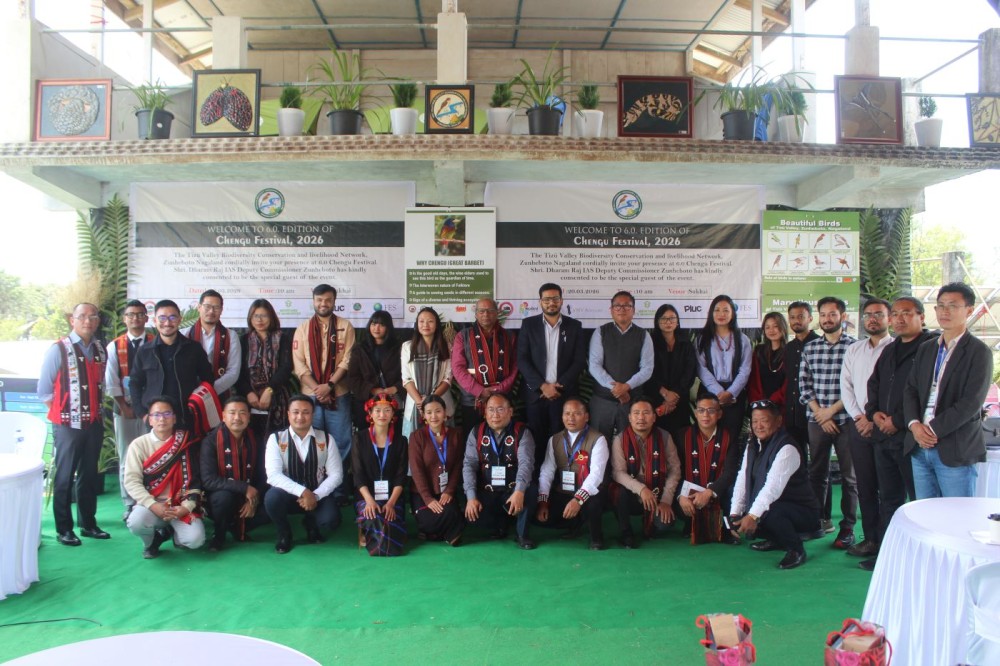
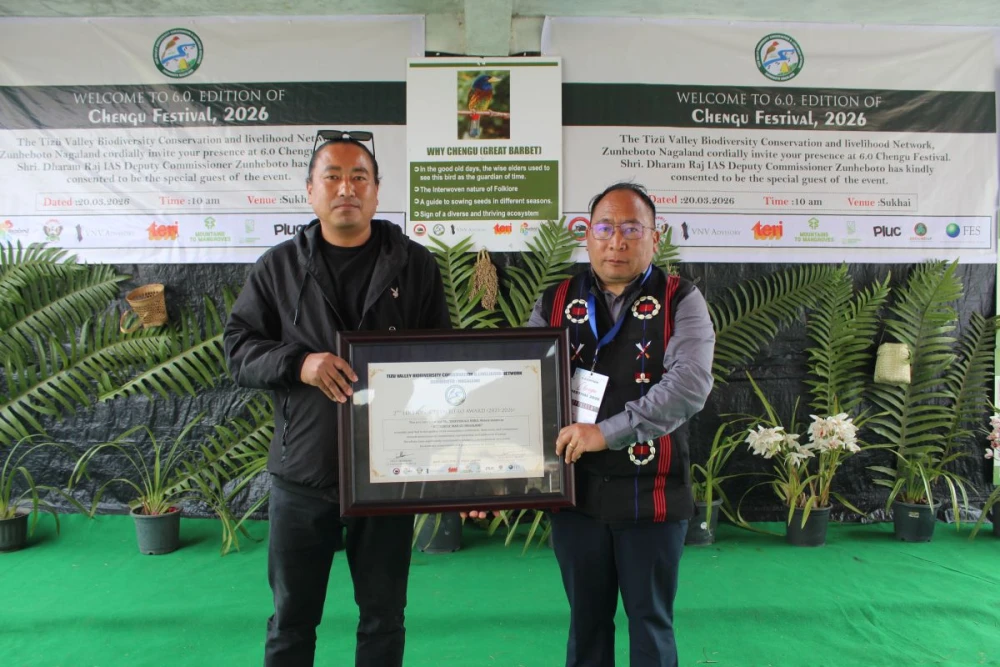
DC Zunheboto, Dharam Raj, IAS along with others at the Chengu Festival Celebrated at Sukhai on March 20. (Morung Photo)
Morung Express News
Zunheboto | March 20
The sixth edition of the Chengu Festival, held under the theme ‘Biodiversity: Our Heritage,’ was celebrated at the Sukhai Community Conserved Area (CCA) on March 20. The programme was co-powered by the Nagaland Tourism Department along with partners including VNV Advisory, TERI, Mountains to Mangroves, Aboriginal Energy, Pluc TV, Ground Up, and FES.
Zunheboto DC, Dharam Raj, IAS, who was the special guest, stated that biodiversity conservation has always been an integral part of Naga life and culture. He noted that the people have traditionally lived in harmony with nature, preserving forests, flora, and fauna through generations.
He highlighted the impact of climate change, noting shifting seasonal patterns that are affecting agriculture, food security, and livelihoods in the region. Referring to the REDD+ programme supported by the UN, he said the initiative aims to reduce emissions from deforestation and forest degradation while promoting sustainability. He added that conserving biodiversity aligns with global Sustainable Development Goals, particularly those related to environmental protection.
The DC also pointed out emerging opportunities such as carbon trading, where companies invest in green resources to offset their carbon footprint. He noted that such initiatives could bring long-term economic benefits to Nagaland.
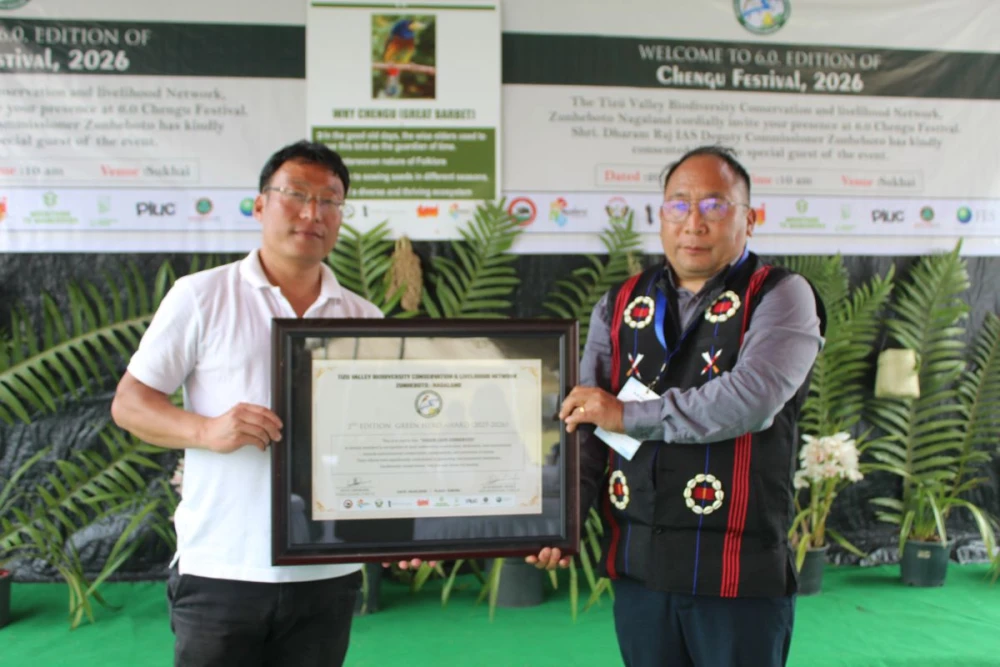
Toka E Tuccumi, Joint Director, Department of Tourism expressed optimism that the Chengu Festival would grow into a major event in the coming years. He described the Chengu Festival as the intellectual property of Sukhai, Ghukhuyi, and Kivikhu villages. “Its success hinges on collective responsibility from these three communities,” he stated. He cited the Hornbill Festival, which began in 2000 as a small initiative but has now grown into an internationally recognized event, generating substantial revenue for the state and locals. He added that tourism thrives on effective marketing and storytelling, and stressed the need for proper registration of homestays, tour guides, and other tourism services.
Aniruddh Soni, Fellow noted that since 2014, extensive groundwork has been carried out in collaboration with community members and partner organizations. Initial efforts included documentation of jhum (shifting) cultivation practices, preparation of case studies, and the development of biodiversity registers.
Soni further elaborated that the REDD+ project has received approval from Plan Vivo Foundation and is expected to be listed soon. Currently, it spans 21 Community Conserved Areas (CCAs) across 43 villages in the Zunheboto region, marking a significant scale of implementation.
In addition, a new initiative has been launched in collaboration with the Sumi Literature Board to document traditional ecological knowledge. This includes indigenous understanding of biodiversity, agriculture, land management, and traditional medicine systems. The project is being supported by the Japan Fund for Global Environment.
Soni said efforts are being undertaken in partnership with the Land Resources Department and Krishi Vigyan Kendras (KVKs) to promote sustainable income sources. By identifying suitable commodities and engaging communities, the initiative aims to reduce dependency on forest resources while ensuring planned landscape management.
Soni remarked that the continued commitment of the local community has been key to the success of these initiatives.
Ivan Zhimomi, CEO of the Tizu Valley Biodiversity Conservation and Livelihood Network (TVBCLN) said, “Hosting the Chengu Festival is not just a celebration—it's a festival with profound significance.” He noted how the event serves as a vibrant showcase of the rich culture and traditions of the Sumi tribe.
Zhimomi stressed its business-oriented approach, designed to boost the local economy, support sustainable livelihoods, and promote biodiversity conservation in the region. Zhimomi urged the broader Sumi community to step forward with mass participation. “These collaborations open doors to greater benefits for our community—let's seize them together,” he said.
Later, speaking to media persons, Zhimomi stated that the 2026 edition marked the sixth Chengu Festival along with the second edition of the Green Hero Award. He expressed pride that the festival remains one of the few in the district organized at the grassroots level by a local organization.
Zhimomi informed that the festival featured exhibitions conducted in collaboration with the Land Resources Department, Government of Nagaland, and acknowledged the support of the Tourism Department, the Foundation for Ecological Security, and other partner organizations.
Zhimomi shared plans to expand the festival into a three- to four-day event in the coming years. He said additional activities such as nature walks, biodiversity monitoring, trekking, panel discussions, and nature talks will be incorporated to enhance the festival experience.
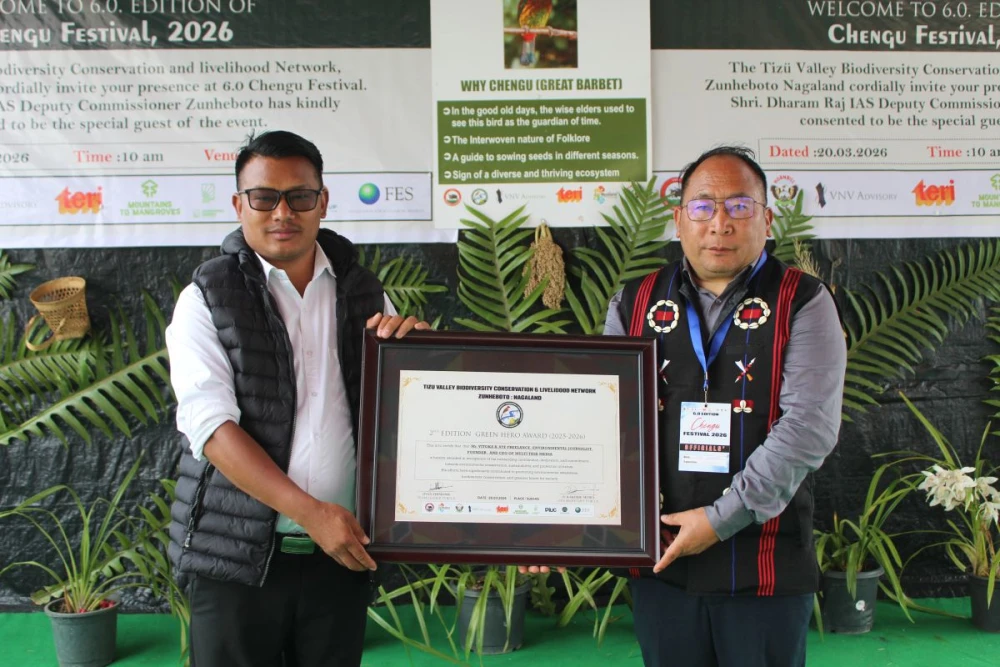
Green Hero Award confered
The 2nd Edition of the Green Hero Award 2025-2026 recognised six exceptional individuals and organizations for their unwavering dedication to environmental conservation, sustainability, and nature protection.
The recipients are Green Club Zunheboto – For pioneering community-led initiatives in environmental stewardship; Tshetsholo Naro, widely known as the “Butterfly Man of Nagaland” – For his passionate work in butterfly conservation and biodiversity advocacy; Vitoka K. Aye, Freelance Environmental Journalist, Founder and CEO of Multi Task Media – For amplifying environmental stories through impactful journalism; The Silver Vision – For innovative projects fostering sustainable development; Ruichinilo Kemp, Co-Founder and CEO of Kenono Foundation – For leadership in community-based conservation efforts; Rokongulie Meyase, Wild Left Tour Operator – For promoting eco-tourism and nature preservation.