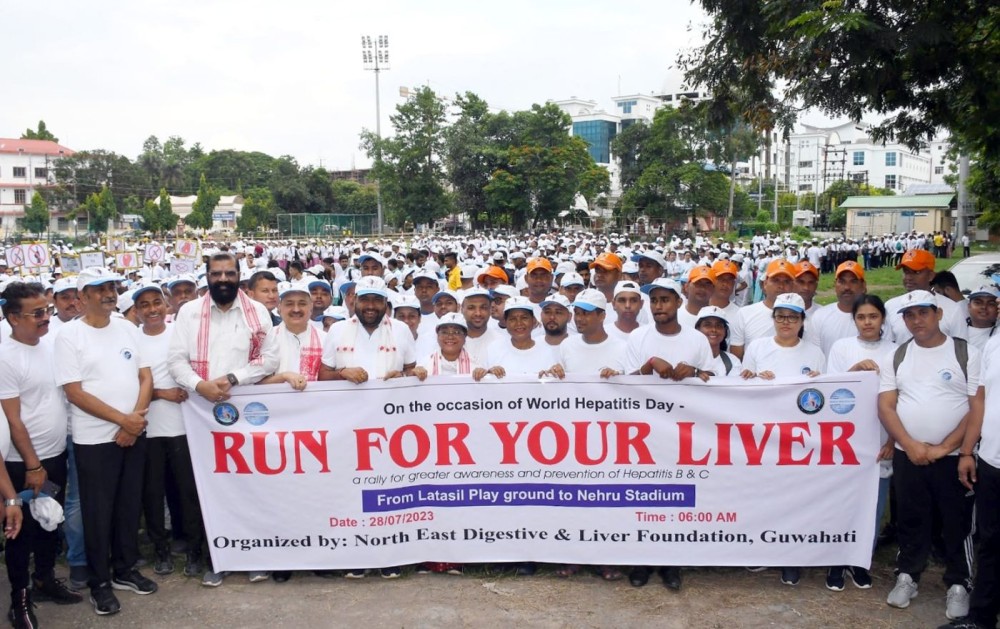
Guwahati: Participants during the 'Run for your Liver' marathon, on the occasion of World Hepatitis Day arranged by Northeast Digestive and Liver Foundation at Latasil Playground in Guwahati, on Friday, July 28 ,2023 . (Photo: IANS/Anuwar Hazarika)
New Delhi, April 19 (IANS) Leading specialists on Sunday warned that excessive consumption of energy drinks is emerging as a leading cause of liver damage among India's youth, on the occasion of the 'World Liver Day'.
Doctors warned that the trend is accelerating, with young patients increasingly showing early signs of liver disease.
Energy drinks are aggressively marketed to young consumers as performance enhancers and fatigue relievers but these drinks often contain caffeine levels far exceeding recommended daily limits, along with substances such as taurine and herbal stimulants, which the liver must metabolize.
Over time, this biochemical overload can impair liver function, medical experts said.
Doctors also warned against the increasingly popular trend of mixing energy drinks with alcohol. The stimulant effect of caffeine can mask the sedative effects of alcohol, leading individuals to consume more alcohol than they realise.
“Three major contributors to liver dysfunction are energy drinks, alcohol, and high-sugar beverages...Alcohol continues to be a leading cause of liver disease, and sugary drinks contribute to fatty liver disease," said Dr. Abhideep Chaudhary, President of the Liver Transplantation Society of India (LTSI), New Delhi.
If liver damage progresses beyond a certain point, a liver transplant often becomes the only life-saving option, he added.
A case published in the journal BMJ Case Reports documented acute hepatitis in a previously healthy individual linked to excessive energy drink consumption, causing high levels of niacin (Vitamin B3), known to be hepatotoxic.
Research indicated that high sugar content, caffeine, and chemical additives in energy drinks can trigger fat accumulation in liver cells, oxidative stress, and inflammation.
These factors contribute to liver injury over time, experts said, adding that when consumed frequently, especially alongside alcohol or unhealthy diets, these beverages significantly increase the risk of developing non-alcoholic fatty liver disease (NAFLD).
Studies suggested that nearly 25–30 per cent of the urban population may be suffering from non-alcoholic fatty liver disease, with a growing number of adolescents and young adults.
"We are witnessing a demographic shift in liver disease with more patients aged 20-30 reporting conditions that were once seen primarily in older individuals. Many young people are unaware of the risks and consider these beverages part of a normal lifestyle," said Dr. Neerav Goyal, President-Elect of Liver Transplantation Society of India (LTSI) and Head, Liver Transplant, Hepatobiliary and Pancreatic Surgery, Indraprastha Apollo Hospital.