Dr Rakesh Kumar Chaurasia
Principal Scientist & Head, KVK, Zunheboto, Nagaland University
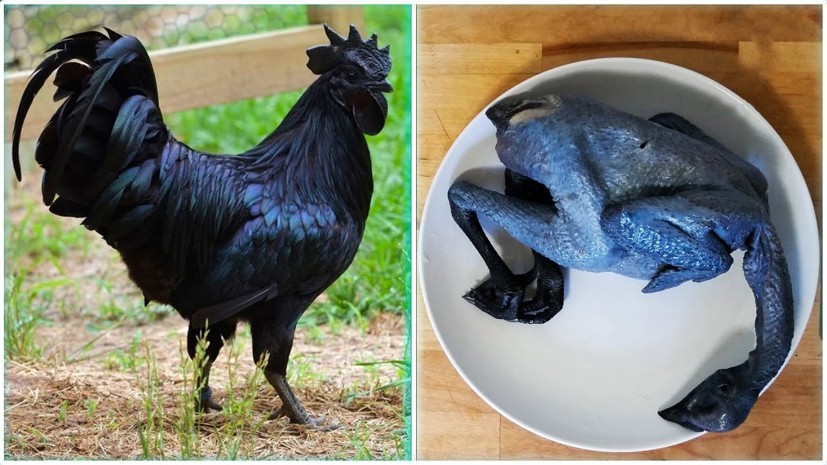
Introduction: Kadaknath, also popularly called as Kali Masi, “fowl having black flesh,” is an Indian breed that originated from the Dhar and Jhabua districts of Madhya Pradesh. The black-coloured meat is due to the presence of melanin. These birds are mostly bred by the rural people and tribal’s. It plays an important role in providing nutrition and a source of income for generations throughout the year. In Nagaland, where almost 99% of the population are non-vegetarians and meat lovers, the introduction of such breeds of poultry will help the farmers and youth to take up poultry farming for profitable business as the cost of Kadaknath meat varies around Rs. 600-700/kg of meat. The eggs obtained are also highly priced in the market. The Kadaknath breed contains approximately 10 times the iron content of the ordinary chicken breed. In fact, higher iron content is the main reason behind its black skin colour and even blood colour.
Breed: There are three varieties: jet black, golden, and pencilled. These birds are very popular for their adaptability and their grey-black meat, which is believed to infuse vigour.
Colour: Kadaknath birds are generally grey-black all over and have gold plumage. The greyish black colour is present in the legs and toenails, beak, tongue, comb and wattles; even the meat, bones and organs have grey colouration.
Characteristics of Kadaknath birds:
A. Production Parameters of Kadknath Birds
Sl.No | Parameters | Data |
Weight of Day-Old Kadaknath Chicks | 28 to 30 gms | |
Body weight in 8 weeks | 800-900 gms | |
Average weight (male) | 2.3 to 2.5 kg | |
Average weight (female) | 1.6 to 1.8 kg | |
Meat percentage without skin (dressed) | 65-70 % | |
Age for first egg laying | 22 to 25 weeks | |
Egg laying/month | 11-12 | |
Annual egg laying | 120 | |
Average egg weight | 40 to 45 grams. |
B. Meat quality: The meat of Kadaknath is of superior quality, with other breeds of chicken have very little fat.
Sl.No | Particulars | Kadaknath | Other breeds |
1. | Protein % | 25 | 18-20 |
2. | Fat % | 0.73-1.03 | 13-25 |
3. | Linoleic acid % | 24 | 21 |
4. | Cholesterol (mg/100gm) | 184 | 218 |
C. Price of meat and eggs: The meat of Kadaknath birds is sold at nearly the rate of Rs. 600.00/kilo in markets, and the eggs are sold at the rate of Rs. 15-20 per egg.
Management of Kadaknath birds
1. Selection of chicks: Day-old quality chicks procured from reputed hatcheries should be used for rearing so that the birds’ performance is optimum.
2. Points to remember when new chicks are introduced:
1. Preheat the room and stabilize the temperature and humidity.
2. Arrange the equipment in such a way that enables chicks to reach feed and water easily.
3. Cover the litter materials with thick paper or carton for 3-4 days so that the young chicks do not pick up litter materials.
4. Provide water mixed with glucose/electrolytes upon arrival in the brooder house. Provide feeds after 1-2 hours.
5. Continue to monitor the chick movement to find out whether the temperature inside the house is ok or not.
3. Housing: The birds can be housed initially in a brooder house for 3 weeks, where the following points should be kept in mind.
a. Brooding of Chicks:
Brooding: Brooding is the period from hatching until supplemental heat is no longer needed. Which means the time period that the chicks need to be kept inside or with a heat lamp/bulb, which is generally somewhere between three to eight weeks.
Points to remember while brooding :
• Light: Proper and continuous light is required so that young chicks can located the feeder and drinker
• Temperature: For providing required brooding temperature inside the brooder heat lamps, heaters are hung so that there is equal distribution of heat in the brooded area. temperature requirements depend upon the age and weather condition, however on the first day to start with the center temperature should be maintained at 90 to 95 degrees F and can reduced by 5 degrees F each week. Brooding is generally done for 3-4 weeks however in some cases it can be extended upto 7-8 weeks.
• Ventilation & Humidity: Ventilation is required for prevention of ammonia fumes in the brooder house. ventilation and humidity are very closely related as high ventilation lowers the humidity and low ventilation causes humidity to become too high, creating a soggy environment. It is easy to maintain in small stocks but difficult to maintain in larger flock size.
• Bedding: Selection of suitable bedding materials is very important in poultry farming ad especially I brooder house. In case of small flocks, the bedding materials may be changed to prevent mold, smell, and disease. Generally used bedding materials consist of Rice husk and sawdust.
• Feed: proper feeding and balanced nutrition are very much required during the early life of Chicks for proper growth. Pre- starter and starter ration should be fed. When the birds arrive in the brooder house, the litter materials should either be covered with cartons or thick paper so that the chicks do not pick up the litter materials. Feeds should be spread on the paper for 2-3 days so that the young chicks can learn to pick up the feeds and along with it feeders should be arranged so that the chicks can be fed properly.
• Water: Provision for clean water should be made and fed to the chicks through drinkers. Water should be changed twice daily to reduce fecal, food, or bedding contamination. The drinkers should be cleaned daily to prevent the formation of molds and bacterial growth.
• Mortality: Mortality around 1-2 % is generally considered ok; however, mortality beyond 2 % should be checked, and appropriate action should be initiated.
b. Housing after brooding:
However, once out of the brooding house, the birds can be reared as per the purpose and requirement of the owner, like intensive or in free range. The house should be constructed in such a way that direct sunlight doesn’t fall on the side walls, and long axis of the house should be in east to west direction. The birds should be provided with a space of upto 1.5 sq.ft. per bird in intensive system. The litter materials should be turned upside down after every 2-3 days, and if required more litter materials should be added so that the moisture content of the litter can be maintained. Proper ventilation should be maintained, and a mechanism for controlling the temperature should be there. For laying birds egg nest should be made in advance (20-25 weeks) and should be made in the corners in case of deep litter system.
4. Feeding:
In the case of Kadaknath, feeding management depends on the production purpose: birds raised for meat should be given broiler feed; those reared for egg production should receive layer feed; and under open or forage systems, birds may be allowed to scavenge while receiving appropriate supplemental feed.
5.Record Keeping:
It is one of the important aspect of Poultry farming which act as source for monitoring and evaluation. Equipment, labour, feed procured and intake, medicine and vaccination record and sale proceeds register should be maintained, which will help in analyzing the profitability of the farm.
6. Health Management:
Generally, disease is introduced by people, employees working at the farm, veterinary professionals, or through newly introduced chicks that might have inherited from the hatchery itself. Hence, disease prevention and control are very important, and the following points should be remembered.
a. All the equipment in the poultry shed should be cleaned and disinfected properly.
b. Visitors should not be allowed.
c. Proper vaccination schedule should be maintained
d. Any birds showing signs of disease should be taken out, culled, and immediately reported to veterinarians.
e. Medications as advised by veterinarians should be continued till birds recover.
7. Vaccination Schedule:
While vaccinating the birds, please check the date of manufacturing and how it was transported, maintain the cold chain for transporting, and vaccinate the birds as required.
Age in days | Vaccine | Route |
1 | Mareks disease | Subcutaneous |
1-7 | Lasota/ RD | Occulonasal drops |
14-18 | IBD | Oculonasal drops |
24 | Lasota | Occulonasal drops, Spray/ drinking water |
8. Disease of Poultry
Disease: Any condition that results in deviation from normal function. Diseases are often known to be medical conditions that are associated with specific signs and symptoms.
Cause of disease occurrence: Diseases occur due to the interaction between 3 main factors: Like agent, Host and the environment.
a. Agent factors: Infectious agents like bacteria, viruses and fungi and Non-infectious agents like chemical, physical, lack or excess of nutrients like minerals and vitamins and toxins.
b. Host Factors: Disease occurrence depends on and differs with the type of Breed reared, sex, age, and immunity status.
c. Managemental and Environmental Factors plays and important role:
•Feed quality •Lighting program •Air quality and ventilation •Water quality •Space (floor or cage, feeder, drinker) •Sanitation •Weather •Season •Geographic location
A. viral disease
1. Marek’s Disease
Marek’s Disease (MD): It is a viral disease that is highly contagious and transmitted through air and causes tumors. This disease affects only female chickens and occurs in chickens between 6 to 20 weeks of age.
Signs and symptoms
The affected chickens lie on their side with one leg stretched backward and the other leg stretched forward. In some cases, chickens start to die suddenly without showing any sign of illness. The birds show signs of paleness, loss of weight, shrunken comb, and diarrhea.
Treatment
The day-old chicks must be vaccinated against the disease as there is no other treatment.
2. Newcastle Disease
Newcastle disease is also known as Ranikhet disease. The disease can be transmitted through the air, feed, water, and carrier birds.
Signs and symptoms
In this disease, the first sign is sudden death. One important symptoms include Torticollis (twisting of the neck) and leg paralysis. Some other signs, like weakness, depression, greenish diarrhea, lying down, swelling of the face, and nervous signs, are also observed. The mortality rate is low in this disease. In layers, laying of soft-shelled or shell-less eggs may be seen as an early sign, followed by no laying of egg laying. In adult chickens, a decline in egg production for many months can be seen.
Treatment
The day-old chicks must be vaccinated against the disease, as there is no other treatment. Good management practices and high level of farm hygiene can help in reducing mortality.
3. Infectious Bronchitis (IBV)
This is a highly contagious respiratory disease that spreads rapidly and suddenly. It is generally transmitted through the air and materials contaminated on the farm.
Signs and symptoms
There is an abnormal respiratory sounds, sneezing and coughing. Watery nasal discharge, ocular discharge and swelling of the face is prominent. Production of eggs is reduced and abnormalities in egg shells are seen in laying hens.
Treatment
Treatment with antibiotics help in prevention.
4. Fowl Pox
Fowl pox is transmitted through contact of body wounds, scratches, by bites of a vector carrying the virus (e.g., mosquitos), and through the air.
Signs and symptoms
crusty and nodular lesions primarily on the unfeathered portions (wattles, comb, and/or legs) of the bird. Occasionally, poxvirus can cause lesions in the mouth and trachea, discharge from the nostrils, causing death due to suffocation (wet form), white ulcers or cheesy membrane in the mouth, loss of appetite, resulting in a decline in egg production. However, once the bird recovers, immunity is generally lifelong.
Treatment and control
Vaccination with fowl pox can prevent this disease. However, once infected, the necrotic membrane from the affected chicken’s mouth and larynx should be removed. The birds may be fed with wet feed (mash), and antibiotics and multivitamins may be added to their drinking water. Good disinfectant should be used during the outbreak of the disease to clean the farm area to reduce mosquitoes population.
B. Bacterial disease
1. Fowl Cholera (Avian Pasteurellosis): It is a highly contagious disease that affects poultry birds.
Signs and symptoms
The birds show difficulty in breathing, swollen joints, purple comb and wattle, oral, nasal and ocular discharges, ruffled feathers and loss of appetite. The birds have yellowish or greenish diarrhea, which leads to death.
Treatment
F cholera vaccines can be administered for prevention, and can be treated with antibiotics.
2. Infectious Coryza
It is a severe respiratory disease that affects chickens suddenly. This disease is commonly seen in layers and broilers, transmitted through nasal discharges through the air or direct contact.
Signs and symptoms
The main sign is swelling of the head (comb, wattle, and eyes), sneezing, discharge from the nose and eyes, conjunctivitis with closed eyes, difficulty in breathing, and moisture under the wings. There is reduced feed and water intake as well as a drop in egg production.
Treatment and control
Infectious Coryza can be treated with antibiotics and sulpha drugs. All infected birds should be disposed off and birds of different ages should not be kept together.
3. Chronic Respiratory Disease (CRD)
CRD affects the respiratory tracts of birds and is transmitted through hatching eggs, direct contact with carrier birds, and inhalation of contaminated droplets, dust or feathers.
Signs and symptoms
In this disease, the birds have respiratory distress, swollen face, nasal discharge, and sneezing, leading to low intake of feed, loss of body weight, and decreased egg production.
Treatment
The infected birds can be treated with Antibiotics, however the disease often recurs once antibiotics are stopped.
4. Pullorum Disease (Salmonellosis)
It is highly contagious, which affects the blood of chickens and is characterized by white diarrhea. It is also called Bacilliary White Diarrhea (BWD). Transmission takes place through eggs, contaminated feed, water, litter, and feces. It causes high mortality in birds.
Signs and symptoms
The birds show respiratory distress, huddling, white and sticky fecal droppings, loss of appetite, pale, shrunken combs with ruffled feathers, and a decline in egg production.
Treatment
The infected birds can be treated with Antibiotics
C. Protozoan disease
1. Coccidiosis
This disease causes diarrhea and weight loss due to a protozoan parasite that resides in the walls of the chicken’s intestine and kills the chicken at any age, and gets infected through contaminated food, water, or wet litter.
Signs and symptoms
Pale comb, droopiness, loss of appetite, ruffled feathers, enteritis and Bloody diarrhoea, standing with the eyes closed, and huddling together in corners, leading to poor growth rate, reduced egg production, and poor egg shell quality. Mortality rate is around 50%.
Treatment
Coccidiosis can be treated with coccidiostats
D. Internal Parasites
The poultry birds get infected with Roundworms (Ascarids), Hairworms (Capillaria), Cecalworms (Heterakis), and Tapeworms (Cestodes). The birds get these from earthworms, flies, snails, and beetles.
Signs and symptoms
The disease causes unthriftiness, stunted growth, emaciation, weight loss, diarrhoea, pale comb, and decreased egg production
Prevention and Control
Regular deworming of birds is required, and rotate birds in yards or pens. Regular cleaning of poultry housing, feeder and drinkers, along with removal of buildup faecal materials, should be done.
Use medications judiciously and only when necessary
•Management problems can only be fixed by proper management changes and/or corrections
•Viral infections cannot be treated with antibiotics
•Bacterial infections can only be treated with the proper antibiotic
•Always consult a veterinarian before initiating any treatment.
•If antibiotics or other drugs are prescribed, follow the recommended dose, route, duration of therapy, and withdrawal time
9. Vitamin and mineral deficiency:
Vitamins and Minerals are required by the birds for proper growth and development. Any deficiencies will produce numerous health problems for chickens, including, in some cases, death. Therefore, it is recommended to use a formulated balanced ration with the inclusion of required vitamins and minerals except vitamin C. Some vitamins are soluble in fats, while others are soluble in water.
Vitamin deficiency and its symptoms
a. Fat-Soluble Vitamins
Vitamin A: Decreased egg production, weakness, and lack of growth. Vitamin D: Thin-shelled eggs, reduced egg production, retarded growth, rickets. Vitamin E: Enlarged hocks, encephalomalacia (crazy chick disease). Vitamin K: Prolonged blood clotting, intramuscular bleeding
b. Water-Soluble Vitamins
Thiamine (B1): Loss of appetite and death. Riboflavin (B2): Curly-toe paralysis, poor growth, and poor egg production. Pantothenic Acid: Dermatitis and lesions on the mouth and feet. Niacin: Bowed legs, inflammation of the tongue and mouth cavity. Choline: Poor growth, fatty liver, decreased egg production. Vitamin B12: Anaemia, poor growth, embryonic mortality. Folic Acid: Poor growth, anaemia, poor feathering, and egg production. Biotin: Dermatitis on the feet and around the eyes and beak.
Minerals
Calcium: Poor egg shell quality and poor hatchability, rickets. Phosphorus: Rickets, poor egg shell quality, and hatchability. Magnesium: Sudden death, Manganese: Perosis and poor hatchability. Iron and copper: Anaemia. Zinc: Poor feathering, short bones, Cobalt: Slow growth, mortality, reduced hatchability.