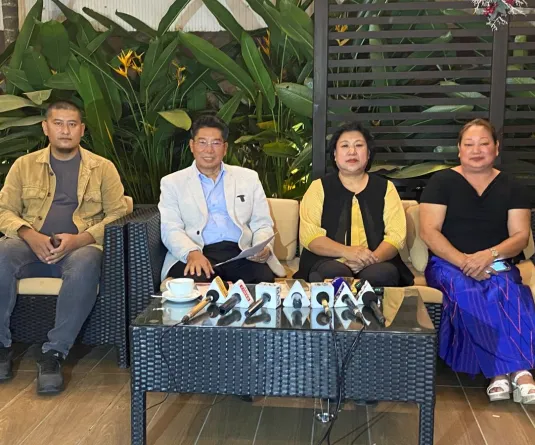
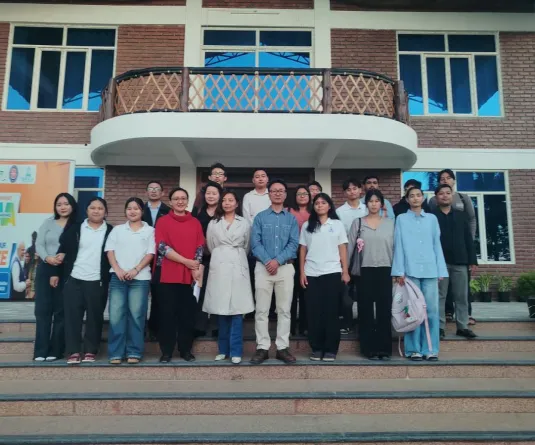
Farmers and officials from KVK Dimapur and the Agriculture Department with distributed Toria seeds and inputs following the launch of the Rice Fallow Intensification Programme at the DAO Office in Niuland.
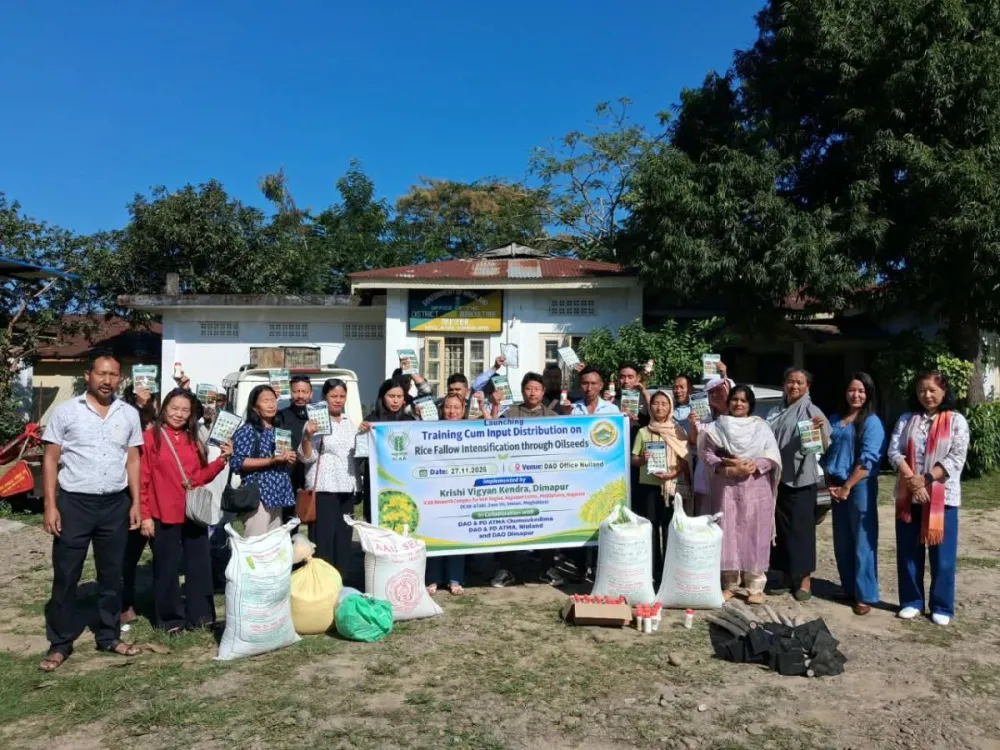
Dimapur, November 29 (MExN): Krishi Vigyan Kendra (KVK) Dimapur has launched a Rice Fallow Intensification Programme through oilseed cultivation, targeting 70 hectares under Toria cultivation across Chümoukedima, Dimapur and Niuland districts.
The programme was launched at the District Agriculture Officer (DAO) Office in Niuland in collaboration with the District Agriculture Officers and Project Directors of Chümoukedima and Niuland, and the DAO of Dimapur.
The initiative aims to utilise rice fallow lands for oilseed cultivation by taking advantage of residual soil moisture after paddy harvesting. Under the programme, 25 hectares in Niuland have been earmarked for cultivation, while 35 hectares in Chümoukedima and 10 hectares in Dimapur are also targeted.
During the launch, Toria seed variety TS-38 was distributed to 20 farmers from different villages of Niuland, covering 25 hectares.
Dr Moanaro, Technical Officer, KVK Dimapur, conducted a training on scientific Toria cultivation, covering sowing methods, pest and disease management, moisture conservation and precautions during crop cultivation. She highlighted the potential of rice fallow intensification in increasing oilseed production and improving agricultural productivity in Nagaland.
District Agriculture Officer, Niuland, Thepusa Nakro highlighted the importance of Toria cultivation in increasing oilseed production and strengthening the state's agricultural sector.
Sub-Divisional Agriculture Officer, Niuland, Dr Arenjungla Ao encouraged farmers to adopt scientific cultivation practices and make use of the technical support provided by KVK Dimapur and the Department of Agriculture.
Senior Scientist and Head of KVK Dimapur, Dr Phool Kumari, urged farmers to take up Toria cultivation in rice fallow areas to generate additional income, improve livelihood opportunities and contribute to increasing domestic oilseed production.
The programme concluded with the distribution of agricultural inputs to participating farmers.