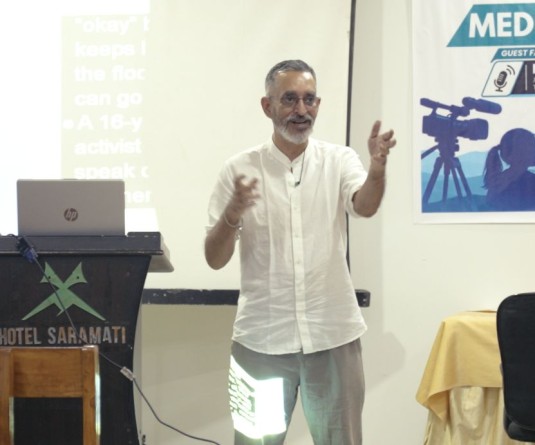
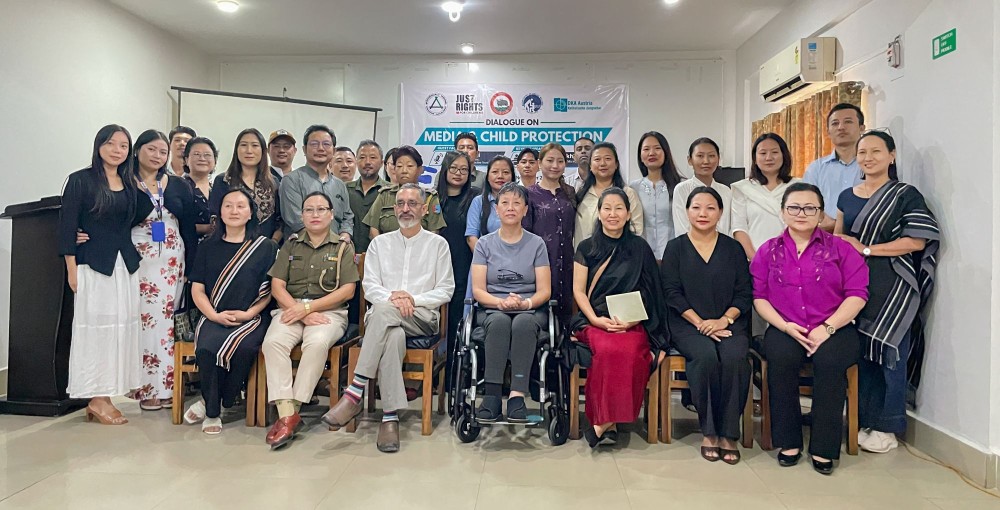
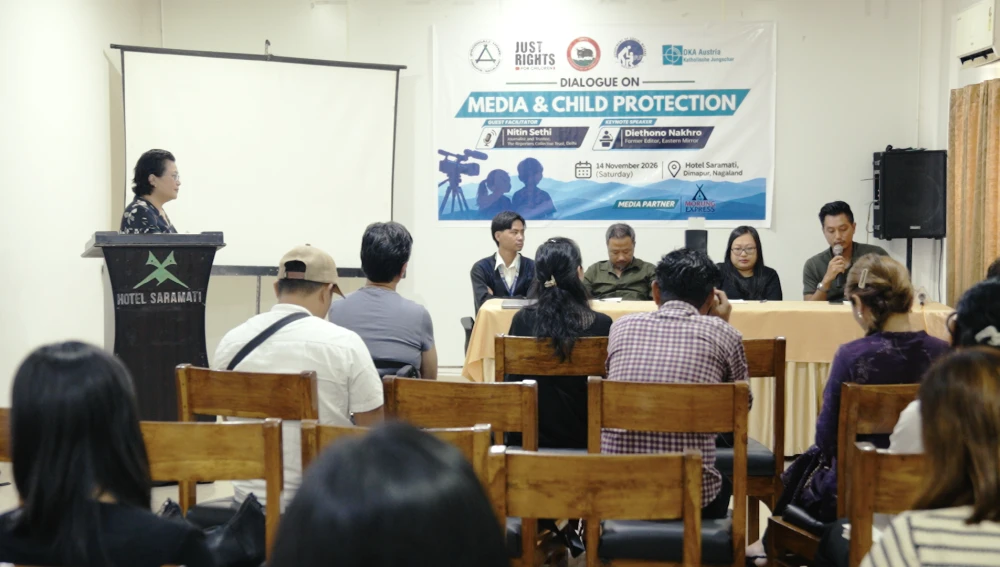
Officials and participants during the state level dialogue organised by Prodigals’ Home and Just Rights for Children in collaboration with Mission Vatsalya, Department of Social Welfare, Nagaland with The Morung Express as media partner on November 14. (Morung Photo)
Morung Express News
Dimapur | November 14
Diethono Nakhro, former Editor at Eastern Mirror and Founder & Executive Director of Khrieto Nakhro Foundation on Saturday called on the media to go beyond reporting incidents of child abuse and exploitation and actively promote child rights, protection and inclusion.
Speaking at a state level dialogue on media and child protection, Nakhro said the media could be a “powerful ally” in advancing child rights, provided its engagement was informed, sensitive and responsible. The event was held at Hotel Saramati.
Drawing from her experience in media, child protection and disability rights, she said the issues of child protection, disability rights, gender equality, indigenous identity, access to justice and social inclusion were deeply interconnected.
Highlighting the challenges of reporting in Nagaland’s close-knit communities, she cautioned that even when a child’s name is withheld, details about the village, school, family circumstances or accused person could reveal the identity of a child victim. “Protecting identity requires more than simply withholding a name or blurring a photograph,” she said, underscoring the need to consider the long-term consequences of insensitive reporting.
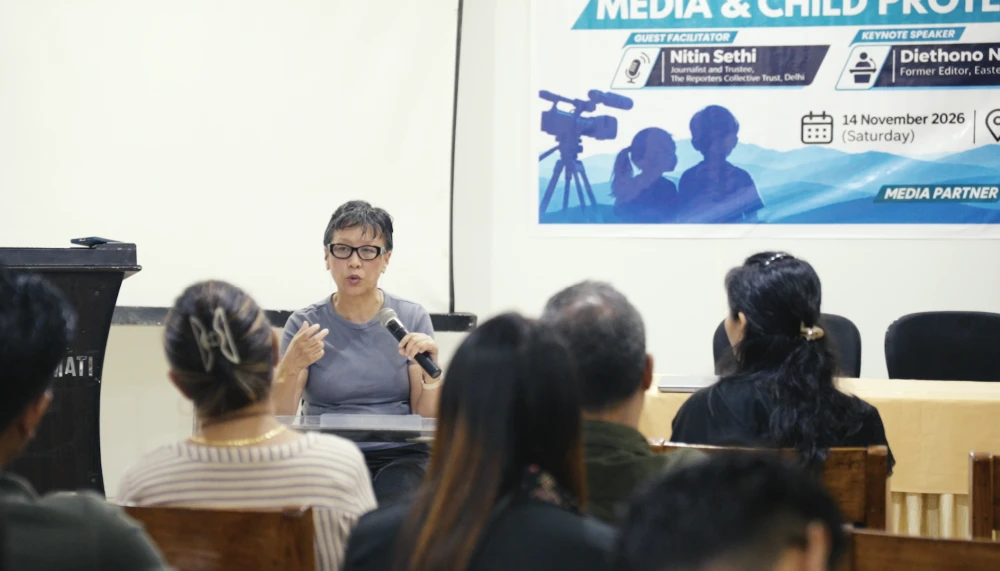
She particularly drew attention to children with disabilities, who face the same risks as other children but are often more vulnerable to abuse and exploitation due to communication barriers, dependence on others and social isolation. She held that protection systems must be accessible and responsive to their needs, while maintaining that disability should never be used to make a story more emotionally appealing. “These are questions of rights and accountability, not sympathy,” she said.
Nakhro also called for greater media attention to children often missing from mainstream reporting, including those in remote areas, economically disadvantaged families and children with disabilities.
Noting that cultures and customary practices are not static, she said harmful practices must be questioned and reformed while preserving cultural values.
The former state commissioner for persons with disabilities further touched on the importance of responsible language. Noting that words shape public perceptions and attitudes, she cautioned against the pressure for speed and attention in digital reporting. She said it should never take precedence over accuracy, dignity and children’s safety.
“The challenge before us is not simply to avoid harmful reporting, but to make journalism an active force for child rights, protection and inclusion,” said Nakhro.
Call for ethical reporting, stronger collaboration
Journalists stressed the need for responsible reporting on child-related issues, particularly the protection of children’s identities, improved access to information and greater collaboration between media organisations, government agencies and civil society.
These observations were shared during a ‘dialogue on sharing challenges and exploring possible solutions’ at the event. The panelists were Imkong Walling, Principal Correspondent at The Morung Express; Veroli Zhimomi, Sub-Editor, Eastern Mirror; Bendangchuba, Reporter, Nagaland Post and Wangzei Konyak, Reporter, Dimapur 24x7.
Imkong Walling said that a journalist’s foremost responsibility when reporting on child victims of crime or violence is to safeguard their welfare and identity. He cautioned against revealing not only a child’s name but also other details that could indirectly expose their identity.
Pointing to the pressure to break news and attract readership through sensationalism and clickbait, Walling said the pursuit of audience engagement should never override the rights of a child, as the disclosure of sensitive information could have devastating and long-lasting consequences for the victim and their family.
Sharing an instance of how a child’s identity could be compromised despite withholding the name, Bendangchuba cited an example of a television reporter who, while covering a sexual abuse case involving a minor, disclosed the victim’s residence and school. He said such reporting defeats the very purpose of legal safeguards.
Veroli Zhimomi remarked that children should not be victimised in the pursuit of a story, noting that the need to report news must never come at the cost of a child’s dignity and safety.
She also pointed to the reluctance of official sources to share information with journalists, which often leads to speculation and the circulation of unverified accounts.
Wangzei Konyak said the digital platform follows measures such as blurring children’s faces and avoiding identifiable locations, including their residences and schools, while adhering to the Juvenile Justice and POCSO Acts. On the challenges digital journalists face in reporting child-related cases, particularly missing children, he shared that the initial appeal for publicity may later be followed by requests to remove the content after the child is found.
Meanwhile, Walling observed that public expectations often place the media in the role of reporter, commentator and judge, with readers and viewers demanding information that journalists may be legally or ethically restricted from disclosing.
The panel also called for more proactive and informative reporting to create awareness and prevent violations of child rights, rather than limiting coverage to incidents after they occur.
Walling highlighted the need to adapt to changing media consumption patterns. Zhimomi called for sustained media follow-ups on reported cases, pointing out that coverage often fades after initial public outrage, without adequately tracking case progress or accountability.
She suggested including representatives from district press clubs and local media organisations in relevant district and state-level child protection discussions to improve information sharing and understanding of ongoing interventions, institutional gaps and available services.
Walling maintained that collaboration must be a two-way commitment, urging journalists, government agencies and civil society organisations to build stronger working relationships and trust.
Bendangchuba also identified churches as important partners in child protection awareness, given their influence in Naga society. However, he cautioned against community and clan-based interventions that pressure victims or families to forgive alleged offenders in order to protect the reputation of the accused.
The state level dialogue was organised by Prodigals’ Home and Just Rights for Children in collaboration with Mission Vatsalya, Department of Social Welfare, Nagaland with The Morung Express as media partner.