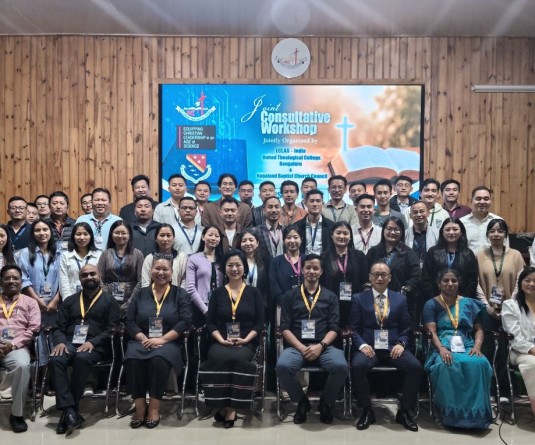
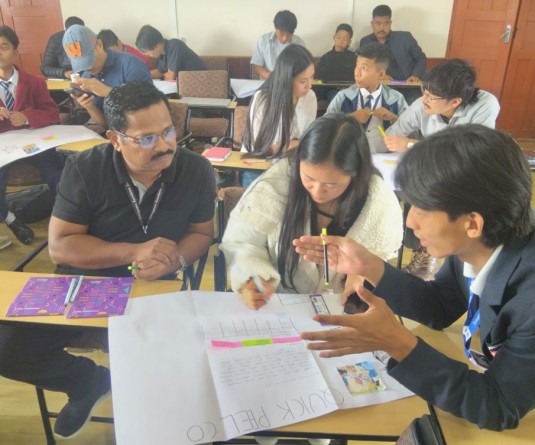
Department of Health & Family Welfare under the NTCP and in collaboration with Vital Strategies organised a state-level capacity building of master trainers to integrate Brief Advice for Cessation at the primary level in Nagaland on October 23.
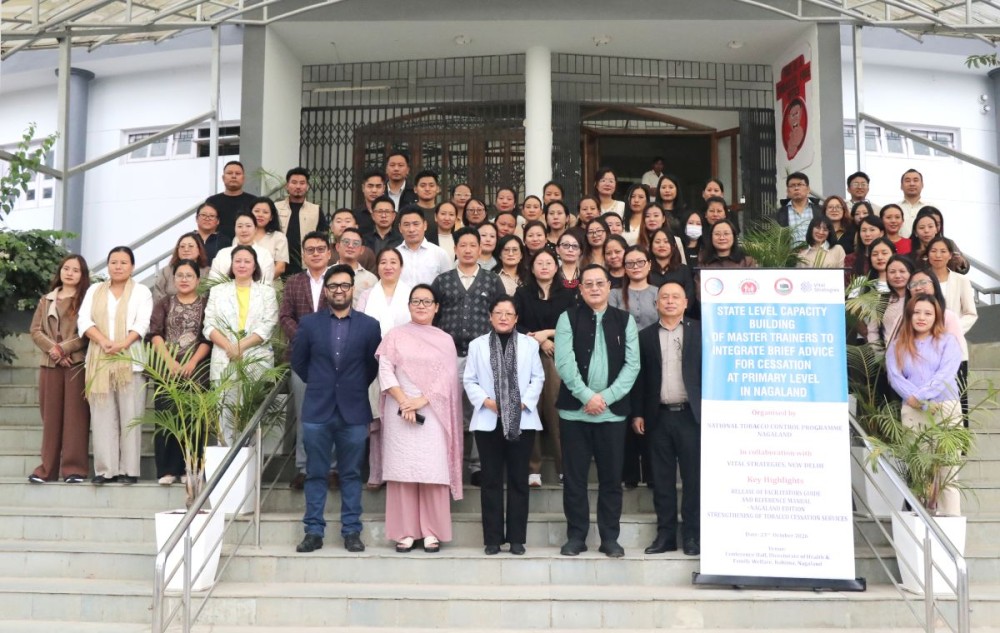
Kohima, October 23 (MExN): The Department of Health & Family Welfare, Government of Nagaland, under the National Tobacco Control Programme (NTCP) and in collaboration with Vital Strategies, organised a state-level capacity building of master trainers to integrate Brief Advice for Cessation at the primary level in Nagaland at the Directorate of Health & Family Welfare, Kohima on October 23.
The landmark initiative aims to systematically integrate brief advice for tobacco cessation into routine primary healthcare delivery across the state, stated a press note.
To support health personnel in executing this mandate, the dignitaries officially released two key training publications, the Facilitator's Guide for Training of Health Workers on Tobacco Cessation and the Nagaland Reference Manual for Health Workers, jointly developed by Vital Strategies and the State NTCP team.
The programme was inaugurated by special guest S Tainiu (NCS), Secretary, Health & Family Welfare, Government of Nagaland.
Speaking on the occasion, Tainiu emphasised the necessity of shifting tobacco cessation from occasional campaigns to an established, routine element of healthcare services. “Primary healthcare workers interact with individuals at all stages of life. By incorporating brief advice into routine consultations, we can make tobacco cessation an accessible and continuing part of the services our health system provides,” she stated.
Tainiu also highlighted the vital role of inter-programme coordination involving Community Health Officers (CHOs), National Tuberculosis Elimination Programme (NTEP), National Programme for Prevention and Control of Non-Communicable Diseases (NPNCD), and National Mental Health Programme (NMHP).
Guest of Honour Dr Keveduyi Theyo underlined that tobacco cessation cannot rely solely on specialised clinics or psychologists due to manpower constraints. “With limited manpower at tobacco cessation clinics, we can only reach a few thousand people. It must be the job of every health worker, especially at the primary care level, to support patients in quitting,” Dr Theyo remarked.
He called on participating district teams to establish clear action plans, cross-programme referral mechanisms, and robust monitoring processes to ensure training outcomes lead to measurable impact on the ground.
Dr I Simon Sumi, State Nodal Officer NTCP, shared the objective of the training and an overview of cessation services in Nagaland.
The day-long workshop featured technical sessions by Dr Upendra Singh Bhadauria, Technical Specialist (Cessation) at Vital Strategies, focusing on scaling brief advice during patient interactions, strengthening TB–tobacco linkages, and measuring monitoring frameworks.
The event concluded with district action plan presentations, discussions, and distribution of certificates to participating healthcare officers and master trainers.