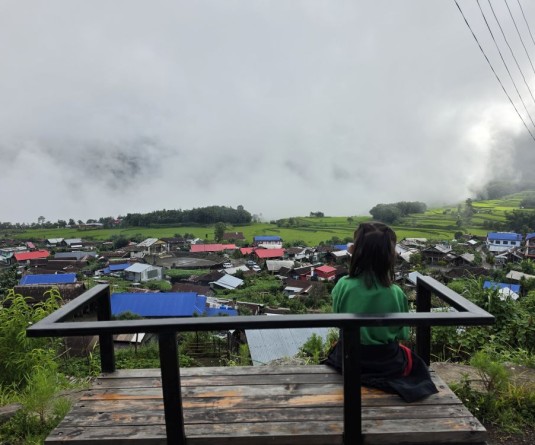
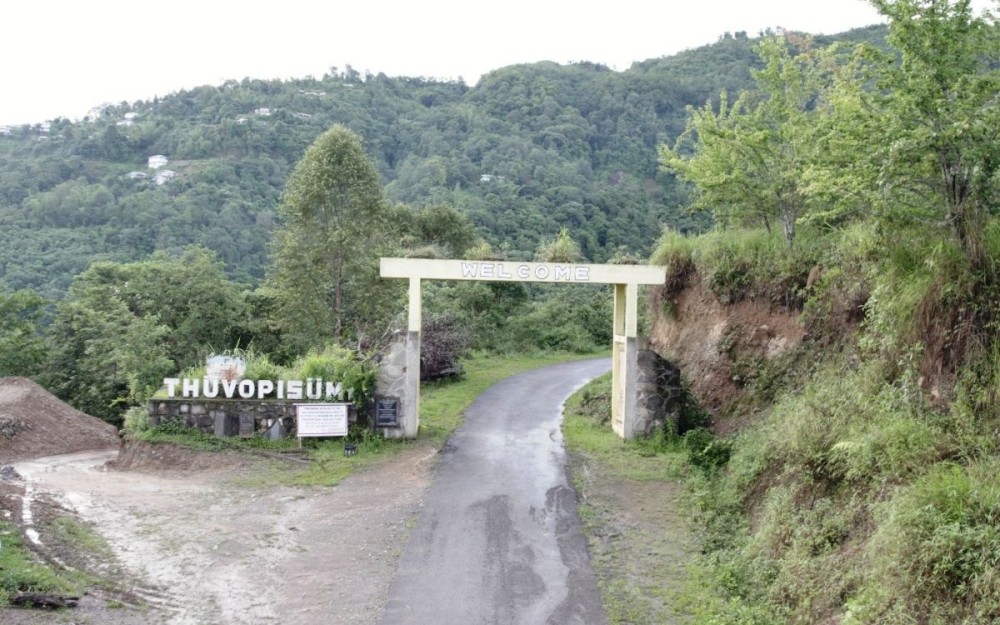
Thüvopisü, Venyiyi Rhakho’s ancestral village, in Phek district.
Venyiyi Rhakho’s homecoming: A 25-year journey built on forgiveness
Kanili Kiho
Dimapur | October 5
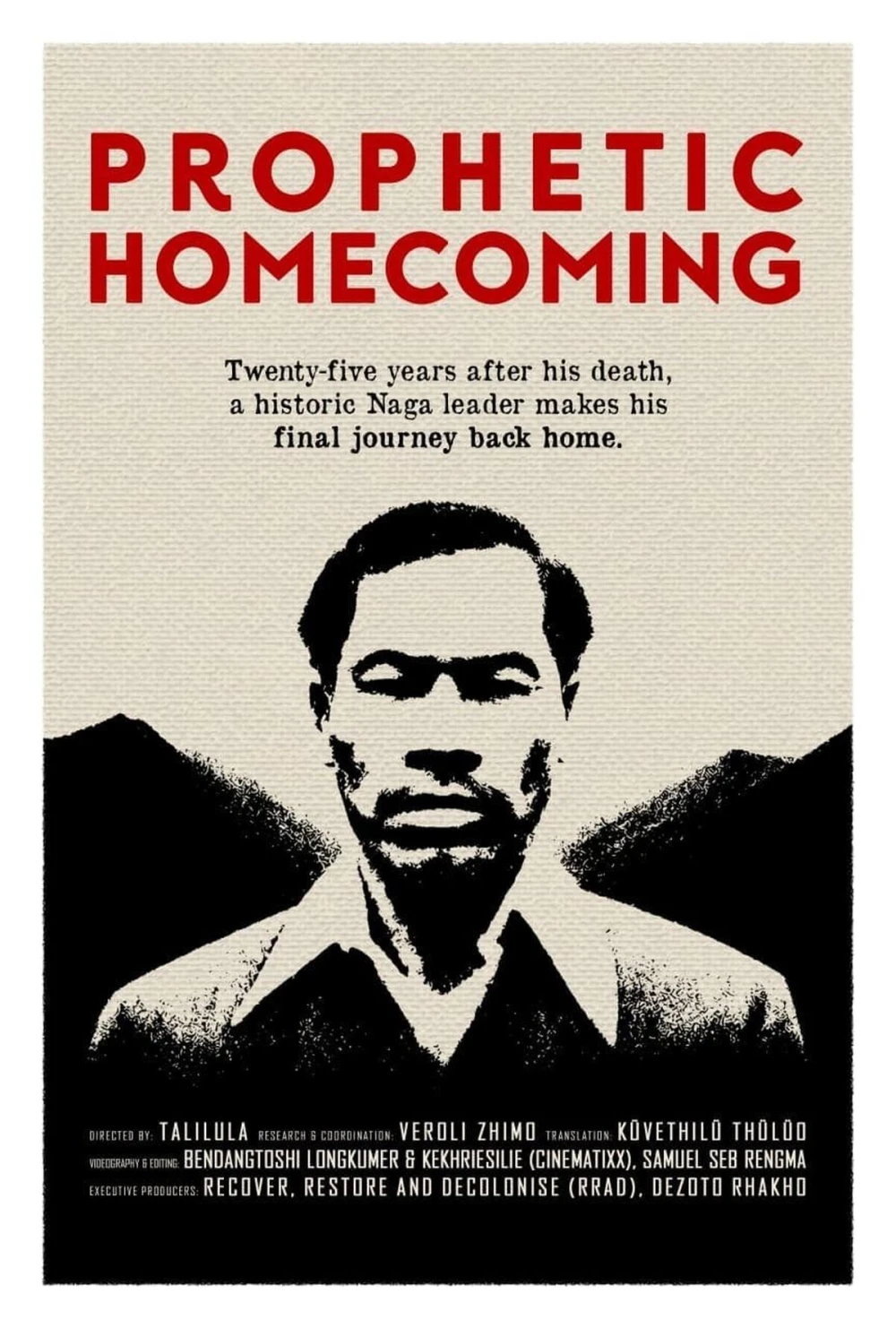
After 25 years, Naga political leader Venyiyi Rhakho’s mortal remains finally return to his homeland in 2004. The documentary film Prophetic Homecoming follows the 25-year journey of a family and community grappling with decades of trauma and grief as they find their way towards forgiveness, reconciliation and healing.
Naga National Council (NNC) Tatar Venyiyi Rhakho represented the Naga leadership at the 1975 Shillong Accord negotiations but refused to sign the pact. He was assassinated in 1979. His mortal remains were eventually repatriated to his native village, Thüvopisü in 2004.
The film premiered during the September Dialogue organised by the Forum for Naga Reconciliation–Recover, Restore and Decolonise (RRaD) at The Lighthouse Church, Dimapur, on September 5.
It was directed by Dr Talilula and produced by Recover, Restore and Decolonise (RRaD) and Dezoto Rhakho, son of Venyiyi Rhakho.
In the film, Dezoto Rhakho talks about the family’s long road to forgiveness. Speaking to The Morung Express in an interview, Dezoto recounted how and when it became a conscious choice, yet, even then, a monumental decision for the family to make.
For decades, the family was told through “prophecy” that they must forgive those who had taken his father’s life.
“But our thoughts were, ‘Why and who do we forgive?’ It was not as if the perpetrators had come seeking forgiveness, and neither did we know the names or identities of the actual perpetrators,” recounted Dezoto. He was 17 when he lost his father.
“Forgiving was not an easy thing to do,” he said, while acknowledging it was possible “only through the work and word of God.”
True to human nature, he said the family kept living with anger and resentment. Despite this, the call for forgiveness always lingered.
The first step towards healing was taken on October 18, 2003. Dezoto recalled being asked to gather the family at his father’s birthplace that day, where “God moved in us and we were able to make the decision to forgive.”
After a full day of prayer and discussion, they came to realise that the resentment and anger had become an obstacle for them — not only standing in the way of bringing his father’s remains home, but also preventing the family from moving forward. “So, as God willed it, we chose to let that burden go.”
He, however, emphasised that forgiveness does not mean they have decided to barter his father’s principles, or that the past has been erased. It also does not diminish the “suffering we endured,” he said.
“My father, Venyiyi Rhakho, had steadfastly opposed the 1975 Shillong Accord and stood by his principles until his death. His principles were, and are, non-negotiable, and his children and family stand by them to this day.”
‘Transition from historical grief towards peace’
According to Dezoto, by forgiveness, it meant that they have “let go of the hatred and resentment and left the final judgement to God.”
He reaffirmed that the repatriation had been possible “only through divine intervention,” even as he reflected on how God led them from not knowing where his father’s mortal remains had been hidden to finally bringing him back to the land he called home.
For the Nagas who hold their dead in deep reverencen, a family makes every effort to bring a loved one home after death, said Dezoto. To be able to do that for his father a quarter of a century since his death, he said was “nothing short of a miracle.”
The quest began in 1986, when the family was first told to bring his father’s remains home. It would take 18 more years before that wish was finally fulfilled.
In 2004, his father was laid to rest with the proper funerary rites in the family compound at Thüvopisü. Looking back, Dezoto said the emotional experience remains one that fills the family with awe as it brought with it healing and closure.
He added that there was a profound sense of fulfillment in being able to “right a great wrong.”
For this reason, he said the repatriation was not just about the physical return. For the family, it was also a form of “spiritual and cultural restoration.”
It marked the beginning of something different, Dezoto, now 64, said, “Like a transition from historical grief towards ancestral and spiritual peace.”
Can forgiveness coexist
with memory and justice?
To explore this notion, this newspaper spoke with Dr Villo Naleo, Social Concern Secretary at Nagaland Baptist Church Council (NBCC).
Dr Villo said forgiveness can coexist with memory and justice. “In the first place, forgiveness is not forgetting, it is remembering rightfully and redemptively. If true forgiveness takes place, we need to remember that we have forgiven others,” he explained.
While noting that there are offences one can overlook, he said there are some which cannot be forgotten. The memory of pain does not mean that one has not forgiven the other, he added.
“Forgiveness does not cancel the punishment; a person can forgive the offender as a Christian but that doesn’t mean the perpetrator is free from legal bindings. The state or legal authority has their place for serving justice, so that the punishment serve as a deterrence,” Dr Villo added.
Can a family forgive without saying that the wrong committed against them was acceptable? On this, Dr Villo explained that forgiveness recognises the reality of sin. A family need not say the wrong committed against them was acceptable, but “when we recognise the reality of sin, then we can expect bad things can happen to us.”
The family can say the wrong “committed against us was unacceptable,” however, he argued that to let forgiveness take place, one needs to accept the reality of sin.
Even so, it does not justify the act of the perpetrator. It is necessary only for closure on the victim’s part, he emphasised.
Forgiveness absorbs the pain of sin and offence— whether big or small, intentional or unintentional, bitter or remorseful, he stressed that true forgiveness dares to bear the pain caused by the enemy.
It may be conspiracy, assassination or ethnic cleansing, he said true forgiveness does not count on sin, regardless of plot or an offence planned to cause injury.
He also responded on how forgiveness may be understood as freeing the person who has been carrying the wound, rather than the person who caused the harm. The harm caused by the perpetrator, he said, violates a person’s dignity. In order to restore that dignity, criminal justice, in particular, looks at the offence from the victim’s point of view.
He also referred to a perspective called “restorative justice,” where the offence is viewed from both perspectives.
Restorative justice offers a different way of understanding crime and responding to it. It cannot solve every type of crime, nor can it change every offender, he clarified. However, it provides a more constructive approach to dealing with crime than the traditional justice system, Dr Villo added.
‘Repatriation process an act of healing’
To forgive and reconcile does not mean erasing history or denying the reality of past harm, said Dr Talilula, who directed the documentary film. Ideally, they rely on accountability, but in real life, the road to justice is rarely a straightforward or guaranteed one.
In the case of Venyiyi Rhakho’s family, she observed that choosing to forgive in the absence of full accountability and eventually working with the very people responsible to assist in the repatriation process revealed that such “processes and our histories are way more nuanced than what I ever imagined.”
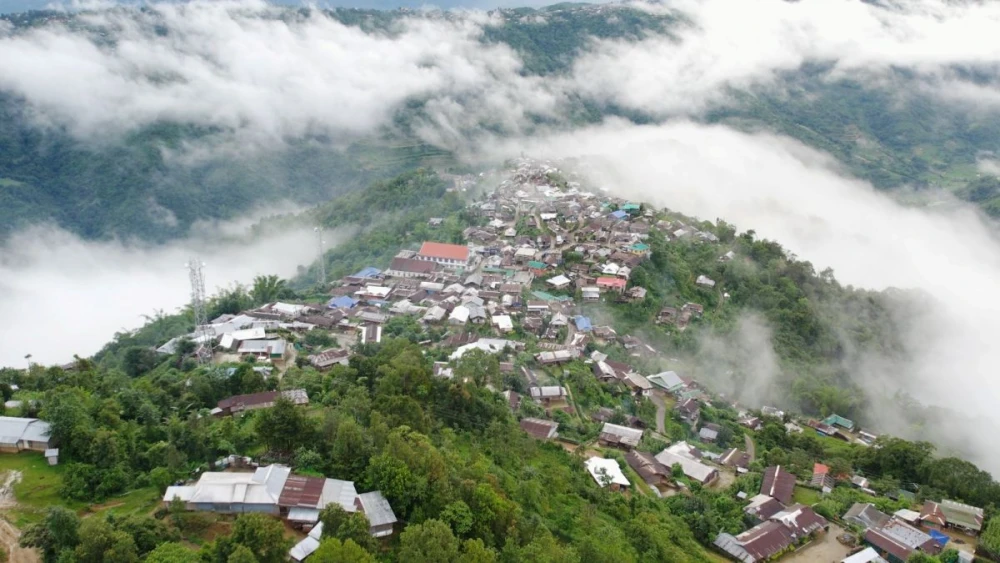
The RRaD member said repatriations usually begin from a place of deep loss and grief. While filming, she learnt that Venyiyi’s ancestral village, Thüvopisü, had endured so much turmoil and conflict.
A major site of the Naga political imagination, the village was reportedly razed seven times by the armed forces, while fratricidal conflicts during the 1950s claimed 48 lives from the community.
Given such a heavy history, Dr Talilula noted how the community’s 25-year effort to bring him home, sustained through prayers and rallying, became more than just a homecoming. It also became a vital part of their healing process, offering solace for historical wounds.
“It made me think about the resilience of the human heart, and how even amidst immense structural violence and complex grievances, meaningful pathways towards peaceful resolutions remain possible,” she maintained.
She also underscored that while healing can be a deeply personal experience, the community plays a “very important role” in supporting that process and the active rebuilding that follows, especially in the context of Naga society.