Sangeeta Barooah Pisharoty (M), Karma Paljor (R) and Snigdha Poonam (L) during a panel discussion at The White Owl Literature Festival and Book Fair held at Townhall, Zone Naithu, Chümoukedima on February 6. (Morung Photo)
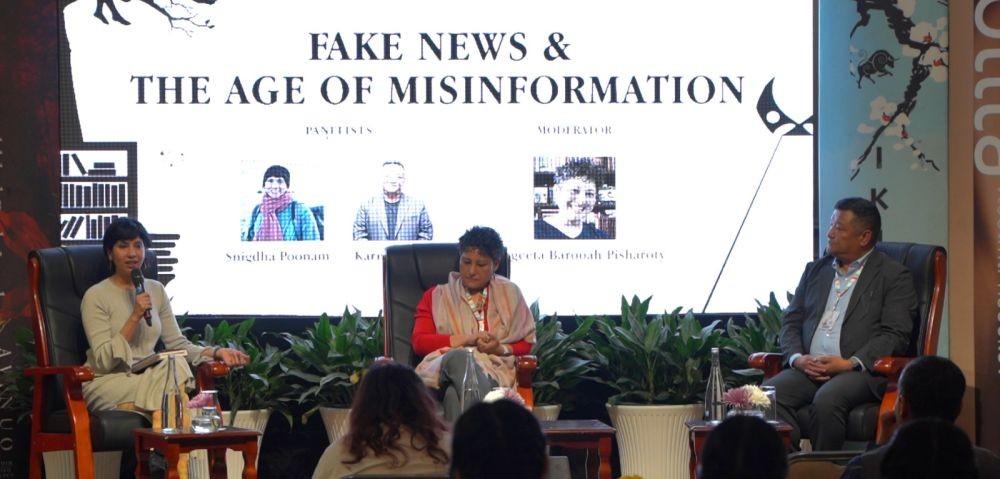
Panel at The White Owl Literature Festival highlights dangers of AI misuse, communal misinformation and scams
Morung Express News
Chümoukedima | February 6
The rise of misinformation and digital scams in India is reaching alarming proportions, threatening public trust, social harmony, and the integrity of journalism, experts warned at a panel discussion at The White Owl Literature Festival and Book Fair held at Townhall, Zone Naithu, Chümoukedima on February 6.
Karma Paljor, Editor-in-Chief and co-founder of EastMojo, said the scale of fake news today far exceeds social media forwards, increasingly mimicking credible journalism. Recalling coverage of the 2011 Sikkim earthquake, he cited a case where a foreign video was falsely aired as local footage by a national channel, highlighting verification failures.
“Fake news now ranges from harmless rumours to organised factories producing fabricated content targeting communities,” Paljor said, pointing to communal misinformation and the circulation of violent, unverified videos during the Manipur crisis. He said EastMojo chose not to publish such content despite online backlash, prioritising public safety over virality.
Paljor also flagged the misuse of artificial intelligence, citing a widely reported AI-generated video of a tiger cub near Gangtok that circulated before verification. Criticising mainstream television channels for spreading disinformation during national security events, he advised audiences to avoid sensational content, rely on independent digital platforms, and cross-check information before sharing.
Senior journalist Paljor stressed rigorous ground-level verification, including sending reporters to sites or contacting trusted local sources before publishing stories. He recounted receiving a call from someone claiming to be a National Investigation Agency officer and insisting they come to his office to establish authenticity, underscoring the importance of direct verification. He warned that the rush to break news often leads to unverified and misleading reporting.
Author-journalist Snigdha Poonam highlighted how digital scams are eroding both savings and societal trust. Nearly every smartphone user, she said, has encountered scam calls or messages promising lottery wins, investment returns, or impersonating authorities to extract OTPs or money. Poonam cited a personal experience during COVID-19 when she received a WhatsApp message claiming she had won Rs 25 lakh, falsely endorsed with images of Prime Minister Narendra Modi and other public figures.
“Even educated, urban citizens fall prey to such scams,” she said, noting fraudsters admitted earning crores through similar schemes. Scammers impersonate institutions including the RBI, tax authorities, and investigative agencies, creating fake websites across regions such as Assam, West Bengal, and Mewat. Poonam warned that digital fraud thrives on convincing lies and that the collapse of trust in digital communication poses a serious societal challenge.
She also highlighted how scams reflect deep social inequalities. Fraud networks often operate from underdeveloped areas and justify their acts as a way to “level the playing field” against urban or wealthy populations, pointing to caste, gender, religion, and economic disparity as underlying drivers.
Moderator Sangeeta Barooah Pisharoty, the president of the Press Club of India (PCI), said scams have become a barometer of societal breakdown and stressed that structural inequalities must be addressed to curb the menace. She added that misinformation and weak journalistic accountability threaten democracy and called for greater public awareness and responsible media practices.
Likewise, Paljor urged the media to prioritise informing and educating citizens about scams rather than dismissing victims, citing widespread data leaks and the lack of coverage on digital fraud. He lamented that mainstream channels often focus on sensational stories instead of issues affecting ordinary citizens.
“Journalists have a duty to verify, educate, and protect public trust,” he said, underscoring the role of independent media in combating both misinformation and digital fraud in India.