Officials along with the participants during the Academic Lead Workshop held at SCERT, Kohima, on June 19. (DIPR Photo)
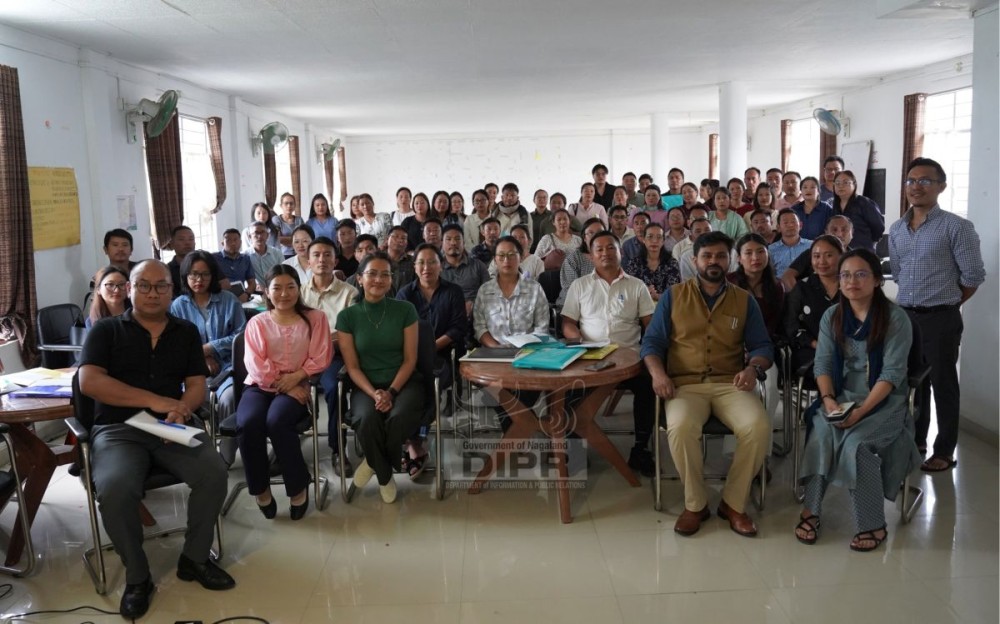
Kohima, June 21 (MExN): The Department of School Education under the Nagaland Education Project–The Lighthouse (NECTAR), with support from the State Council of Educational Research and Training (SCERT), conducted a three-day Academic Lead Workshop for teachers and school heads from all 17 Lighthouse School Complexes (LSCs) at SCERT, Kohima, from June 17 to 19.
The workshop was organised as part of the School Transformation Strategy being implemented in the LSC hub-and-spoke schools to strengthen instructional leadership and support the effective implementation of the Annual Curriculum and Pedagogical Plan (ACPP).
A total of 73 Academic Leads participated in the capacity-building programme, which included sessions on ACPP design, academic monitoring tools, quarterly review mechanisms, teacher mentorship, academic and co-curricular activities, and leadership development.
During the inaugural session, Joint Director of School Education Sentinenla outlined the objectives of the workshop, which include strengthening teaching and learning processes, fostering reflection and continuous improvement, and developing a vision for the future.
She said effective academic leadership is the driving force behind sustainable improvement and would help translate educational policies into classroom practices across schools.
Delivering the welcome address, Joint Director of SCERT Vikedono Sesa said Lighthouse School Complexes are not limited to infrastructure development but are intended to improve teaching and learning practices. She noted that the ACPP would strengthen lesson planning and contribute to better learning outcomes.
Sesa urged participants to promote and sustain good practices to ensure effective implementation of academic plans.
On the concluding day, Principal Director of School Education and Project Director of NECTAR, Shashank Pratap Singh, IAS, said good academic results can be achieved despite infrastructural challenges, citing the performance of toppers from remote areas as examples.
He stressed that the Annual Curriculum and Pedagogical Plan would play a key role in improving government schools and said Academic Leads would have a significant responsibility in mentoring and supporting students.
Singh urged the participants to ensure that no student is left behind and to work towards strengthening learning outcomes across schools.