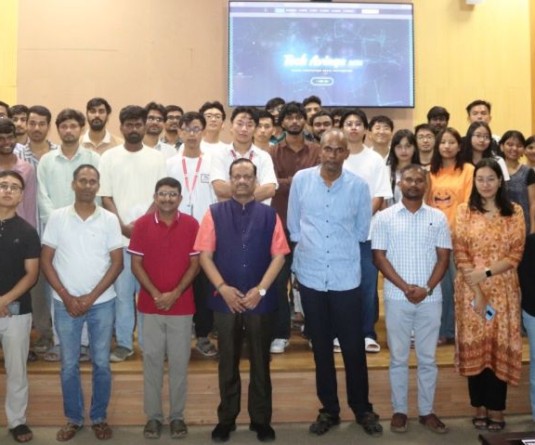
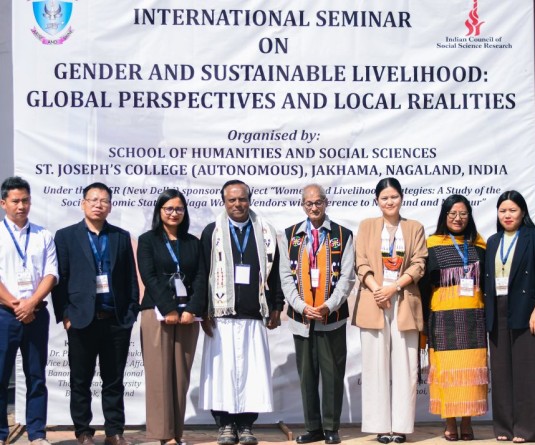
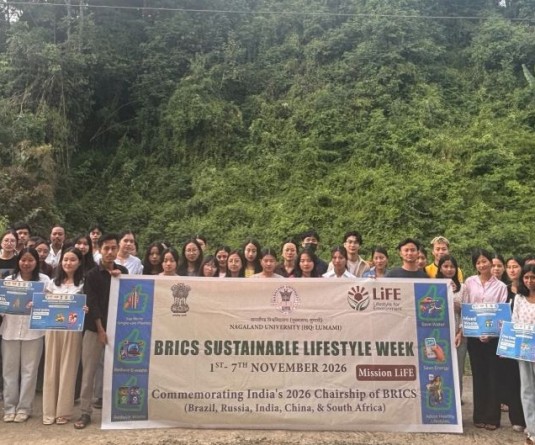
Dr Antony Richa Deputy Registrar, Prof Akali Sema PI STINER, Prof KK Jha, Prof Malini B Sharma with the participants.
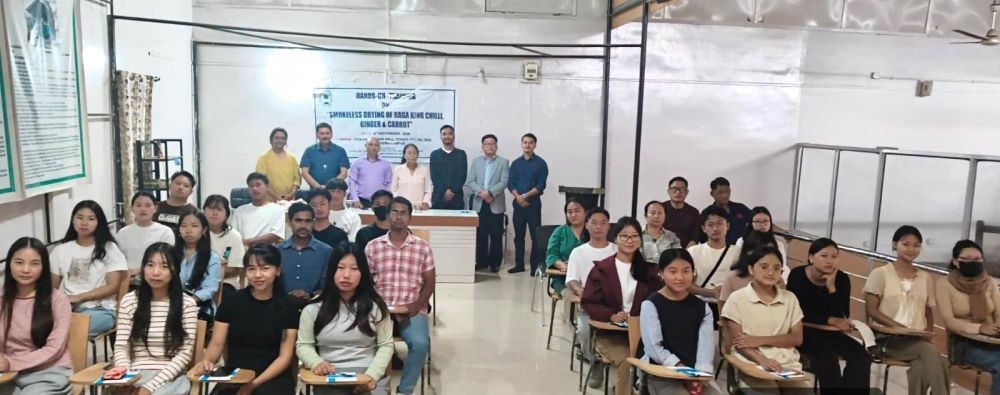
Medziphema, November 7 (MExN): The STINER TFC Nagaland Centre, Nagaland University, SAS, Medziphema Campus, organised a one-day hands-on training programme on smokeless drying of Naga King Chilli, Ginger and Carrot on November 6, under the initiative of Prof Akali Sema, Project In-charge, STINER TFC Nagaland Centre.
A press release received here stated that the programme commenced with a formal session chaired by Prof Akali Sema, who shared the journey and initiatives of STINER, highlighting its objectives and efforts towards promoting technology-based livelihood opportunities and entrepreneurship in the region.
The special guest, Dr Antony Richa, Deputy Registrar, Nagaland University, SAS, Medziphema, in his brief address, encouraged participants to explore entrepreneurship and self-employment opportunities rather than limiting their aspirations to conventional white-collar jobs.
He highlighted that agriculture and farmers form the backbone of the economies of many advanced nations emphasising that farmers are among the most valuable assets of an economy. He encouraged participants to recognise the potentials of agriculture and take up agricultural ventures.
This was followed by a short address by Prof KK, Jha, Member of the Monitoring Committee. The formal session concluded with vote of thanks delivered by Bikram Ghimere, PA, STINER TFC.
The technical session provided participants with insights into various smokeless drying methods and techniques suitable for different agricultural and horticulture products. Participants were also given practical exposure through hands on demonstrations and training on the drying of Naga Kinga chilli, ginger and carrot, enabling them to understand the process involved in value addition and preservation of locally available produce.
Monkhalo Sebu Rengma, Chairman of Rise and Lead Foundation, conducted a session on marketing strategies for dried products. He highlighted the importance of effective marketing, product positioning and exploring potential markets to ensure the commercial viability of processed agricultural products.